How to Evaluate an Astrologer: Red Flags, Green Flags & Safety Tips
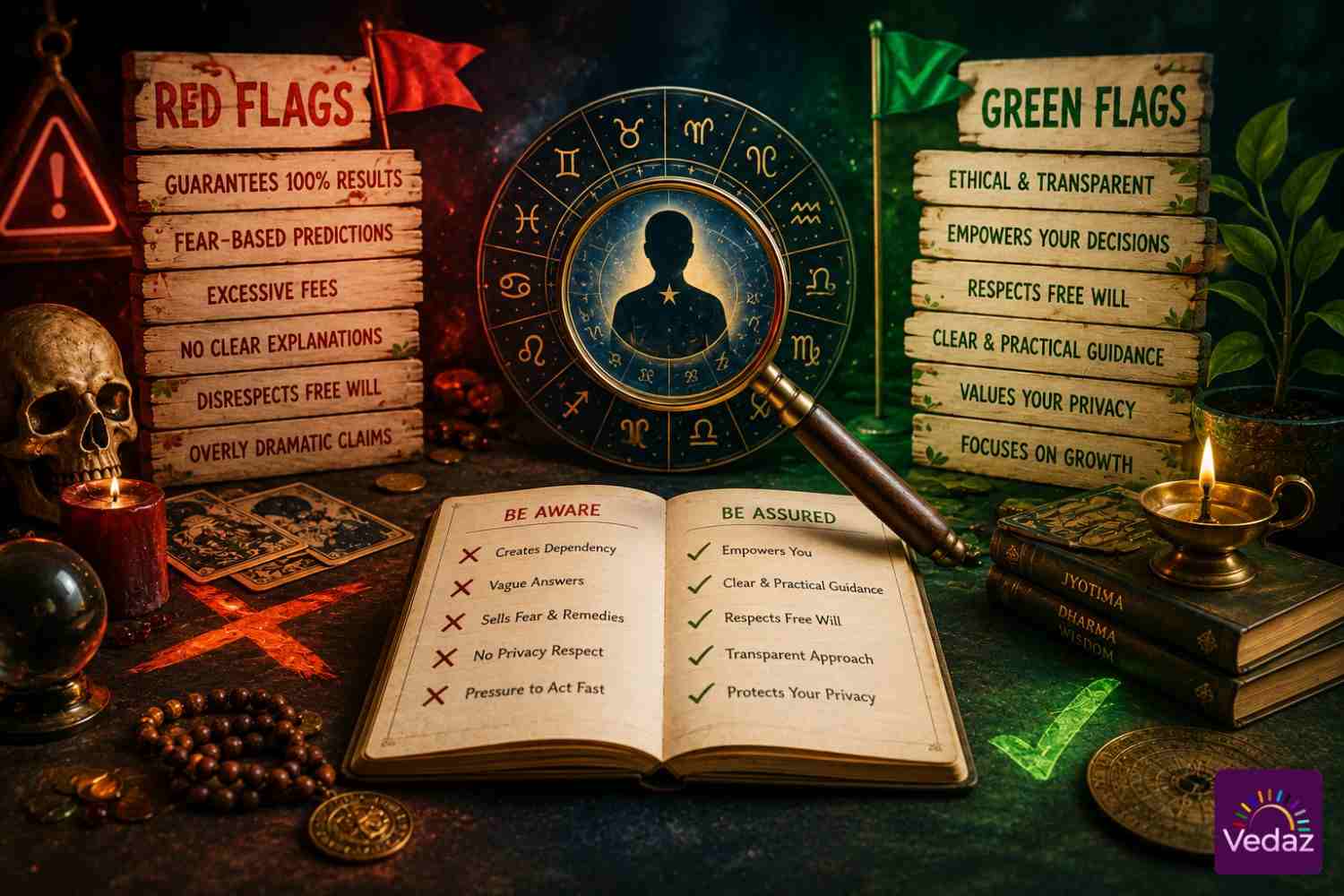
Astrology is unregulated, with enormous variance between ethical and exploitative practitioners. The biggest red flag is fear-based framing paired with expensive remedies as the "only" solution. The biggest green flag is honest acknowledgment of limits and directing serious issues to qualified professionals — doctors, lawyers, financial advisors.
Here's something no one tells you when you first get into astrology: the field has no regulation, no licensing board, no minimum standards. Anyone can call themselves a Vedic astrologer tomorrow and start charging for readings.
Most people only discover this the hard way — after a frightening prediction about their health or marriage, followed by a "remedy" that costs thousands of rupees or dollars, delivered with urgent pressure to act *right no
Dr. Tanvi Deshpande
Astrology Education, Consultation Ethics & Spiritual Guidance | 11+ Years
Dr. Tanvi Deshpande is an astrology educator and researcher who writes about consultation ethics, responsible astrological practices, and helping readers make informed decisions when seeking spiritual guidance.
Frequently Asked Questions
1. What is the single biggest red flag in an astrologer?
Fear-based framing paired with an expensive remedy presented as the only solution, usually with manufactured urgency. The exploitation structure is: manufacture dread about your health, marriage, children, or money — then sell a costly puja, gemstone, or ritual as the only escape, pressured to act immediately. Genuine astrology does not trade in manufactured fear, and never makes an expensive purchase the sole path out of a crisis it created. Recognizing this one pattern prevents most exploitation.
2. What is the biggest green flag in an astrologer?
Honest framing about limits, and directing serious issues to qualified professionals. Paradoxically, the clearest sign of a trustworthy astrologer is the willingness to say what astrology cannot do — to state that a chart offers perspective rather than deterministic prediction, and to recommend doctors for health, lawyers for legal matters, financial advisors for money, and mental health support for distress. A practitioner clear about limits is far more trustworthy than one who claims to handle everything.
3. Are guarantees always a red flag?
Yes. Guarantees of specific outcomes — a guaranteed government job, marriage by a date, business success, a cure — are red flags, because genuine astrology identifies tendencies and supportive windows, never guarantees. Equally disqualifying are absolute fatalistic predictions ("divorce is certain," "the chart denies children," "a serious health event will occur") — overreach the genuine tradition does not support, and which cause real psychological harm. Both over-promising and absolute doom-saying disqualify a practitioner.
4. Which topics carry the highest risk of exploitation?
Health and longevity (no genuine practitioner predicts lifespan or diagnoses illness), childlessness ("the chart denies children" is cruel overreach ignoring medical reality), marriage failure ("divorce is certain" can damage a reparable relationship), and financial desperation ("sudden wealth remedies" and gambling encouragement). These are where exploitation is most harmful and most common — be most careful exactly where you are most vulnerable, and prioritize the relevant professional over astrological claims.
5. How do I protect a vulnerable relative from astrological exploitation?
Help them know the core pattern in advance — fear plus expensive remedy plus urgency — since recognizing it is most of the protection. Encourage the rule of never making a large payment or major decision under pressure, always stepping away to reflect and seek a second perspective. And ensure serious issues go to the right professional first. Astrology is supplementary at most, never the primary response to a real health, legal, or financial problem.
6. Does a good astrologer ever admit astrology has limits?
Yes — and this is one of the strongest signs of a trustworthy practitioner. Genuine, ethical astrology is clear about what charts can and cannot do: it offers perspective and reflects tendencies, but does not deliver deterministic prediction, medical diagnosis, lifespan prediction, or guarantees. A practitioner who refuses to acknowledge any limits is overreaching. Willingness to state limits honestly is a green flag, not a weakness.
Related Blogs

Boost Your Health with Astrology
Boost your health with astrology using zodiac-based habits, wellness tips, and simple routines for better physical and mental balance.
The Socking Truth Behind Wearing A Black Thread
Uncover the mystery behind the black thread. From protection to spiritual energy—here’s why everyone’s suddenly wearing one.

Hidden Messages In Your Moles
What if that little mole on your cheek is more than just a mark? Explore the fascinating meanings behind mole placements and what they reveal about your future.

Who Is Your Ishta Devata?
Explore the concept of your personal God in Hinduism. Learn how to discover, connect with, and build a relationship with your Ishta Devata for inner peace and spiritual growth.