Astrology and Anxiety: An Honest Guide to When It Helps, When It Harms, and What Actually Helps
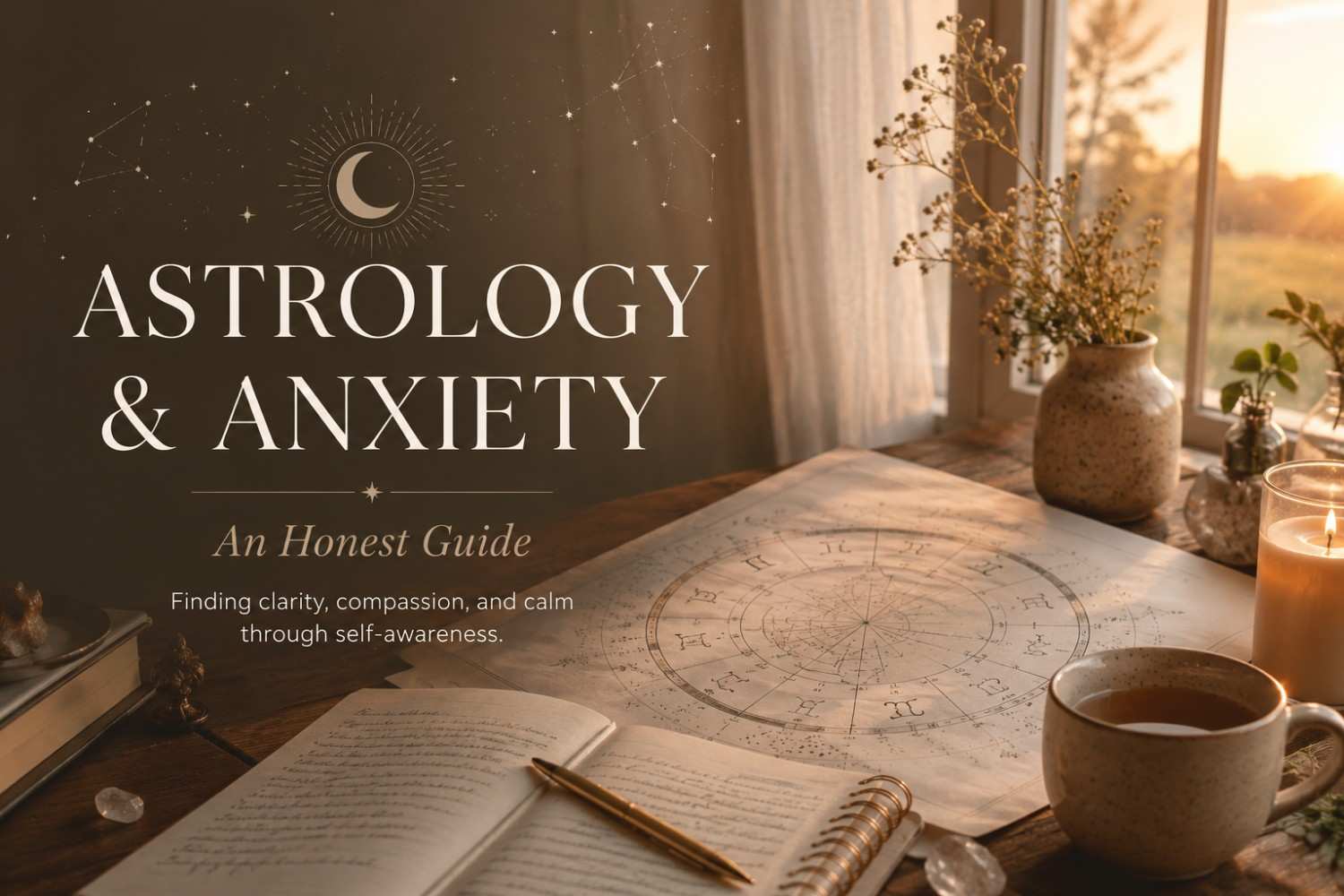
Many people turn to astrology hoping for reassurance about the future, relationships, money, or uncertainty. This guide explores when astrology can genuinely offer perspective, when it quietly worsens anxiety through fear and compulsive checking, and why real emotional support and professional care matter far more.
- ◦A Note Before Anything Else
- ◦Why Anxious People Turn to Astrology
- ◦When Astrology Can Genuinely Help an Anxious Mind
- ◦When Astrology Actively Harms an Anxious Mind
- ◦The Compulsive Checking Loop
- ◦The Self-Check
- ◦What Actually Helps When Anxiety Is the Real Issue
- ◦A Note on How Vedaz Approaches This
- ◦Final Thought
Many people turn to astrology when they are anxious — about the future, a relationship, a decision, money, health, or simply a persistent feeling that something is wrong. This is one of the most important and least honestly discussed parts of astrology, because the relationship between astrology and anxiety genuinely runs in both directions.
In some situations, astrology can offer perspective, reflection, and emotional steadiness. In others, especially in its fear-based commercial form, it can quietly worsen anxiety and create dependence on reassurance.
The honest conversation is not whether astrology is “good” or “bad” for anxiety. It is about how astrology is being used, what emotional role it is playing, and whether it ultimately leaves someone calmer and more grounded — or more frightened, dependent, and trapped in compulsive checking.
A Note Before Anything Else
If you are experiencing strong or persistent anxiety, the most important thing this guide can say is this upfront: anxiety is real, common, and treatable, and the support that genuinely helps it is not astrological.
It is the support of a mental health professional, a doctor, trusted people in your life, and real emotional care.
Astrology, at its healthiest, may sometimes offer perspective. But it cannot treat anxiety, and it should never replace therapy, counseling, psychiatric support, or medical care.
If anxiety is strongly affecting your sleep, work, relationships, emotional wellbeing, or daily life, reaching out for real support is one of the healthiest things you can do. Nothing in this guide replaces that, and the most responsible thing it can do is say so clearly before going further.
Why Anxious People Turn to Astrology
It is important to understand this impulse honestly and without judgment.
Anxiety is deeply connected to uncertainty — uncertainty about relationships, money, health, decisions, the future, or whether life will be okay. Astrology appears to offer exactly what an anxious mind wants most: reassurance, patterns, explanation, and the feeling that uncertainty can somehow become understandable.
This impulse is deeply human. Wanting reassurance during uncertainty is not foolish or irrational.
But this also points directly to the central tension in the relationship between astrology and anxiety: the same promise that makes astrology emotionally comforting can also make it psychologically risky.
If the anxious mind begins depending on astrology for certainty, emotional reassurance, or the feeling of control, astrology can slowly become part of the anxiety itself instead of relief from it.
That shift is important.
When Astrology Can Genuinely Help an Anxious Mind

A short but important clarification matters here: astrology only helps anxiety when it is approached lightly, non-fatalistically, and as perspective rather than certainty. The moment it becomes a source of fear, emotional dependence, or compulsive reassurance-seeking, it usually starts feeding anxiety instead of calming it.
-
As a framework for perspective — honest astrology’s reminder that life moves in phases, and that difficult periods eventually pass, can sometimes help anxious people feel less trapped in the present moment.
-
As structured reflection — some people use astrology as a way to think more calmly about emotions, fears, priorities, or recurring patterns in their lives.
-
As a vocabulary for emotional understanding — reflective astrology can sometimes help people describe feelings they were struggling to process clearly before.
-
As a gentle emotional pause — when approached calmly, astrology may create a moment of reflection instead of spiraling panic or overthinking.
-
Only when held lightly — this is the essential condition. Astrology helps only when it is treated as perspective, never as prophecy, certainty, or emotional dependency.
-
Only alongside real support — astrology should never replace therapy, counseling, emotional support systems, medical care, or trusted human relationships.
This pattern is especially visible around combinations like Kaal Sarp Dosha: Complete Guide, where Kaal Sarp panic can sometimes become more psychologically distressing than the chart combination itself.
When Astrology Actively Harms an Anxious Mind
The same thing that makes astrology attractive to anxiety — the promise of certainty — is also what can make fear-based astrology psychologically harmful.
-
Fear-based predictions intensify anxiety — alarming ideas about dangerous periods, severe doshas, curses, disasters, or unavoidable suffering directly feed anxious thinking instead of calming it. Honest astrology recognizes that What Vedic Astrology Can and Cannot Do is not built for doom, and that difficult placements should not be treated as fixed sentences.
-
Compulsive checking develops easily — repeatedly checking horoscopes, consulting multiple astrologers, or constantly searching for reassurance can quietly become an anxiety loop.
-
Dependence on certainty grows — outsourcing emotional reassurance and decision-making to astrology can make uncertainty feel even harder to tolerate over time.
-
Temporary relief becomes addictive — each reading may briefly reduce anxiety, but the fear often returns later, creating a cycle of repeated checking and reassurance-seeking.
-
Fear-based astrology monetizes vulnerability — expensive remedies, urgent warnings, and emotionally intense predictions often target frightened people during vulnerable moments.
-
Catastrophic framing damages emotional wellbeing — absolute predictions about marriage failure, illness, bad luck, or disaster can deeply affect someone who is already anxious.
Similarly, frightening narratives about Saturn-related suffering often soften considerably once people encounter more contextual discussions such as Shani Dosha: Complete Guide, which examines Shani Dosha, really within the broader framework of a full chart analysis.
- The warning sign is escalation — if astrology consistently leaves someone more frightened, emotionally dependent, compulsive, or unstable, it is harming rather than helping.
Many anxieties also develop around Saturn periods, even though Sade Sati Phases Calculator Guide often shows that Sade Sati explained in a broader context looks very different from catastrophic social media portrayals.
The Compulsive Checking Loop

One of the least honestly discussed parts of astrology anxiety is compulsive checking.
Many people do not realize they have entered a reassurance-seeking cycle because every reading brings temporary emotional relief. Someone may repeatedly:
-
check horoscopes,
-
watch tarot readings,
-
consult multiple astrologers,
-
compare predictions,
-
or search constantly for reassurance about one fear or uncertainty.
The problem is that reassurance usually works only for a short time.
The anxiety returns later, often stronger than before, because the mind never actually learns to tolerate uncertainty. Instead, it slowly learns: “I can only feel calm if I check again.”
Relationship-related fears can work in similar ways. Repeatedly seeking reassurance about compatibility may reinforce what Manglik Dosha: A Deep Guide describes as the Manglik fear cycle, where anxiety grows through repeated checking rather than deeper understanding.
Over time, astrology can stop functioning as perspective and start functioning as emotional reassurance dependency.
This pattern is not unique to astrology. Similar reassurance loops happen with health anxiety, relationship anxiety, compulsive internet searching, and many other anxiety-related behaviors. Astrology simply becomes the tool the anxiety attaches itself to.
That is why compulsive checking is usually a warning sign rather than a solution.
The Self-Check
A simple and honest self-check cuts through almost everything else:
Does engaging with astrology leave you calmer and more grounded — or more anxious, dependent, and emotionally trapped?
Helpful engagement usually feels:
-
reflective,
-
emotionally lighter,
-
calm,
-
and easy to step away from.
Harmful engagement usually creates:
-
repeated checking,
-
emotional dependence,
-
stronger fear,
-
compulsive reassurance-seeking,
-
and more difficulty tolerating uncertainty without another reading.
If astrology repeatedly leaves someone emotionally escalated instead of emotionally steadier, it has likely become part of the anxiety itself rather than relief from it.
What Actually Helps When Anxiety Is the Real Issue
The honest answer matters here: significant anxiety is best helped by real support, not by trying to eliminate uncertainty through astrology.
-
Professional mental health support matters most — therapy, counseling, psychiatric care, and medical support are the genuinely effective tools for persistent anxiety.
-
Trusted relationships help regulate anxiety — supportive people can interrupt the isolation and overthinking anxiety often creates.
-
Practical action helps more than repeated reassurance — if anxiety is connected to money, relationships, health, work, or decisions, practical steps usually help more than constant predictions.
-
Learning to tolerate uncertainty is important — much anxiety comes from distress about not knowing what will happen next.
-
Reducing compulsive reassurance-seeking helps break the cycle — repeatedly checking astrology for certainty often strengthens anxious patterns instead of resolving them.
-
Grounding in everyday routines genuinely matters — sleep, movement, nutrition, emotional connection, and stable routines affect anxiety more than many people realize.
-
Astrology should remain emotionally light — if astrology is used at all, the healthiest version is reflective, balanced, and easy to step away from.
-
Knowing when to step back matters — if astrology becomes emotionally overwhelming, compulsive, or frightening, distance from it may be part of protecting your wellbeing.
A Note on How Vedaz Approaches This
Vedaz is built to avoid fear-based prediction, emotional manipulation, and dependency-driven astrology. It approaches astrology as reflective perspective rather than fixed certainty, and it consistently encourages real emotional support instead of monetizing fear or anxiety.
If anxiety is strongly affecting your life, please consider reaching out to a mental health professional or someone you trust. That, not astrology, is what genuinely helps. People looking for gentle reflection around emotions and uncertainty may also find Mitra AI helpful as a conversational companion when used lightly and alongside real-world emotional support.
Those exploring ways to cultivate more calm and perspective during stressful periods may also find Moksha AI useful for reflective conversations about emotional wellbeing, while recognizing that persistent anxiety deserves support from qualified mental health professionals.
Final Thought
The relationship between astrology and anxiety deserves an honest conversation because it genuinely cuts both ways.
An anxious mind naturally turns toward reassurance, patterns, and emotional certainty during difficult periods. Astrology can sometimes provide a small amount of reflection, perspective, or emotional steadiness when it is approached lightly and non-fatalistically.
But the same promise can also become psychologically unhealthy. Fear-based astrology feeds intolerance of uncertainty, encourages compulsive checking, and monetizes frightened people during emotionally vulnerable moments.
That is why the most important self-check matters more than any prediction: does astrology leave you calmer and more grounded, or more anxious and emotionally dependent?
If it is the second pattern, astrology has likely stopped functioning as perspective and started functioning as part of the anxiety itself.
And the most important thing remains the simplest: real anxiety deserves real support.
At its healthiest, astrology is only a small reflective perspective held lightly alongside genuine human connection, emotional support, and professional care — never something that should deepen fear in the first place.
Dr. Meera Venkataraman
Astrology Literacy, Spiritual Counseling & Consultation Practices | 9+ Years
Dr. Meera Venkataraman is a researcher and writer specializing in astrology literacy, spiritual counseling, and consultation practices. Her work explores how people engage with astrology during periods of uncertainty, helping readers develop realistic expectations, recognize unhealthy patterns of dependence, and use astrological guidance thoughtfully as a tool for reflection rather than fear.
Frequently Asked Questions
1. Can astrology help with anxiety?
In a limited way, yes — but only when approached honestly and lightly. Non-fatalistic astrology can sometimes provide perspective, emotional reflection, and a sense that difficult periods are temporary. But this only helps when astrology is treated as perspective rather than certainty, and only as a supplement to real support rather than a replacement for it. For significant anxiety, the genuinely effective help is professional mental health support, not astrology.
2. Can astrology make anxiety worse?
Yes, significantly — especially in fear-based forms. Predictions about dangerous periods, severe doshas, curses, or looming disasters can strongly intensify anxious thinking. Astrology can also become a reassurance-seeking compulsion where repeated checking temporarily relieves anxiety while making it worse long-term. If engaging with astrology consistently leaves you more anxious, dependent, or frightened, it is harming rather than helping.
3. Why do anxious people become attached to astrology?
Because anxiety is deeply connected to uncertainty, and astrology appears to offer certainty, patterns, and reassurance about the future. This is a very human response. The problem is that dependence on certainty often strengthens anxiety over time rather than reducing it, especially when astrology becomes a repeated reassurance-seeking habit.
4. How do I know whether astrology is helping or harming me emotionally?
A useful self-check is simple: after engaging with astrology, do you generally feel calmer, clearer, and emotionally lighter — or more afraid, more dependent on checking again, and less able to tolerate uncertainty? Helpful engagement feels light and easy to step away from. Harmful engagement escalates emotionally and creates dependence.
5. What actually helps anxiety if astrology does not?
Professional support, trusted relationships, practical action, emotional regulation skills, and learning to tolerate uncertainty are the things that genuinely help anxiety long-term. Therapy and evidence-based mental health care are significantly more effective than repeated reassurance-seeking through astrology.
6. Is it wrong to find astrology comforting?
Not inherently. Many people find comfort in reflective frameworks, spiritual practices, or systems of meaning. The issue is not comfort itself but whether the relationship stays healthy and emotionally light, or becomes fear-based, compulsive, and dependent. Comfort held lightly alongside real support is healthy. Comfort that replaces treatment or becomes obsessive is where problems begin.
Related Blogs
Boost Your Health with Astrology
Boost your health with astrology using zodiac-based habits, wellness tips, and simple routines for better physical and mental balance.
The Socking Truth Behind Wearing A Black Thread
Uncover the mystery behind the black thread. From protection to spiritual energy—here’s why everyone’s suddenly wearing one.
Hidden Messages In Your Moles
What if that little mole on your cheek is more than just a mark? Explore the fascinating meanings behind mole placements and what they reveal about your future.
Who Is Your Ishta Devata?
Explore the concept of your personal God in Hinduism. Learn how to discover, connect with, and build a relationship with your Ishta Devata for inner peace and spiritual growth.