Best Days for Mundan Ceremony in Hindu Tradition
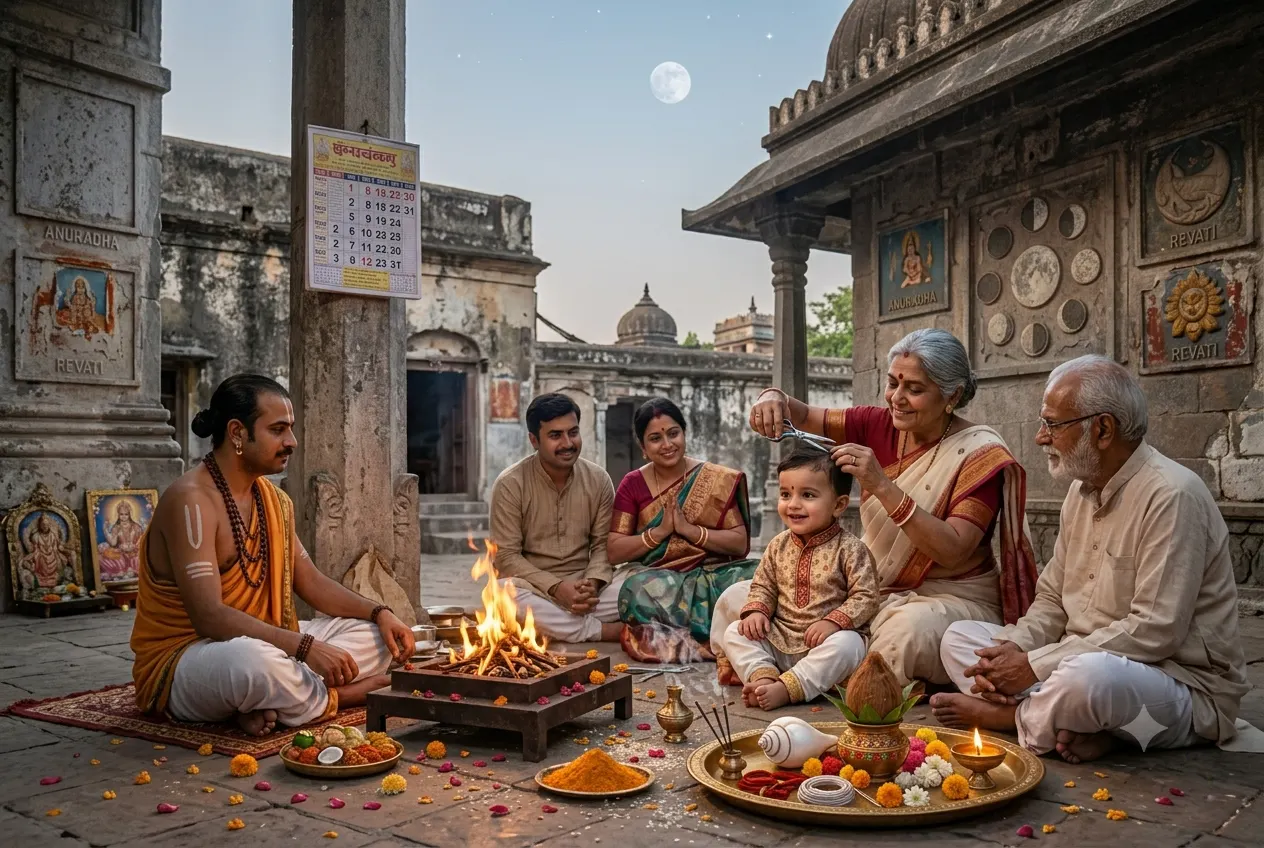
The Mundan ceremony is a sacred Hindu ritual marking a child’s first haircut, symbolizing purification, protection, and new beginnings. The best muhurat generally considers auspicious weekdays, nakshatras, tithis, the child’s kundli, planetary periods, and transits to select a spiritually favorable time.
- ◦Best Days for Mundan Ceremony in Hindu Tradition
- ◦Quick List of Auspicious Factors for Mundan
- ◦What Is a Mundan Ceremony in Hindu Tradition?
- ◦Why Mundan Ceremony Is Important
- ◦Why Shubh Muhurat Is Important for Mundan
- ◦Best Days for Mundan Ceremony
- ◦Auspicious Weekdays for Mundan
- ◦Best Nakshatras for Mundan Ceremony
- ◦Best Tithis for Mundan Ceremony
- ◦Best Months for Mundan Ceremony
- ◦Is Mundan Allowed During Certain Periods?
- ◦When to Avoid Mundan Ceremony
- ◦Mundan Ceremony Muhurat Based on Child’s Kundli
- ◦How to Choose the Right Mundan Muhurat for Your Child
- ◦Conclusion
Best Days for Mundan Ceremony in Hindu Tradition
The best days for Mundan ceremony are Monday, Wednesday, Thursday, and Friday, during auspicious nakshatras like Pushya, Mrigashira, Swati, and Revati, and favorable tithis such as Dwitiya, Tritiya, Panchami, and Saptami.
Quick List of Auspicious Factors for Mundan
- Best Days: Monday, Wednesday, Thursday, Friday
- Best Nakshatras: Pushya, Mrigashira, Swati, Revati
- Best Tithis: 2nd (Dwitiya), 3rd (Tritiya), 5th (Panchami), 7th (Saptami), 10th (Dashami)
A baby’s first haircut is more than just a sweet family moment—it is a sacred milestone deeply rooted in Hindu tradition. The Mundan ceremony, also known as Mundan Sanskar, is believed to cleanse past-life karmas and bless the child with good health, intelligence, and spiritual growth.
For parents, this ritual carries both emotional and spiritual significance. It marks the beginning of a child’s conscious journey in this life, making it one of the most cherished Hindu rituals performed in early childhood.
Choosing the right day for your child’s Mundan ceremony is not just tradition—it is believed to influence their health, fortune, and future. Let’s explore how to select the best shubh muhurat for mundan and understand the factors that truly matter.
Chat free with Muhurta - muhurta – Choose the perfect timing for important life events.
What Is a Mundan Ceremony in Hindu Tradition?
The Mundan ceremony (also called Chudakarana Sanskar) is one of the sixteen important samskaras mentioned in ancient Hindu scriptures. In this ritual, a child’s hair is shaved for the first time, usually during the first, third, or fifth year of life.
According to Vedic beliefs, hair from birth carries impurities and karmic influences from past lives. Shaving it symbolizes purification, growth, and fresh beginnings. Spiritually, it is believed to enhance the child’s mental development and neutralize negative planetary effects.
Families often perform mundan at temples, holy rivers, or at home with proper Vedic rituals. Priests chant mantras while the child’s head is shaved, followed by blessings and festive celebrations.
Tip: For a deeper understanding of astrology’s influence on early-life rituals, explore 12 houses in Vedic astrology explained.
Why Mundan Ceremony Is Important
Mundan is believed to remove past life karmas, purify the child, and support healthy physical and mental development.
It symbolizes a fresh beginning, helping the child grow with positive energy and spiritual protection.
Why Shubh Muhurat Is Important for Mundan
In Vedic astrology, timing is everything. A muhurat for mundan ensures the ceremony occurs when cosmic energies are most supportive. Performing the ritual at the wrong time may reduce its intended blessings.
Astrologers check planetary positions, tithi (lunar day), nakshatra (constellation), and weekday before suggesting a suitable date.
A proper muhurat can:
- Strengthen the child’s health and immunity: Protects the child from illnesses and promotes physical well-being.
- Support mental growth and intelligence: Auspicious timing enhances cognitive development.
- Reduce negative planetary effects: Balances malefic planetary influences in the birth chart.
- Bring peace and prosperity to the family: Creates harmony and positive vibrations at home.
When done at the right time, the ritual becomes spiritually powerful and truly auspicious.
Learn more about timing and cosmic influence in rituals like this in Top Shubh Muhurat Dates in May 2026.
Best Days for Mundan Ceremony
The ideal time for a mundan ceremony is usually between the child’s first and third year, though exact timing depends on the child’s birth chart and family tradition.
- Shukla Paksha (waxing moon phase): Symbolizes growth and positivity.
- Avoid inauspicious planetary periods to maximize blessings.
Astrologers consider:
- Child’s birth nakshatra – Ensures compatibility with cosmic energies.
- Current planetary transits – Avoid challenging combinations.
- Malefic planetary periods – Skipped to ensure smooth blessings.
- Auspicious tithi and weekday combinations – Strengthen spiritual power.
For personalized predictions, astrologers also study planetary effects in Marriage in Astrology: Planets and Houses.
Auspicious Weekdays for Mundan
Weekdays carry different planetary energies in Vedic astrology. Selecting the right weekday enhances the spiritual strength of the ritual.
Recommended weekdays:
- Monday (Moon): Emotional stability and calmness; highly auspicious for children.
- Wednesday (Mercury): Enhances intelligence and communication skills.
- Thursday (Jupiter): Planet of wisdom and blessings; one of the best days for mundan.
- Friday (Venus): Brings harmony and prosperity.
Weekdays generally avoided:
- Saturday (Saturn): May bring delays or obstacles.
- Tuesday (Mars): Sometimes avoided unless astrologically recommended.
Fiinal decisions should always be based on the child’s kundli. Learn more about planetary effects on rituals in Rahu and Mars Conjunction Effects in Horoscope.
Best Nakshatras for Mundan Ceremony
Nakshatras significantly influence the success of a mundan ceremony. Favorable constellations promote growth, health, and longevity.
Auspicious nakshatras:
- Ashwini: Supports healing and vitality
- Rohini: Brings prosperity and happiness
- Mrigashira: Encourages curiosity and intelligence
- Pushya: Highly auspicious for any ritual
- Hasta: Promotes skill and growth
- Swati: Brings independence and strength
- Revati: Ensures protection and nourishment
Nakshatras usually avoided:
- Bharani, Krittika, Ardra, Ashlesha, Magha
For child-focused rituals influenced by nakshatras, also check Astrology Signs About Your Future Partner.
Best Tithis for Mundan Ceremony
Tithi, or lunar day, significantly affects ritual energy.
Auspicious tithis:
- Dwitiya (2nd day): Balance and harmony
- Tritiya (3rd day): Creativity and expansion
- Panchami (5th day): Health and learning
- Saptami (7th day): Vitality and strength
- Dashami (10th day): Success and progress
- Ekadashi (11th day): Spiritual purity
- Trayodashi (13th day): Cleansing and positivity
Tithis to avoid:
- Amavasya, Purnima, Chaturdashi, Ashtami, Navami
The waxing moon phase is generally preferred for growth and positive development. Learn more about auspicious dates in Shubh Muhurat: Dates in April 2026.
Best Months for Mundan Ceremony
Mundan is usually performed in:
- Chaitra
- Vaishakh
- Jyeshtha
- Magh
- Phalguna
These months are considered spiritually favorable and support the child’s well-being.
Is Mundan Allowed During Certain Periods?
Mundan is generally avoided during:
- Chaturmas (four holy months of penance)
- Eclipse periods (Surya or Chandra Grahan)
- When Jupiter or Venus is combust
- Family mourning periods
These restrictions ensure the ritual occurs when cosmic energies are supportive.
When to Avoid Mundan Ceremony
- Amavasya (New Moon)
- Chaturmas period
- Child’s birth Nakshatra
- Inauspicious planetary alignments
- Eclipse periods (Surya or Chandra Grahan)
Mundan Ceremony Muhurat Based on Child’s Kundli
The most accurate mundan date comes from analyzing the child’s birth chart:
- Moon position
- Strength of Lagna (Ascendant)
- Dasha and Antardasha periods
- Jupiter and Saturn placement
- Ongoing transits
Weak or afflicted planets may require remedies before performing the ceremony. Personalized timing ensures the ritual supports the child’s destiny and well-being.
For planetary remedies and insights, also see Bhakoot Dosha Effects and Marriage Remedies.
How to Choose the Right Mundan Muhurat for Your Child
The best Mundan muhurat depends on:
- Child’s birth chart (kundli)
- Moon sign and Nakshatra
- Strength of Lagna (Ascendant)
- Ongoing planetary periods (Dasha)
A personalized muhurat ensures maximum spiritual and astrological benefits.
Conclusion
The mundan ceremony is more than a haircut—it is a sacred ritual symbolizing purification, protection, and new beginnings. Choosing the right shubh muhurat for mundan ensures the child receives divine blessings at the most auspicious cosmic moment.
While weekdays, nakshatras, and tithis provide guidance, a kundli-based muhurat gives the best results. Aligning with the right timing can create a lifetime of positive energy and growth for your child.
Perform the ceremony with devotion, proper rituals, and accurate astrological timing—because every sacred beginning deserves the most auspicious start.

Astro Shub
Vedic Astrology, Vastu Shastra, Numerology, Tarot Reading, Palmistry, Psychic Reading, Reiki Healing | 10 years
With a calm demeanor and an intuitive mind, Astro ShubBose is one of the best astrologer in Balaghat, Madhya Pradesh. His 10 years of experience and focus on Vedic Astrology, Vastu Shastra, Numerology, Tarot Reading, Palmistry, Psychic Reading, Reiki Healing, give his readings depth and relevance.
Frequently Asked Questions
1. What is the ideal age for a Mundan ceremony?
The mundan is usually performed during the child’s first, third, or fifth year, depending on family tradition and the child’s birth chart.
2. Can Mundan be performed at home?
Yes, mundan can be performed at home, temples, or near holy rivers, provided the Vedic rituals and mantras are followed properly.
3. Which nakshatras are best for Mundan?
Favorable nakshatras include Ashwini, Rohini, Mrigashira, Pushya, Hasta, Swati, and Revati, as they promote growth, intelligence, and health.
4. Are there any periods when Mundan should be avoided?
Yes, Mundan is avoided during Chaturmas, eclipse periods, Jupiter or Venus combustion, and family mourning periods.
5. Why is shubh muhurat important for Mundan?
A shubh muhurat ensures the ceremony aligns with cosmic energies, strengthening the child’s health, intelligence, and overall spiritual growth.
Related Blogs

Saraswati Puja: Science Behind Yellow Sweets
Yellow sweets on Saraswati Puja aren't just tradition—they're science, emotion, and energy in one. Find out how colour, food, and devotion come together in this surprising story of wisdom and wellness

Are You Doing Shiv Puja In The Right Way?
Shiv Pooja isn’t about perfection—it’s about presence. Discover the small yet powerful steps you might be skipping, and how they can transform your prayer into a deeper, more personal experience.

Easy Lakshmi Pooja Steps For Inner Peace
You don’t need perfection to feel divine peace. Just a diya, a flower, and a moment of stillness. This gentle Lakshmi Pooja is a soft reminder that grace begins within.
Navgraha Pooja: A Powerful Spiritual Start
Struggling with delays, confusion, or emotional heaviness? Navgraha Pooja might be the spiritual shift you need. Learn how this ancient practice helps you align with cosmic energy and reclaim inner peace.