Lal Kitab: The Complete Guide to India's 'Red Book' of Astrology
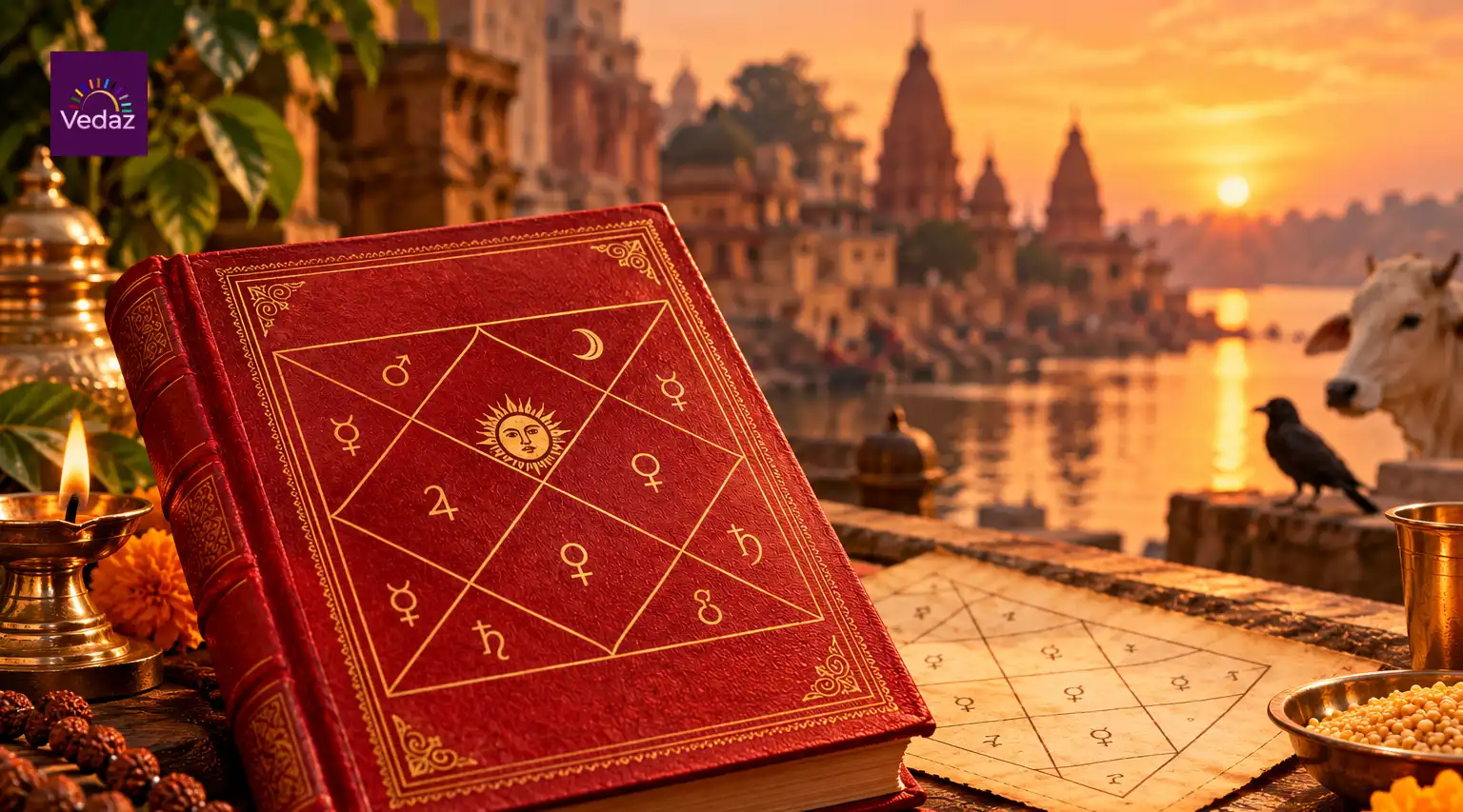
Lal Kitab ("the red book") is a North Indian system of astrology and palmistry from the early 20th century. It's known for its fixed-house chart and its simple, practical remedies (upay). In a Lal Kitab kundli, Aries is always the 1st house, and planets are read by house instead of by sign. Its remedies use everyday actions, like charity, feeding animals and the way you behave, rather than costly rituals.
- ◦What Is Lal Kitab?
- ◦How Lal Kitab Differs From Vedic Astrology
- ◦Pakka Ghar: The Permanent Houses of Planets
- ◦Key Lal Kitab Concepts
- ◦Lal Kitab Remedies (Upay): What They Look Like
- ◦Using Lal Kitab Remedies Safely and Responsibly
- ◦Lal Kitab Kundli: How to Get One
- ◦Lal Kitab vs Parashari Remedies: A Comparison
- ◦Common Myths About Lal Kitab
- ◦How Lal Kitab Reads Planets in Houses: General Themes
- ◦Lal Kitab and Palmistry
- ◦Questions to Ask a Lal Kitab Practitioner
- ◦Who Should Consider Lal Kitab?
- ◦Lal Kitab in Everyday Life
- ◦Universal Conduct Remedies Everyone Can Follow
- ◦The Bottom Line
Lal Kitab is one of the most searched astrology topics in North India. It gets about 18,000 searches a month, with thousands more for "Lal Kitab kundli." People love it for one thing above all: remedies that are simple, cheap and practical. But Lal Kitab is also widely misunderstood, and its remedies are sometimes copied without the background they need.
This guide explains where Lal Kitab comes from, how its chart is different from a standard Vedic kundli, its key ideas (pakka ghar, rin and sleeping planets), and how to approach its remedies safely.
What Is Lal Kitab?
Lal Kitab (लाल किताब) means "red book," named after the red binding of its first volumes. It's a body of work on astrology and palmistry (samudrik shastra), published in five volumes between 1939 and 1952, originally in Urdu. It's widely credited to Pandit Roop Chand Joshi of Punjab. Its origins are debated, though, and some followers trace its ideas back to older traditions.
Lal Kitab blends:
- Vedic astrological ideas (planets, houses).
- Palmistry: the lines and mounts of the hand.
- Folk wisdom: practical remedies drawn from everyday life in North India.
Its language is poetic and often cryptic, which is why practitioners read it in different ways.
How Lal Kitab Differs From Vedic Astrology
| Feature | Vedic (Parashari) astrology | Lal Kitab |
|---|---|---|
| Chart basis | Lagna (ascendant) sign is the 1st house | Aries is always the 1st house (Kaal Purush chart) |
| Signs | Central to interpretation | Largely ignored; houses matter |
| Planet reading | Sign, house, aspects, dignity | House position, planetary "friendships", pakka ghar |
| Timing | Vimshottari dasha | Its own age-based cycles (e.g., 35-year cycle) and annual charts (varshphal) |
| Remedies | Mantra, charity, puja, gemstones | Simple practical upay: objects, actions, conduct |
| Palmistry | Separate discipline | Built in |
How a Lal Kitab kundli is made: Start with your Vedic birth chart. Keep each planet in the same house it has from your lagna. Then renumber the houses so the 1st house holds Aries, the 2nd Taurus, and so on. The planets stay in their houses, and the signs are standardised. That's why Lal Kitab astrologers say "Saturn in the 4th house" without mentioning the sign.
Pakka Ghar: The Permanent Houses of Planets
Lal Kitab gives each planet a pakka ghar (permanent house), where it's thought to be naturally at home. According to the Lal Kitab tradition:
| Planet | Pakka ghar (permanent house) |
|---|---|
| Sun | 1st |
| Moon | 4th |
| Mars | 3rd and 8th |
| Mercury | 7th |
| Jupiter | 2nd, 5th, 9th and 12th |
| Venus | 7th |
| Saturn | 8th and 10th |
| Rahu | 12th |
| Ketu | 6th |
How a planet's actual house relates to its pakka ghar is a key part of reading Lal Kitab.
Key Lal Kitab Concepts
Rin (karmic debts)
Lal Kitab talks about rin, which are debts carried from ancestors or past actions. They're identified from specific planetary placements. The best known is Pitra rin (ancestral debt). Others are linked to relatives, women of the family, or how you treat other people. Remedies often involve the whole family acting together, such as giving to charity as a group.
Like every idea about karma, rin should be understood as a call to responsible action, not a reason for fear or guilt.
Sleeping (soya hua) planets and houses
A planet or house is called "sleeping" if certain conditions aren't met. One example is when no planet aspects a house. Sleeping planets are said to give fewer results until they're "awakened," often through particular remedies or life events.
Planetary friendships and enmities
Lal Kitab has its own view of which planets are friends and which are enemies. It uses this to judge how planets in the same or related houses affect each other.
Blind (andha) and semi-blind charts
Some arrangements are called "blind" or "half-blind" horoscopes, where results may be muddled or delayed. Practitioners read these in very different ways.
Varshphal (annual chart)
Lal Kitab uses its own annual chart. It moves planets through the houses by a fixed table based on age, to describe the themes of each year.
Lal Kitab Remedies (Upay): What They Look Like
Lal Kitab's reputation rests on its remedies. Common types include:
- Charity (daan): giving particular items, like grains, jaggery, oil or clothing, on certain days.
- Feeding: feeding cows, dogs, crows, birds or fish, linked to particular planets.
- Flowing in water: offering certain items into flowing water.
- Carrying or keeping objects: for example, a silver item or a square piece of metal.
- Changes in conduct: respecting elders, avoiding alcohol, keeping promises, caring for family members.
- Household practices: keeping certain areas clean, and avoiding certain items at home.
Why they appeal: they're cheap, they're part of everyday life, and you don't need anyone in the middle.
Using Lal Kitab Remedies Safely and Responsibly
Lal Kitab remedies are generally simple, but simple doesn't mean you should do them blindly. Here are some practical guidelines:
- Remedies are chart-specific. A remedy that suits one placement can be wrong for another. Lal Kitab itself warns against doing remedies without proper analysis.
- One remedy at a time. Traditional advice is to do a remedy steadily for a set period (often 40 or 43 days) and not to mix many at once.
- Do no harm. Any remedy must be kind to animals, people and the environment. Feed animals suitable food. Don't pollute rivers with plastic or harmful items. The intent is to offer biodegradable things respectfully.
- Never under pressure. A genuine Lal Kitab practitioner has no need to scare you or charge large sums for "special" upay.
- Conduct remedies first. Many Lal Kitab remedies are about behaviour: honesty, respect, staying sober and caring for family. These are safe for everyone.
- Not a substitute for professionals. Health, legal and money matters need qualified professionals.
Lal Kitab Kundli: How to Get One
To make a Lal Kitab kundli:
- Make your regular Vedic kundli with accurate date, time and place of birth. Try the free Vedaz kundli calculator.
- Note each planet's house from the lagna.
- Renumber the houses so the 1st house is Aries, the 2nd Taurus and so on, keeping the planets in their houses.
- Interpret by house, pakka ghar and planetary relationships, ideally with a practitioner who knows Lal Kitab well.
The Lal Kitab chart depends entirely on house positions, so an accurate birth time is essential. Without it, the house placements, and the remedies built on them, can't be trusted. If you don't know your time, see our kundali by date of birth guide.
Lal Kitab vs Parashari Remedies: A Comparison
| Parashari remedies | Lal Kitab remedies | |
|---|---|---|
| Typical form | Mantra, puja, homa, gemstones, charity | Everyday objects, feeding, charity, conduct |
| Cost | Can range widely | Usually very low |
| Basis | Planetary dignity, dasha, house lordship | House placement, pakka ghar, rin |
| Duration | Often tied to dasha periods | Often 40–43 days |
| Shared foundation | Charity, service, respect, discipline | Charity, service, respect, discipline |
Notice what they share. In every system, the safest and most widely recommended remedies are good conduct, service and charity.
Common Myths About Lal Kitab
- "Lal Kitab remedies work instantly." Remedies are about steady practice and changed behaviour, not overnight miracles.
- "More remedies are better." The Lal Kitab tradition advises doing one remedy at a time, and doing it properly.
- "Lal Kitab can fix anything." No astrology system can guarantee results in health, law, exams or relationships.
- "Lal Kitab is the same as Vedic astrology." It draws on Vedic ideas, but it uses a different chart method and its own rules of interpretation.
- "You need a costly Lal Kitab expert for every remedy." Many conduct-based remedies are universal and free. Remedies tied to a specific placement benefit from an experienced practitioner, but they should never cost a fortune.
How Lal Kitab Reads Planets in Houses: General Themes
Lal Kitab's interpretations are detailed and differ between practitioners, but some house themes are widely shared:
- 1st house: the self and one's "throne." A planet here strongly shapes personality and public image.
- 2nd house: family, saved-up wealth and in-laws. It's seen as a temple-like house linked to Jupiter.
- 3rd house: siblings, courage and effort.
- 4th house: mother, home and peace of mind. It's the Moon's own house.
- 5th house: children, intelligence and education.
- 6th house: maternal relatives, service, enemies and disease. It's Ketu's house.
- 7th house: marriage, partnerships and business. Venus and Mercury share it.
- 8th house: hidden matters, sudden events and longevity. It's linked to Saturn and Mars.
- 9th house: fortune, ancestors and religion. It's strongly linked to Jupiter.
- 10th house: career, father's status and worldly work. It's Saturn's house of action.
- 11th house: income and gains. It's often read as showing what the native earns through their own efforts.
- 12th house: expenses, sleep, travel and spiritual comfort. It's Rahu's house.
A Lal Kitab practitioner puts these together with each planet's nature, its pakka ghar, aspects in the Lal Kitab sense, and the person's real life, to judge results and suggest upay.
Lal Kitab and Palmistry
Lal Kitab stands out because it brings palmistry and astrology together. Practitioners may look at:
- Lines: life, head, heart, fate and others.
- Mounts: raised areas linked to planets (Jupiter under the index finger, Saturn under the middle finger, Sun under the ring finger, Mercury under the little finger, Venus at the base of the thumb, the Moon on the outer palm).
- Signs and marks, used to cross-check the horoscope.
Some Lal Kitab readers use the palm to check or correct a horoscope when the birth time is uncertain. As with all palmistry, the readings are traditional and differ from reader to reader.
Questions to Ask a Lal Kitab Practitioner
- Which planet and house is this remedy for, and why?
- How long should I do it, and how will I know when to stop?
- Is there anything in this remedy that could harm animals, people or the environment? (If so, ask for an alternative.)
- Can I start with conduct-based remedies first?
- What does this cost? Genuine Lal Kitab upay are usually very cheap.
A practitioner who answers clearly and kindly, without pressure, is a good sign.
Who Should Consider Lal Kitab?
Lal Kitab can be a good fit if you:
- Prefer practical, low-cost remedies.
- Want a house-focused view that goes alongside your Vedic chart.
- Are fine with a system whose texts different practitioners read differently.
Many astrologers use Lal Kitab alongside Parashari astrology. They read the chart with Parashari methods and draw on Lal Kitab for simple remedies. Learn about other schools in our Vedic and Hindu astrology guide.
Lal Kitab in Everyday Life
For many North Indian families, Lal Kitab isn't so much a separate "system" as a store of practical household wisdom. Feed a cow on Thursdays, offer water to the Sun, keep silver at home, respect the eldest. Whether or not you follow its astrology, its spirit of simple, kind, disciplined living is worth keeping.
Universal Conduct Remedies Everyone Can Follow
Many Lal Kitab teachings stress everyday conduct. These are safe for anyone, whatever their chart:
- Respect elders, especially parents and grandparents, and ask for their blessings.
- Keep your word. Honesty strengthens every planet.
- Avoid alcohol and intoxicants. This is a recurring Lal Kitab theme.
- Feed the hungry and care for animals kindly.
- Keep your home clean and orderly, especially the entrance and kitchen.
- Treat sisters, daughters and the women of the family with respect and generosity.
- Repay debts and avoid needless borrowing.
- Help with family obligations. Lal Kitab's idea of rin often points to shared family responsibility.
These are the kind of remedies nobody ever regrets doing.
How long should a Lal Kitab remedy be done? Traditional advice is to do a remedy steadily for a fixed period, often 40 or 43 days, and to do one remedy at a time instead of many at once.
Is Lal Kitab written in Hindi or Urdu? The original Lal Kitab volumes were written in Urdu. Hindi and English translations and commentaries are now easy to find.
Can Lal Kitab remedies be done by women and children? Conduct-based remedies like respect, honesty and charity suit everyone. For remedies tied to a specific placement, a practitioner usually says who should do them. Children's remedies are typically done by parents on their behalf.
The Bottom Line
Lal Kitab is a fascinating branch of Indian astrology. It's centred on houses, it's poetic and practical, and its remedies are ones anyone can afford. Its real wisdom is in its stress on conduct, family responsibility and everyday kindness. Use it thoughtfully. Get an accurate chart, choose remedies with care, do one at a time, and never act out of fear.
Make your free kundli, learn about other schools in our Vedic astrology guide, or ask Vedaz to explain your house placements.
Nandini Kulkarni
Lal Kitab, Yantras, Kuber Yantra, traditional remedies, doshas | 12 years
Nandini Kulkarni writes about traditional remedies by explaining their origins, customary uses, and place within astrological traditions. Her approach prioritizes context over sensational claims, helping readers understand unfamiliar practices while avoiding promises of guaranteed results or fear-based interpretations.
Frequently Asked Questions
1. What is Lal Kitab?
Lal Kitab is a North Indian system of astrology and palmistry, published in five volumes between 1939 and 1952 and widely credited to Pandit Roop Chand Joshi. It's known for its fixed-house chart and simple practical remedies.
2. How is a Lal Kitab kundli different from a normal kundli?
In a Lal Kitab kundli, Aries is always in the 1st house, and planets keep the house positions they have from your lagna. Interpretation focuses on houses instead of signs.
3. What is pakka ghar in Lal Kitab?
Pakka ghar is the permanent house of a planet in Lal Kitab. For example, it's the 1st for the Sun, the 4th for the Moon and the 12th for Rahu. How a planet relates to its pakka ghar shapes its results.
4. What is Pitra rin in Lal Kitab?
Pitra rin is an ancestral karmic debt that's identified from certain planetary placements in Lal Kitab. Remedies usually involve family charity and responsible action, not fear.
5. Are Lal Kitab remedies safe?
Most are simple and safe when done thoughtfully, but they're chart-specific. Do one at a time, avoid harming animals or the environment, and be careful with anyone who charges large sums or uses fear.
Related Blogs

Boost Your Health with Astrology
Boost your health with astrology using zodiac-based habits, wellness tips, and simple routines for better physical and mental balance.

The Socking Truth Behind Wearing A Black Thread
Uncover the mystery behind the black thread. From protection to spiritual energy—here’s why everyone’s suddenly wearing one.

Hidden Messages In Your Moles
What if that little mole on your cheek is more than just a mark? Explore the fascinating meanings behind mole placements and what they reveal about your future.

Who Is Your Ishta Devata?
Explore the concept of your personal God in Hinduism. Learn how to discover, connect with, and build a relationship with your Ishta Devata for inner peace and spiritual growth.