Neem Karoli Baba Mandir: A Place That Changes You Forever
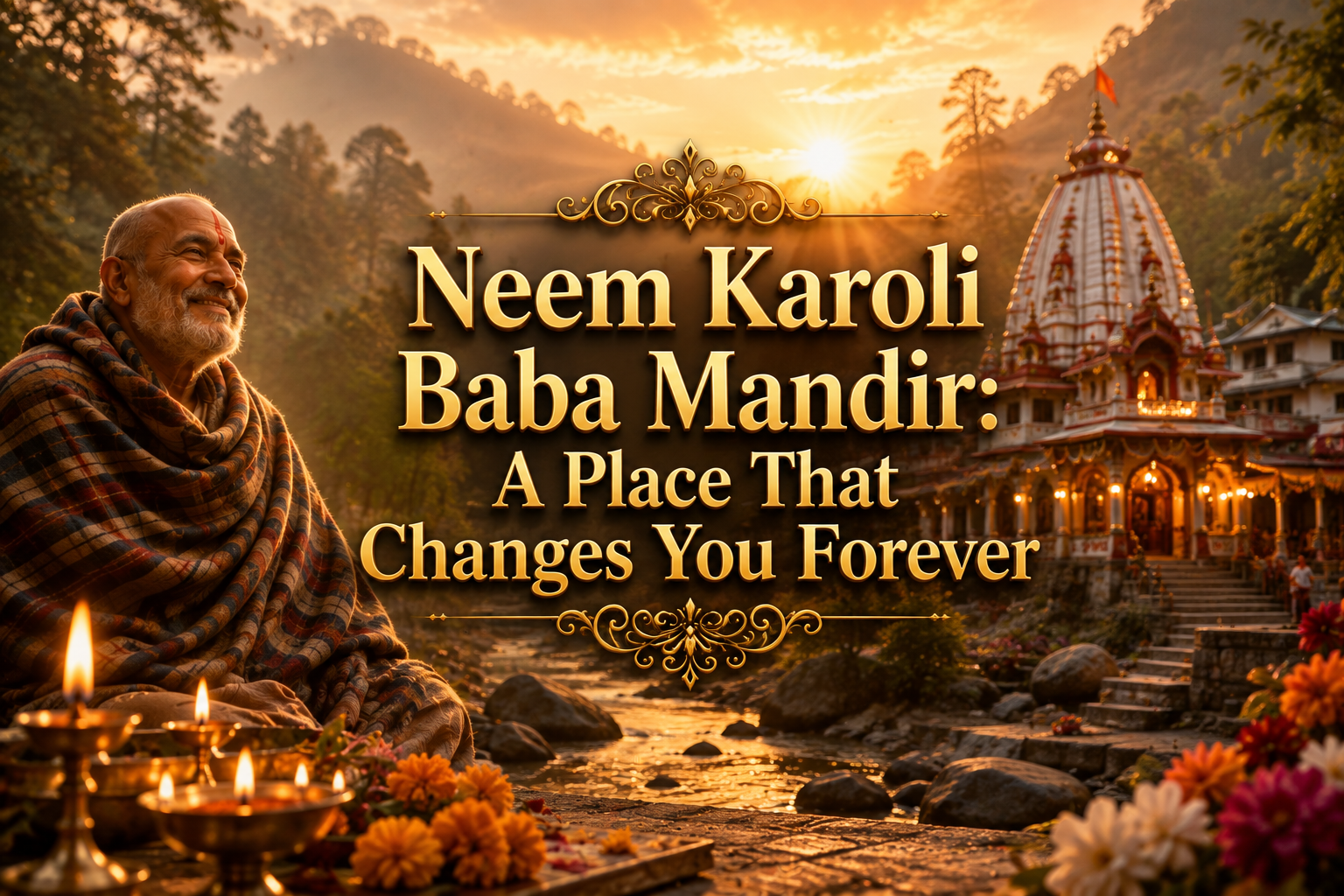 Neem Karoli Baba Mandir, also known as Kainchi Dham in Uttarakhand, is a sacred ashram dedicated to Neem Karoli Baba. Known for its peaceful energy and global following, it attracts devotees seeking spiritual transformation, guidance, and inner calm in 2026.
- ◦Introduction
- ◦What is Neem Karoli Baba Mandir famous for?
- ◦Why Kainchi Dham Feels Different from Other Temples
- ◦Neem Karoli Baba Mandir Darshan Timings (2026)
- ◦Neem Karoli Baba Mandir History: Why Was This Ashram Built?
- ◦How to Reach Neem Karoli Baba Mandir
- ◦Best Time to Visit Neem Karoli Baba Mandir
- ◦What Happens During Darshan at Kainchi Dham?
- ◦Why Do People Believe Neem Karoli Baba Still Guides Them?
- ◦Neem Karoli Baba Mandir: Key Elements and Their Impact
- ◦What to Do During Your Visit to Kainchi Dham
- ◦Conclusion
Introduction
Some places don’t just calm you.
They shift something inside you.
Neem Karoli Baba Mandir, also known as Kainchi Dham in Uttarakhand, is one of those rare places where people arrive with questions and leave with a quiet sense of clarity. It is not defined by grand architecture or rituals, but by the feeling it creates.
Surrounded by hills and located along the Nainital–Almora road, the ashram feels simple on the outside. Yet, it has attracted devotees from across the world, including well-known figures, all drawn by the same thing—an experience that feels deeply personal.
In this guide, you will understand the darshan timings, history, spiritual significance, and why Neem Karoli Baba Mandir continues to change people in 2026. Some places don’t give answers directly. They help you find them within yourself.
What is Neem Karoli Baba Mandir famous for?
Neem Karoli Baba Mandir is famous for its association with Neem Karoli Baba, a revered saint known for his teachings on love, service, and devotion. The temple, also called Kainchi Dham, is known for its peaceful environment and the belief that it brings clarity, guidance, and spiritual transformation.
Why Kainchi Dham Feels Different from Other Temples
Kainchi Dham does not function like a typical temple where rituals define the experience. Instead, it is centered around simplicity and presence. There are no elaborate systems that dictate how you should pray or what you should do.
This simplicity shifts the focus inward. Devotees often describe feeling a sense of calm that is not created by the environment alone, but by how the space allows them to disconnect from noise and reconnect with themselves.
The teachings of Neem Karoli Baba emphasized love, selfless service, and faith. These ideas continue to shape the atmosphere of the ashram even today, much like the deeper wisdom explored in Strong Jupiter in Horoscope and Its Blessings.
The power of this place is not in what it shows.
It is in what it allows you to feel.
Neem Karoli Baba Mandir Darshan Timings (2026)
Kainchi Dham follows a simple but structured daily schedule. Timings may vary slightly depending on the season, but the general flow remains consistent.
Neem Karoli Baba Mandir Timing Table
| Session | Timings |
|---|---|
| Temple Opening | Around 6:00 AM – 6:45 AM |
| General Darshan | 6:00 AM – 8:00 PM |
| Winter Closing | Around 6:00 PM |
| Morning Aarti | Around 7:00 AM |
| Evening Aarti | Around 7:00 PM |
Darshan is available throughout the day, with slight variations depending on weather and seasonal conditions. In winter months, the temple may close earlier in the evening.
Important Daily and Special Details
The temple remains open for most of the day, allowing devotees to visit at their convenience. Tuesdays are considered especially significant, often featuring extended hours, kirtan, and prasad distribution in the evening.
The most important day of the year is June 15th, celebrated as the Bhandara or Founder’s Day. On this day, thousands of devotees gather, and general access may be restricted due to the scale of the event.
Understanding these details helps you plan your visit more realistically.
Neem Karoli Baba Mandir History: Why Was This Ashram Built?
Neem Karoli Baba, also known as Maharaj-ji, was a spiritual saint widely respected for his simple yet profound teachings. He emphasized devotion to God, service to others, and unconditional love.
Kainchi Dham was established in 1964 when Neem Karoli Baba chose this location as a place for spiritual practice and gathering. The ashram was built with the intention of creating a space where people could come not just to worship, but to experience inner peace.
Over time, the ashram gained recognition not only in India but globally. Devotees such as Steve Jobs and Mark Zuckerberg have publicly acknowledged visiting or being influenced by Neem Karoli Baba’s teachings.
Unlike many religious institutions built over centuries, Kainchi Dham developed organically through the presence and influence of the saint himself.
This is not just a place built for devotion.
It is a place built around a life that inspired devotion.
How to Reach Neem Karoli Baba Mandir
Neem Karoli Baba Mandir is located on the Nainital–Almora road in Uttarakhand, approximately 17–20 km from Nainital.
The nearest railway station is Kathgodam, about 35 km away, which is well connected to major cities like Delhi. From Kathgodam, taxis and buses are easily available.
The nearest airport is Pantnagar Airport, located around 70 km from the temple. From there, road transport is the most convenient option.
From Delhi, the temple is roughly a 6-hour drive, making it accessible for both short trips and extended visits.
The journey itself becomes part of the experience.
Best Time to Visit Neem Karoli Baba Mandir
The best time to visit Kainchi Dham is between March and June and again from September to November when the weather is pleasant and travel conditions are favorable.
Early mornings, especially on weekdays, offer a quieter and more peaceful experience compared to weekends.
Tuesdays are considered spiritually significant, but they also tend to be more crowded. Planning your visit with proper timing guidance like Shubh Muhurat in October 2026 for New Beginnings can enhance the experience.
Choosing the right time shapes the quality of your experience.
What Happens During Darshan at Kainchi Dham?
Darshan at Neem Karoli Baba Mandir is simple and calm. There are no complex rituals or strict procedures that need to be followed.
Devotees enter the ashram, spend time in prayer or silence, and move through the space at their own pace. The environment encourages reflection rather than activity.
The experience is not about how much you do.
It is about how present you are.
Why Do People Believe Neem Karoli Baba Still Guides Them?
One of the most unique aspects of Kainchi Dham is the belief that Neem Karoli Baba continues to guide devotees even after his physical presence.
Many visitors share personal experiences of finding answers, clarity, or unexpected solutions after visiting the ashram. While these experiences cannot be measured, they form the foundation of the temple’s reputation.
This belief is not based on rituals, but on lived experiences shared across generations.
Faith here grows through experience.
Neem Karoli Baba Mandir: Key Elements and Their Impact
| Element | Meaning | Experience |
|---|---|---|
| Neem Karoli Baba Teachings | Love and service | Inner clarity |
| Ashram Simplicity | Minimal structure | Mental calm |
| Kainchi Dham Location | Natural surroundings | Emotional balance |
| Global Devotee Base | Shared belief | Trust and connection |
| Tuesday Gatherings | Spiritual focus | Collective energy |
What to Do During Your Visit to Kainchi Dham
Approaching Kainchi Dham requires a mindset of openness rather than expectation. It is not a place where structured rituals guide your actions, so allowing yourself to simply sit, observe, and reflect can make the experience more meaningful.
Wearing modest clothing is recommended, and photography is not permitted inside the ashram, so it is best to focus fully on the experience rather than capturing it.
Accommodation within the ashram is limited, so staying in nearby Nainital is often more practical. Planning your visit in advance ensures a smoother experience, especially during peak seasons. If you seek deeper clarity in life decisions, you can also Chat free with an AI Astrologer Moksha - moksha – Achieve spiritual growth and inner peace through guidance.
Sometimes, the simplest visits leave the deepest impact.
Conclusion
Neem Karoli Baba Mandir is not defined by rituals, scale, or structure, but by the quiet transformation it creates within those who visit.
It is a place where belief is not imposed, but discovered through experience. The simplicity of the ashram, combined with the legacy of Neem Karoli Baba, creates an environment that feels both grounding and deeply personal.
Whether you come seeking peace, clarity, or simply curiosity, Kainchi Dham offers something that goes beyond expectation. Many seekers also explore subtle signs and meanings like 911 Angel Number Meaning: A Wake Up Call from the Universe as part of their spiritual journey.
And that is why Neem Karoli Baba Mandir continues to change people long after they leave.
Acharya Shweta
Vedic astrology | 7 Years
Acharya Shweta is a Vedic astrologer who helps people understand their life patterns, emotions, and personal challenges through astrology. Her areas of expertise include Vedic and Prashna Astrology, Vastu, Numerology, Astro Counselling, Life Coaching, Face Reading, and Psychic guidance. She takes a simple and practical approach, using these traditional practices to help people find greater clarity, balance, and direction in life.
Frequently Asked Questions
1. Where is Neem Karoli Baba Mandir located?
Neem Karoli Baba Mandir, also known as Kainchi Dham, is located on the Nainital–Almora road in Uttarakhand, about 17–20 km from Nainital. It is surrounded by hills and known for its peaceful environment.
2. What are the darshan timings of Neem Karoli Baba Mandir?
Darshan is generally available from around 6:00 AM to 8:00 PM daily, with winter timings often closing earlier around 6:00 PM. Morning and evening aarti usually take place around 7:00 AM and 7:00 PM.
3. Why is Kainchi Dham so famous?
Kainchi Dham is famous for Neem Karoli Baba’s teachings on love, service, and devotion. It is also known for the belief that visitors experience inner clarity and guidance after visiting.
4. What is special about Tuesday at Neem Karoli Baba Mandir?
Tuesday is considered especially significant, with extended hours, kirtan, and prasad distribution. It attracts a larger number of devotees compared to other days.
5. What is the best time to visit Kainchi Dham?
The best time to visit is between March–June and September–November when the weather is pleasant. Early mornings on weekdays offer a quieter experience.
6. Is there any entry fee for Neem Karoli Baba Mandir?
No, there is no entry fee to visit Kainchi Dham. The ashram is open to all devotees free of cost.
7. How can I reach Neem Karoli Baba Mandir?
The nearest railway station is Kathgodam (about 35 km away), and the nearest airport is Pantnagar (around 70 km). From there, taxis and buses are easily available.
8. Is photography allowed inside Kainchi Dham?
Photography is not permitted inside the ashram premises. Visitors are encouraged to respect the rules and focus on the experience.
9. Is accommodation available at Kainchi Dham?
Accommodation inside the ashram is very limited, so most visitors stay in nearby Nainital, which is about 18–20 km away.
10. Why do people believe Neem Karoli Baba still guides them?
Many devotees believe Neem Karoli Baba continues to guide them through life experiences and inner clarity. This belief is based on personal experiences shared by visitors over time.
Related Blogs

Why Ram Mandir in Ayodhya Means Everything to Millions ?
This is not just a temple—it’s faith, history, and identity coming together. Discover why Ram Mandir matters so deeply.

The Hidden Story of Ram and Ravan
What if Ram and Ravan were never just hero and villain? The real story is deeper than you think.

Inside Kamakhya: India's Most Mysterious Temple of Shakti
Not every temple has an idol. Kamakhya doesn’t—and that’s where the mystery begins.

Why Devotees Belief in Banke Bihari Temple
In this temple, the deity doesn’t just get worshipped—He connects. Discover why faith here feels different.