The Hidden Story of Ram and Ravan
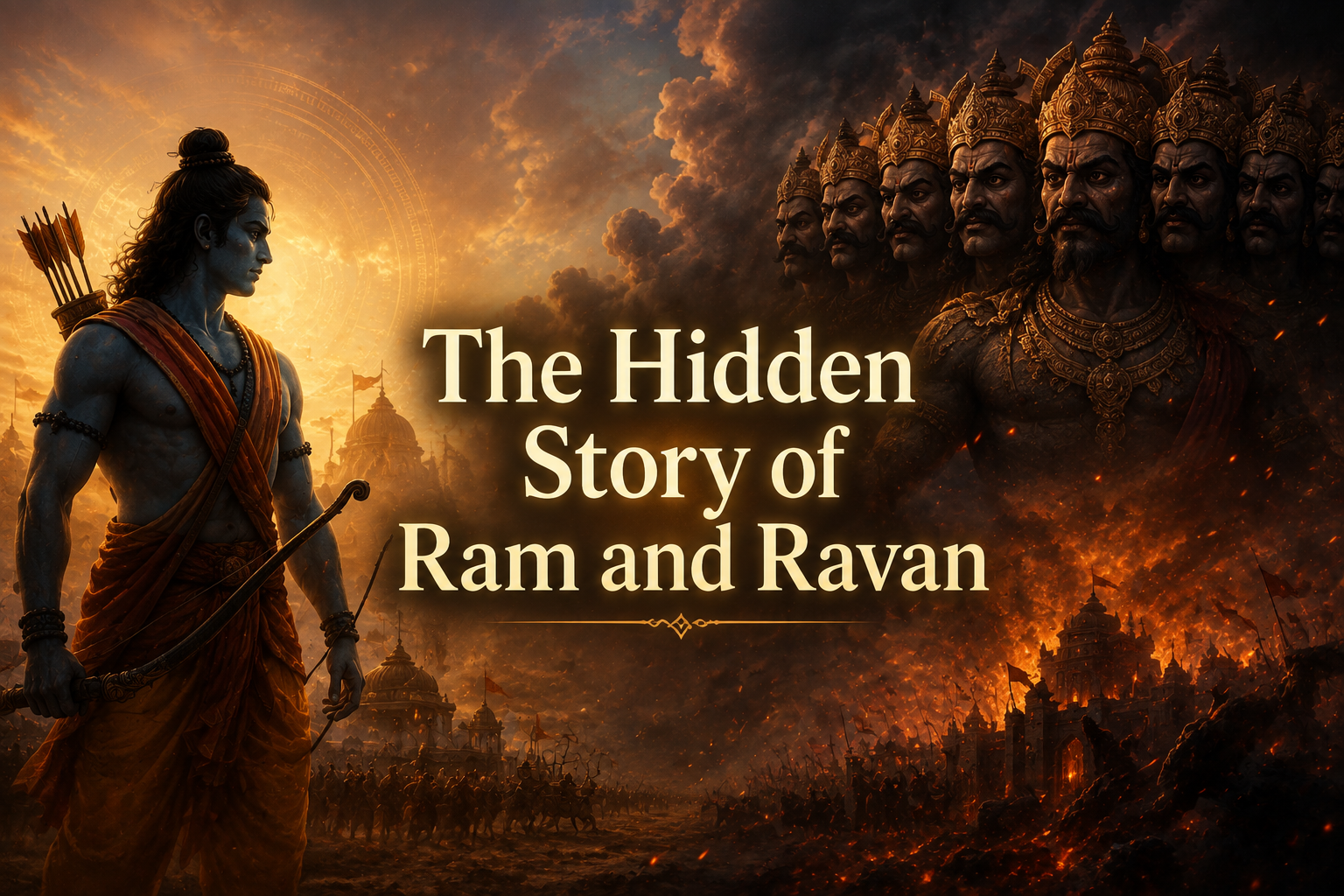
The story of Ram and Ravan is more than good vs. evil—it symbolizes the internal conflict between dharma and ego. Ram represents discipline, clarity, and adherence to duty, while Ravan embodies knowledge and power destroyed by uncontrolled ego. Hidden stories like Urmila's sacrifice, Ravan's navel weakness, and Vibhishana choosing dharma over loyalty reveal the Ramayana as a psychological map of forces within every individual.
- ◦Introduction
- ◦What Is the Real Meaning of Ram and Ravan?
- ◦The Lesser-Known Side of Ravan
- ◦Hidden Aspects of the Ram–Ravan Conflict
- ◦The Spiritual Symbolism Behind the Story
- ◦The Hidden Story of Rama’s Ring
- ◦The Untold Sacrifices Behind the Story
- ◦Why Ram Wins and Ravan Falls
- ◦What This Story Really Teaches You
- ◦Conclusion
Introduction
The story of Ram and Ravan is often told as a simple battle between good and evil. But when you look deeper into the Ramayana, it becomes clear that this is not just a story of a hero defeating a villain. It is a layered narrative about human nature, choices, ego, duty, sacrifice, and the balance between power and discipline. The real depth of this story lies in what it reveals about us.
At its core, the Ramayana is not just history or mythology—it is a psychological and spiritual map. Ram represents order, restraint, and dharma. Ravan represents brilliance, ambition, and ego. And the conflict between them is something that exists within every individual.
What Is the Real Meaning of Ram and Ravan?
The story is not about one being completely right and the other completely wrong. Instead, it shows what happens when qualities go out of balance. Ram is not just “good”—he is controlled, disciplined, and aligned with dharma even when it costs him personally. Ravan is not just “evil”—he is intelligent, powerful, and deeply devoted, but destroyed by his inability to control his ego.
This is what makes the story timeless. It is not about choosing sides. It is about understanding consequences.
The Lesser-Known Side of Ravan
Ravan is one of the most misunderstood figures in the Ramayana. He is often reduced to a villain, but his character is far more complex. He was a highly learned scholar, a master of the Vedas, an exceptional musician, and a devoted follower of Lord Shiva. His ten heads are not just symbolic of power—they represent knowledge across different domains.
There are stories that describe how Ravan performed intense penance, even sacrificing his own heads to please Lord Shiva. Each time, they grew back, symbolizing both his devotion and his resilience. His strength was not accidental—it was earned.
But this is where the turning point lies. Despite having knowledge, power, and devotion, Ravan lacked humility. His downfall was not due to lack of intelligence—it was due to uncontrolled ego. This contrast is what makes his character so powerful. He had everything required to be great, but one flaw destroyed everything.
Hidden Aspects of the Ram–Ravan Conflict
| Story Element | Character Focus | Hidden Meaning |
|---|---|---|
| Intentional War | Ravan | Destiny and liberation may operate beyond visible actions |
| Hidden Weakness | Ravan | Even the most powerful have a vulnerable core |
| Choosing Dharma | Vibhishana | Truth must be chosen over loyalty when values clash |
| Silent Wisdom | Mandodari | Ignored wisdom often leads to downfall |
Silent Wisdom
Some interpretations suggest that Ravan was aware of who Ram truly was—an incarnation of Vishnu. In certain traditions, it is believed that Ravan knew that being defeated by Ram would grant him liberation. This adds a deeper layer to the conflict. It transforms the battle from revenge into destiny.
This perspective does not justify his actions, but it adds complexity. It suggests that even opposition can play a role in a larger cosmic balance.
Ravan’s Hidden Weakness
Ravan was granted a powerful boon that made him nearly invincible. However, like most such boons in mythology, it came with a condition. His vulnerability lay in a specific point—his navel, believed to contain an अमृत (nectar-like essence). It was only when this secret was revealed, with the help of Vibhishana, that Ram was able to defeat him.
This detail reflects a deeper truth: no matter how powerful someone becomes, there is always a point of weakness. And often, that weakness is hidden beneath layers of strength. Similar patterns of hidden vulnerabilities and transformation can also be understood through Planets in 8th House and Hidden Life Transformations.
The Role of Vibhishana
Vibhishana, Ravan’s own brother, chose to stand with Ram. This is not just a story of betrayal—it is a story of choosing dharma over loyalty. Vibhishana represents the voice of truth within difficult situations. He reminds us that standing for what is right is often uncomfortable, especially when it goes against family or familiarity.
Mandodari’s Silent Strength
After Ravan’s death, some traditions state that Mandodari, his queen, later married Vibhishana when he became the king of Lanka. This is not just a narrative detail—it reflects continuity, stability, and the restoration of order after chaos. Mandodari herself is often seen as a wise and grounded figure who repeatedly advised Ravan against his decisions, but was not heard.
Her role highlights another theme: wisdom is not always loud, but ignoring it has consequences.
The Spiritual Symbolism Behind the Story
Many interpretations of the Ramayana see the entire story as an internal journey rather than an external battle. In this view, Ram represents the soul, Sita represents the mind, Ravan represents ego, and Hanuman represents the life-force or devotion.
When ego (Ravan) takes control of the mind (Sita), the soul (Ram) must rely on strength, discipline, and devotion (Hanuman) to restore balance. This interpretation transforms the story into something deeply personal. It is no longer about ancient characters—it becomes about inner conflict.
The Hidden Story of Rama’s Ring
One lesser-known tale speaks about a moment when Ram drops his ring into the underworld, and Hanuman goes to retrieve it. When Hanuman reaches there, he finds countless identical rings. He is told that each ring belongs to a different Ram from a different cycle of time.
This story suggests that the Ramayana is not a one-time event. It is a repeating pattern—a cycle that continues across ages. The battle between dharma and ego is not confined to one era. It repeats in different forms, again and again, much like the repeating spiritual signals discussed in 1010 Angel Number Meaning: Alignment With Your Higher Purpose.
The Untold Sacrifices Behind the Story
Urmila’s Silent Contribution
Urmila, the wife of Lakshman, is one of the most overlooked figures in the Ramayana. When Lakshman chose to accompany Ram into exile, Urmila stayed back in Ayodhya—not out of weakness, but as a conscious sacrifice. According to lesser-known traditions, Lakshman vowed to remain awake for all 14 years to protect Ram and Sita. To maintain this balance, the goddess of sleep, Nidra, transferred his sleep to Urmila, who then remained in a deep state of rest for those years.
Because of her silent sacrifice, Lakshman was able to remain alert and eventually defeat Meghnath, who had a boon that he could only be killed by someone who had conquered sleep. Urmila’s role reveals a deeper truth—the biggest contributions are not always visible. Some sacrifices happen quietly, yet they shape the entire outcome.
The Story of Shanta
Few people know that King Dasharatha had a daughter named Shanta before Ram and his brothers were born. She was adopted by another king and later played a role in bringing the sage who conducted the yagna that led to the birth of Ram and his brothers.
Few people know that King Dasharatha had a daughter named Shanta before Ram and his brothers were born. She was adopted by King Romapada and later married the sage Rishyashringa. It was Rishyashringa who performed the sacred Putrakameshti Yagna for Dasharatha, which ultimately led to the divine birth of Ram, Lakshman, Bharat, and Shatrughna. This lesser-known connection reveals that even the birth of Ram was part of a carefully aligned chain of events, not a coincidence.
Why Ram Wins and Ravan Falls
The difference between Ram and Ravan is not strength, intelligence, or capability. Both were extraordinary in their own ways. The difference lies in alignment.
Ram stayed aligned with dharma even when it was difficult. Ravan chose his desires over wisdom, even when he knew the consequences. One chose discipline over impulse. The other chose ego over balance.
That is the real turning point. If you want to understand how karmic patterns and planetary influences shape such outcomes, you can explore insights from Rahu Mahadasha Effects and Practical Remedies.
What This Story Really Teaches You
The Ramayana is not asking you to simply admire Ram or reject Ravan. It is asking you to observe both—and recognize these traits within yourself. There are moments when you act with clarity, restraint, and purpose. And there are moments when ego, anger, or desire takes over.
The story becomes powerful when you stop seeing it as external and start seeing it as internal. For deeper self-understanding and emotional balance, you can also Chat free with an AI Astrologer Chandra - chandra – Understand and manage emotions for better relationships.
Conclusion
The hidden story of Ram and Ravan is not about a battle that happened long ago. It is about a pattern that continues even today. It is about the constant tension between discipline and desire, wisdom and ego, purpose and impulse.
When you look beyond the surface, you realize that Ram and Ravan are not just characters—they are forces within you. And the outcome of that battle depends on which one you choose to strengthen.
Ishika Banerjee
Hindu Mythology & Sacred Stories Expert | 5 Years
Ishika brings ancient temple legends to life through powerful storytelling, uncovering the deeper meaning behind divine traditions and beliefs.
Frequently Asked Questions
1. What is the real meaning of the story of Ram and Ravan?
The story of Ram and Ravan is not just about good defeating evil. It represents a deeper conflict between dharma (righteousness) and ego. Ram symbolizes discipline, balance, and moral responsibility, while Ravan represents intelligence and power that become destructive when driven by ego. The story ultimately teaches the consequences of choices.
2. Was Ravan really a villain in the Ramayana?
Ravan is often portrayed as a villain, but he was also a highly learned scholar, a devotee of Lord Shiva, and a capable ruler. His downfall was not due to lack of knowledge or power, but because of arrogance and ego. This makes his character complex rather than purely negative.
3. Why did Ravan have ten heads?
Ravan’s ten heads are symbolic rather than literal in many interpretations. They represent his vast knowledge, including mastery over the four Vedas and six Shastras. They also symbolize multiple aspects of human nature—desire, anger, ego, and intellect.
4. What was Ravan’s weakness?
Ravan’s hidden weakness was believed to be in his navel, where a source of life energy (Amrit) was present. With the guidance of Vibhishana, Ram targeted this point, leading to Ravan’s defeat. Symbolically, it shows that even the strongest individuals have vulnerabilities.
5. What does Ram represent in the Ramayana?
Ram represents dharma, self-control, discipline, and ideal conduct. He follows righteousness even when it leads to personal suffering, which is why he is seen as the embodiment of an ideal human being.
6. What is the story behind Rama’s ring in the underworld?
A lesser-known story tells that when Hanuman went to retrieve Ram’s ring from the underworld, he found countless identical rings. He was told each belonged to a different Ram from different cycles of time. This suggests that the Ramayana is a repeating cosmic pattern.
7. What is the spiritual meaning of Ram, Sita, and Ravan?
In spiritual interpretations, Ram represents the soul, Sita represents the mind, and Ravan represents ego. When ego takes control of the mind, the soul must restore balance through awareness, strength, and devotion. This makes the Ramayana an inner journey rather than just an external story.
8. Who was Urmila and why is she important?
Urmila was Lakshman’s wife, and her sacrifice is often overlooked. According to some stories, she took on Lakshman’s sleep for 14 years so he could stay awake and protect Ram and Sita. Her role highlights silent and unseen sacrifices.
9. Did Ravan know that Ram was an avatar of Vishnu?
Some interpretations suggest that Ravan was aware of Ram’s divine nature and that his actions were part of a larger destiny. It is believed in certain traditions that being defeated by Ram would grant him liberation, adding complexity to the narrative.
10. What is the main lesson from the Ram and Ravan story?
The main lesson is that knowledge, power, and strength are not enough without humility and self-control. The story teaches that ego leads to downfall, while discipline and alignment with dharma lead to stability and growth.
Related Blogs

Ujjain Mahakal Mandir: History, Bhasma Aarti & Jyotirlinga Significance
Uncover the spiritual energy, rare rituals, and hidden beliefs that make Ujjain’s Mahakal Mandir one of the most powerful and mysterious temples in India.

The Story Behind Sheetla Mata Mandir
Sheetala Mata Mandir is more than a temple—it’s a place of healing, faith, and tradition. Explore its story, beliefs, and why it’s still loved today.
Chhatarpur Mandir: More Than Just a Temple
Discover Chhatarpur Mandir (Shree Adya Katyayani Shaktipeeth) in Delhi—timings, aarti schedule, location, and spiritual significance of this powerful Maa Katyayani temple.
Birla Mandir Jaipur: Timings, History & Darshan Guide
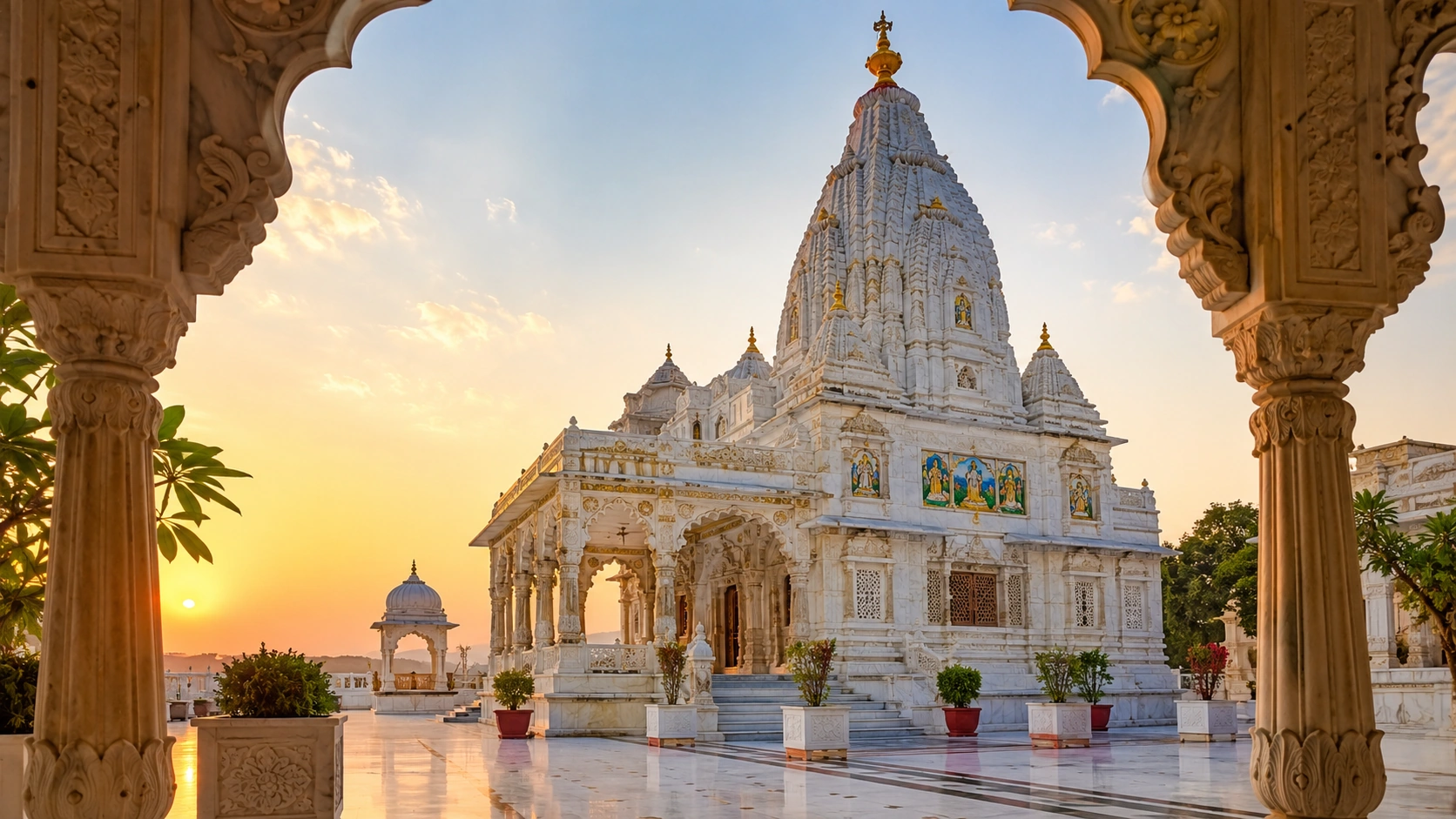
The Birla temple in Jaipur has become one of the most exquisite chapters of contemporary design and the ancient spirituality, as it is made at the foothill of Moti Dungari Hill. This peaceful sanctuary, carved of white marble, postcard views and a spiritual escape of all types of travelers.