Chhatarpur Mandir: More Than Just a Temple
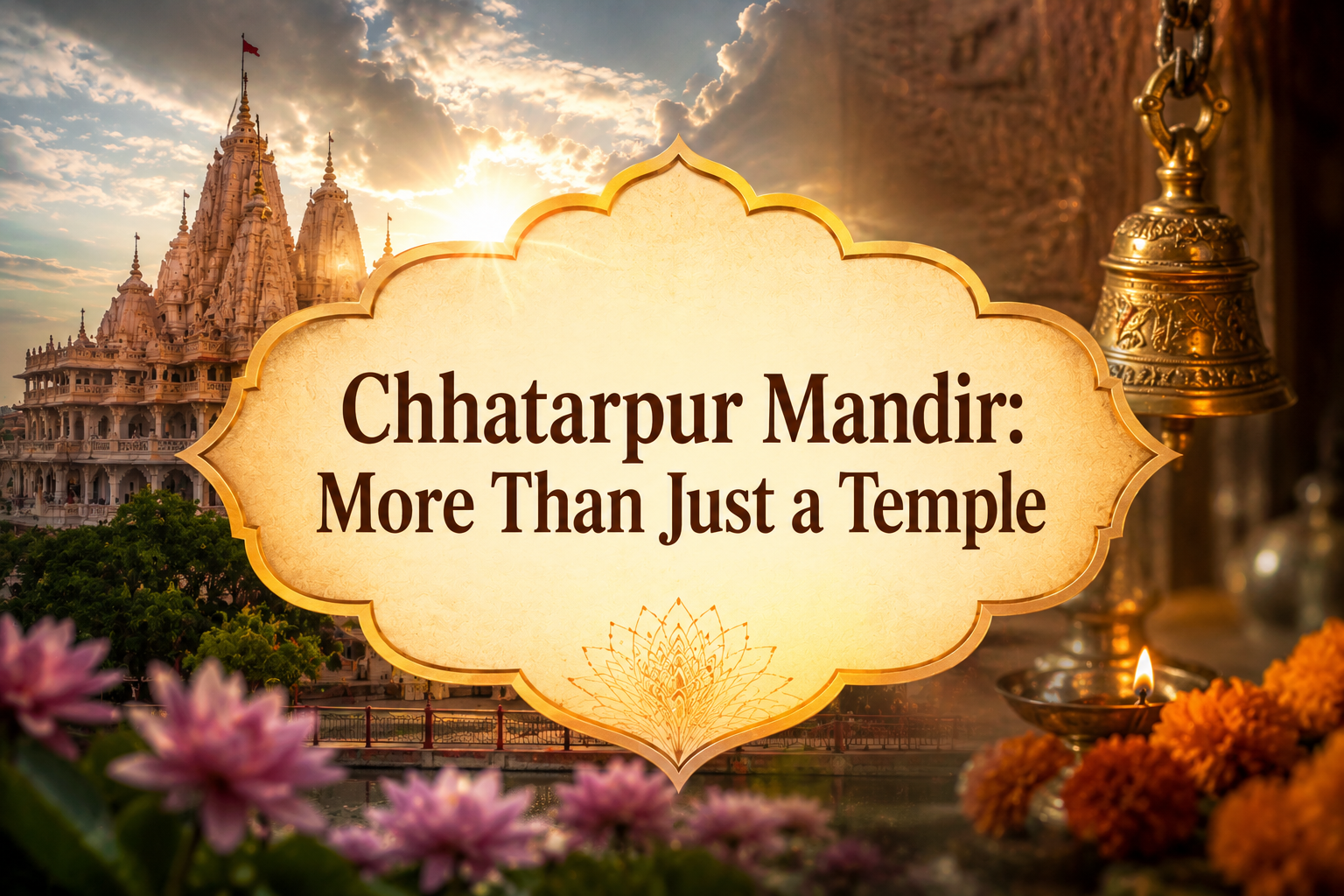
Chhatarpur Mandir, officially Shree Adya Katyayani Shaktipeeth Mandir, is one of the largest temple complexes in Delhi and the second-largest after Akshardham. Established in 1974 by Baba Sant Nagpal Ji, it is dedicated to Maa Katyayani, spans over 60 acres with 20+ shrines, and offers free darshan from 4 AM to 10 PM in Mehrauli, South Delhi.
- ◦Introduction
- ◦Chhatarpur Mandir History: What is its Spiritual Significance?
- ◦Why is Chhatarpur Mandir So Famous Among Devotees?
- ◦Chhatarpur Mandir Architecture: What Makes It Unique?
- ◦Chhatarpur Mandir Timings: What are the Darshan Hours?
- ◦Where is Chhatarpur Mandir Located and How to Reach?
- ◦What is the Best Time to Visit Chhatarpur Mandir?
- ◦Spiritual Experience at Chhatarpur Mandir
- ◦Conclusion
Introduction
In a city like Delhi, where everything moves fast and noise rarely fades, finding a space to pause is rare. Chhatarpur Mandir, officially known as Shree Adya Katyayani Shaktipeeth Mandir, is one of those spaces where the energy shifts the moment you enter.
At first glance, it impresses you with its sheer scale—the wide courtyards, the white marble structures, the organized flow of people. But as you spend a little more time there, something shifts. The noise feels distant, your thoughts slow down, and the experience becomes less about the place and more about what you feel within it.
People visit for different reasons. Some come for blessings, some out of habit, and some simply out of curiosity. But almost everyone leaves with a sense of calm that wasn’t there before. And that’s what makes Chhatarpur Mandir more than just a temple—it becomes an experience.
Chhatarpur Mandir History: What is its Spiritual Significance?
Chhatarpur Mandir was established in 1974 by Baba Sant Nagpal Ji, a spiritual leader who envisioned a space where people could connect with divine energy amidst urban life. Over the years, the temple expanded into one of the largest temple complexes in India.
The temple is dedicated to Maa Katyayani, one of the nine forms of Goddess Durga. In Hindu belief, Maa Katyayani represents strength, courage, and protection. She is often worshipped by devotees seeking emotional stability, inner strength, and the ability to overcome challenges.
What makes this temple spiritually significant is how accessible it feels. Unlike remote pilgrimage sites that require long journeys, Chhatarpur Mandir exists within a bustling city, yet manages to maintain a strong spiritual presence.
The temple stands as a reminder that spirituality does not always require distance—it can exist even in the middle of everyday life.
Why is Chhatarpur Mandir So Famous Among Devotees?
Chhatarpur Mandir is not just famous because of its size—it is famous because of how it makes people feel.
Every day, thousands of devotees visit the temple, each carrying their own thoughts, worries, or hopes. Some come during difficult times, seeking clarity or strength. Others come simply to maintain a connection they have built over time.
One of the biggest reasons for its popularity is the belief in Maa Katyayani’s protective and empowering energy. Devotees believe that sincere prayers here help remove obstacles and bring emotional balance.
For those seeking deeper understanding of planetary influences behind life challenges, you can also explore Rahu Mahadasha Effects and Practical Remedies.
Another important factor is its accessibility. Being located in Delhi and connected via metro and road, the temple becomes a regular spiritual stop rather than a once-in-a-lifetime visit.
This combination of accessibility, belief, and emotional connection is what keeps the temple constantly alive with devotion.
Chhatarpur Mandir Architecture: What Makes It Unique?
One of the first things you notice about Chhatarpur Mandir is its architecture. Built primarily with white marble, the temple reflects a blend of North and South Indian architectural styles, creating a structure that feels both grand and balanced. The complex spans over 60 acres and features more than 20 temple shrines, built in a blend of Dravidian and Nagara architectural styles.
The carvings are detailed yet not overwhelming. The courtyards are spacious, allowing large numbers of visitors to move comfortably. The design feels intentional—created not just for beauty, but for experience.
Unlike many crowded temples where movement feels rushed, here there is a sense of flow. Even during peak hours, the structure supports the movement of people without creating chaos.
For many visitors, the architecture itself becomes a part of the spiritual experience. It creates an environment where the mind naturally slows down.
Chhatarpur Mandir Timings: What are the Darshan Hours?
| Session | Timings |
|---|---|
| Morning Darshan | 04:00 AM – 12:00 PM |
| Evening Darshan | 04:00 PM – 10:00 PM |
Aarti at Chhatarpur Mandir is performed twice daily, in the morning and evening.
- Morning Aarti (Mangla Aarti): 6:30 AM – 7:00 AM
- Evening Aarti: 7:00 PM – 7:30 PM
These timings may vary slightly during festivals like Navratri or special occasions, so checking locally is always recommended.
Entry Fee: Free
Quick Tips for Visitors:
- Early mornings are best for peaceful darshan
- Navratri sees heavy crowds—plan accordingly
- Weekdays are less crowded than weekends
- Follow temple discipline for smooth entry
Where is Chhatarpur Mandir Located and How to Reach?
Chhatarpur Mandir is located in Mehrauli, New Delhi – 110074, in South Delhi, near the Qutub Minar area.
Location Details:
- Nearest Metro Station: Chhatarpur (Yellow Line)
- Distance from station: Walking distance / short auto ride
Travel Options:
- Metro (most convenient)
- Auto rickshaw / cab
- Private vehicles
Because of its location, the temple can be visited without extensive travel planning, making it ideal for both locals and tourists.
What is the Best Time to Visit Chhatarpur Mandir?
The temple is open throughout the year, but your experience can vary depending on when you visit.
The most popular time is Navratri, when the temple is decorated beautifully and filled with devotional energy. The atmosphere becomes vibrant, and the sense of collective faith is very strong.
If you are planning rituals during this time, you may also want to check Shubh Muhurat in October 2026 for New Beginnings.
However, this also means larger crowds.
If you prefer a more peaceful and personal experience, early mornings on regular days are ideal. During these hours, the temple feels quieter, allowing you to spend more time in reflection.
Spiritual Experience at Chhatarpur Mandir
Some places give you answers. Some places give you silence. Chhatarpur Mandir gives you both—depending on what you need.
Standing in front of Maa Katyayani, there is a sense of strength that feels calm rather than overwhelming. It doesn’t demand anything from you—it simply allows you to be present.
For a few moments, the outside world fades. Your thoughts become clearer, your breathing steadies, and the noise that usually fills your mind becomes quieter.
If you are exploring deeper spiritual transformations, you can also read about Planets in 8th House and Hidden Life Transformations.
And sometimes, that is enough. Not every visit needs to change your life instantly. Sometimes, it just needs to give you the strength to continue.
For more personalized spiritual clarity, you can Chat free with an AI Astrologer Moksha - moksha – Achieve spiritual growth and inner peace through guidance.
Conclusion
Chhatarpur Mandir in Delhi offers a rare combination of spiritual calm and accessibility within a busy city. Known for its grand architecture, peaceful environment, and devotion to Maa Katyayani, it remains a meaningful place for reflection and prayer.
Chhatarpur Mandir, also known as Shree Adya Katyayani Shaktipeeth Mandir, stands as one of Delhi’s most important spiritual landmarks, where devotion and everyday life come together.
Moksha Verma
Spiritual Growth, Inner Peace, Vedic Astrology | 10+ Years
Astrologer Moksha Verma focuses on helping people find spiritual growth and inner calm through Vedic astrology. With a caring and straightforward approach, Moksha guides individuals to understand their life's challenges and awaken hidden strengths. By combining ancient wisdom with modern insights, Moksha supports seekers in achieving balance, clarity, and lasting peace in their everyday lives.
Frequently Asked Questions
1. What is Chhatarpur Mandir famous for?
Chhatarpur Mandir is one of Delhi’s largest temple complexes dedicated to Maa Katyayani. It is known for its grand architecture and Navratri celebrations.
2. Which deity is worshipped in Chhatarpur Mandir?
The temple is dedicated to Maa Katyayani, one of the nine forms of Goddess Durga. She is worshipped as a symbol of strength, courage, and protection.
3. How long does darshan take at Chhatarpur Mandir?
Darshan usually takes 15–30 minutes on regular days but can take longer during Navratri or weekends.
4. What is the best time to visit Chhatarpur Mandir?
The best time to visit is during Navratri, when the temple is beautifully decorated and spiritually vibrant. For a quieter experience, early mornings on regular days are ideal.
5. How to reach Chhatarpur Mandir?
The easiest way to reach Chhatarpur Mandir is via the Delhi Metro (Yellow Line). The nearest station is Chhatarpur, from where the temple is within walking distance or a short auto ride. Cabs and buses are also available.
6. Is Chhatarpur Mandir open every day?
Yes, Chhatarpur Mandir is open every day of the week. Devotees can visit during both morning and evening darshan timings.
7. Is photography allowed inside Chhatarpur Mandir?
Photography rules may vary inside the temple complex. In many inner sanctum areas, photography is restricted, so visitors are advised to follow on-site guidelines.
8. Can we do Navratri pooja booking at Chhatarpur Mandir?
During Navratri, special puja arrangements may be available, but most darshan is open and does not require booking.
9. Is Chhatarpur Mandir a Shaktipeeth?
Chhatarpur Mandir is officially named Shree Adya Katyayani Shaktipeeth Mandir, recognizing its status as a Shaktipeeth — a site of powerful Shakti energy dedicated to a form of Goddess Durga.
10. Is there a dress code at Chhatarpur Mandir?
There is no strict dress code, but modest and respectful clothing is recommended for visitors.
Related Blogs

Why Ram Mandir in Ayodhya Means Everything to Millions ?
This is not just a temple—it’s faith, history, and identity coming together. Discover why Ram Mandir matters so deeply.

Inside Kamakhya: India's Most Mysterious Temple of Shakti
Not every temple has an idol. Kamakhya doesn’t—and that’s where the mystery begins.
Why Devotees Belief in Banke Bihari Temple
In this temple, the deity doesn’t just get worshipped—He connects. Discover why faith here feels different.

5 Fascinating Facts About Prem Mandir
It looks like a temple of light—but Prem Mandir holds deeper stories most visitors never notice.