Gemstone Recommendation in Astrology: How to Get an Honest One and Avoid Being Overcharged
Gemstones have a long history in Vedic astrology, but recommendations are often influenced by differing astrological approaches and commercial interests. This guide explains how genuine gemstone suggestions are derived from a birth chart, what gemstones can realistically be expected to do, why astrologers may disagree, and how to avoid fear-based sales tactics and unnecessary expenses.
- ◦Quick Facts
- ◦How a Genuine Gemstone Recommendation Is Derived
- ◦Why Different Astrologers May Recommend Different Stones
- ◦What Gemstones Can and Cannot Honestly Be Expected to Do
- ◦Exactly How Gemstone Recommendations Are Used to Overcharge
- ◦How to Get a Genuine Recommendation Without Being Exploited
- ◦Understand the Chart Before You Buy the Remedy
- ◦Final Thought
Most people do not go looking for a gemstone.
They go looking for answers.
Maybe there is a career problem that refuses to move. Maybe a relationship feels uncertain. Maybe someone has been told they are entering a difficult planetary period. Somewhere during that conversation, a gemstone enters the picture.
At first, the recommendation sounds simple enough. A Yellow Sapphire for Jupiter. An Emerald for Mercury. A Blue Sapphire for Saturn.
Then the details start appearing.
The stone needs to be a certain carat weight. It should be set in a specific metal. It must be worn on a particular finger, on a particular day, after a particular ritual. Sometimes there is urgency too. The recommendation suddenly feels time-sensitive.
Before long, what started as a chart reading can turn into a purchase costing far more than expected.
The difficult thing is that gemstones occupy a genuine place in traditional astrology. They are not something modern marketers invented. But they also sit in one of the most commercialized parts of the astrology industry, which makes it hard for many people to separate tradition from salesmanship.
That is why understanding the reasoning behind a recommendation matters far more than understanding the gemstone itself.
This guide explains how genuine gemstone recommendations are made, why astrologers may disagree with one another, what gemstones can realistically be expected to do, and how to recognize the most common ways people end up paying far more than they need to.
Because when it comes to gemstones, knowledge is usually the best protection.
Quick Facts
| Topic | Honest Reality |
|---|---|
| What it is | A gemstone associated with a planet and traditionally used as a remedial measure |
| How genuine recommendations are made | Based on your specific birth chart and planetary roles |
| Biggest warning sign | Fear followed by pressure to buy quickly |
| Common cost trap | Carat inflation, energizing fees, and bundled add-ons |
| Honest expectation | Supportive at most, not a guaranteed solution |
| Honest truth | Genuine recommendations come with reasoning, not urgency |
How a Genuine Gemstone Recommendation Is Derived
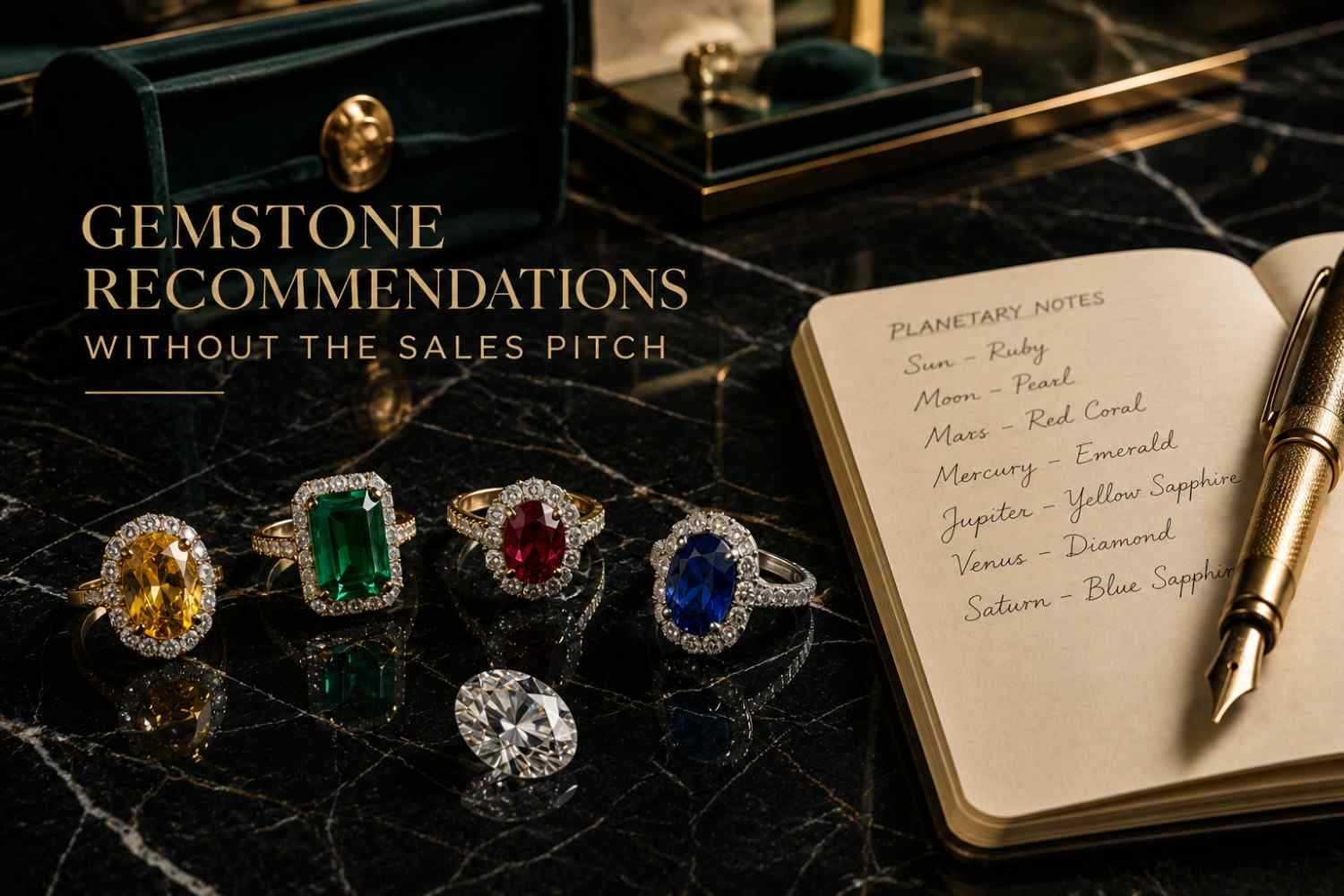
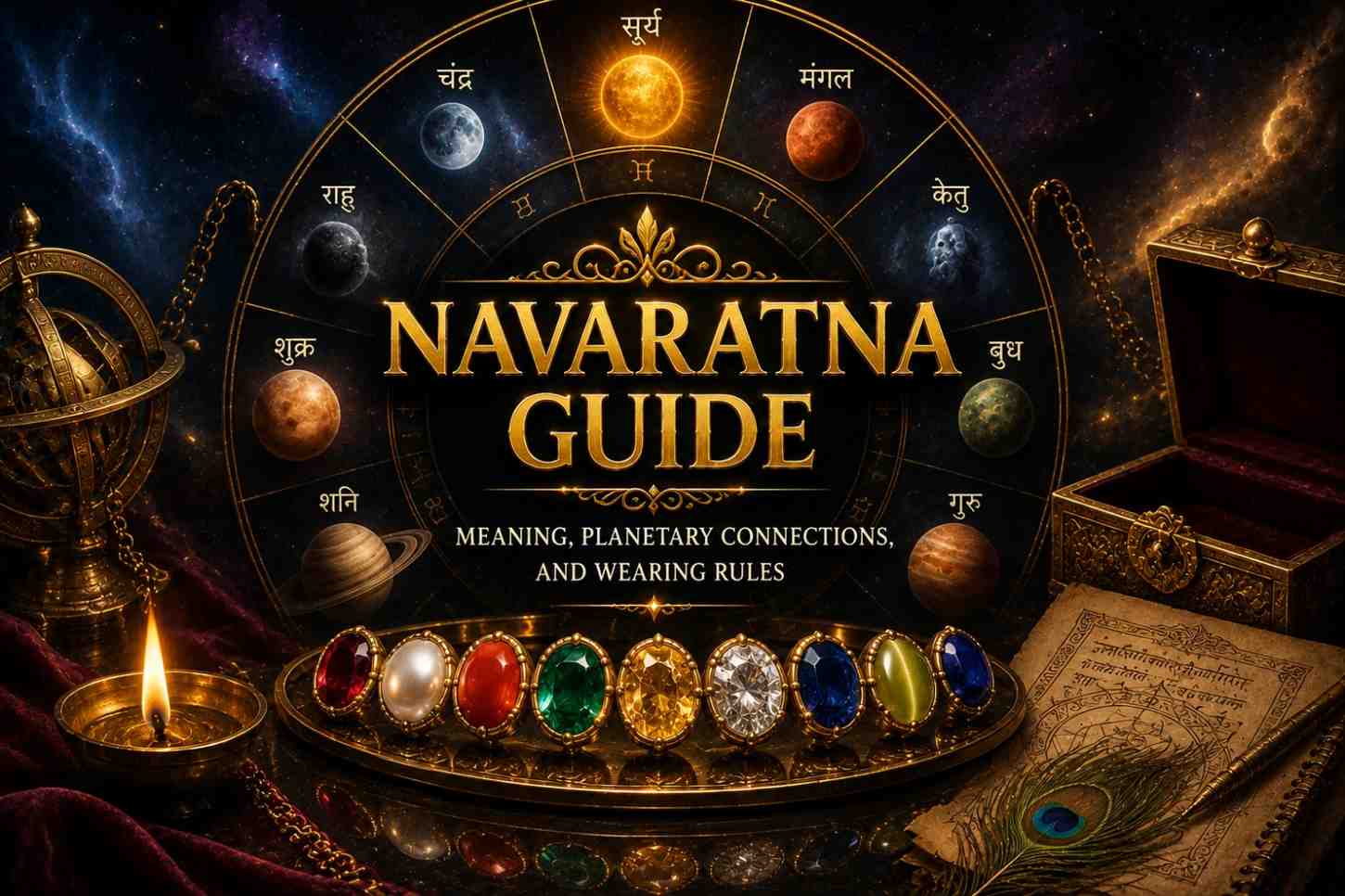
In traditional Vedic astrology, each of the nine planets is associated with a gemstone. Most people are familiar with the basic associations:
-
Sun → Ruby
-
Moon → Pearl
-
Mars → Red Coral
-
Mercury → Emerald
-
Jupiter → Yellow Sapphire
-
Venus → Diamond
-
Saturn → Blue Sapphire
-
Rahu → Hessonite
-
Ketu → Cat's Eye
But genuine gemstone selection is much more complicated than simply matching a stone to a planet.
A thoughtful astrologer does not begin with the gemstone. They begin with the chart.
The first thing usually examined is the Lagna, or Ascendant, because it determines how different planets function in the chart. A planet that is helpful in one person's chart may not play the same role in another person's chart.
From there, a proper analysis often considers several factors:
-
Which planets act as functional benefics
-
The condition and strength of those planets
-
House ownership and planetary relationships
-
Current Mahadasha and Antardasha periods
-
Overall chart balance
-
Whether strengthening a particular planet is actually desirable
This last point is especially important.
Many people assume that if a planet appears weak, it should automatically be strengthened. Genuine chart analysis is rarely that simple.
A planet may govern multiple areas of life simultaneously. Strengthening it could potentially support one area while influencing another. This is why astrologers who understand chart dynamics spend time evaluating the whole picture rather than making quick recommendations.
A genuine gemstone recommendation should therefore feel personal and specific.
Readers interested in learning more about planetary gemstones, their traditional associations, and commonly discussed wearing practices may also find our Vedic gemstones guide helpful.
The practitioner should be able to explain:
-
Why this planet was chosen
-
Why strengthening it makes sense
-
What role it plays in your chart
-
Why alternative planets were not selected
If the recommendation appears almost immediately without much explanation, it is reasonable to ask more questions.
Why Different Astrologers May Recommend Different Stones
One of the most surprising things people discover is that two experienced astrologers can look at the same chart and recommend different gemstones.
Many assume that this means somebody must be wrong.
In reality, astrology contains different schools of thought, different interpretive traditions, and different priorities. Because of that, it is possible for multiple recommendations to emerge from the same chart.
Some astrologers focus heavily on the Ascendant and functional benefics. Others place more emphasis on the Moon chart. Some prioritize supporting the Lagna lord, while others focus on strengthening planets connected with specific life areas.
As a result, gemstone recommendations are often less objective than many people assume.
This is actually an important thing to understand because certainty is often used as a sales tool.
When someone says:
-
This is the only gemstone that can help.
-
There is no alternative.
-
You must wear this immediately.
It can sound authoritative.
But genuine practitioners are usually comfortable explaining their reasoning instead of relying on absolute certainty.
A recommendation can be thoughtful without pretending to be the only possible answer.
In many ways, willingness to explain is often a better sign than willingness to guarantee.
What Gemstones Can and Cannot Honestly Be Expected to Do
One reason gemstone recommendations create so much confusion is that expectations are often unrealistic from the beginning.
The internet is filled with stories claiming that a particular gemstone transformed someone's career, solved financial problems, fixed a relationship, or dramatically changed their life.
Traditional astrology generally frames gemstones in a much more modest way.
They are usually viewed as supportive measures rather than miracle solutions.
What gemstones are traditionally believed to do
-
Support beneficial planetary influences
-
Act as one part of a broader remedial practice
-
Symbolically strengthen qualities associated with a planet
-
Complement other spiritual or reflective practices
What gemstones cannot honestly guarantee
-
Marriage within a specific timeframe
-
Sudden wealth
-
Guaranteed career success
-
Protection from every difficulty
-
Instant life transformation
-
Specific outcomes on specific dates
This distinction matters because unrealistic expectations create disappointment.
A gemstone should never become a substitute for action.
Career challenges still require skill development and effort.
Relationship difficulties still require communication and maturity.
Health concerns still belong with qualified medical professionals.
Financial problems still require practical planning.
The more a recommendation sounds like a shortcut around reality, the more cautious you should become.
Exactly How Gemstone Recommendations Are Used to Overcharge
Most people do not get overcharged because they wanted a gemstone.
They get overcharged because they were placed under pressure.
The pattern is surprisingly consistent.
First, a concern is introduced. The astrologer may highlight a difficult dasha, a weak planet, a dosha, or an upcoming challenge. The concern may be genuine, but it also creates emotional vulnerability.
Next, the gemstone appears as the solution.
At this point, the recommendation may still seem perfectly reasonable. The problem is what often follows.
Common overcharging tactics include:
-
Insisting on unusually large carat weights
-
Recommending only premium or extremely expensive stones
-
Adding certification fees
-
Charging separately for energizing rituals
-
Charging separately for activation ceremonies
-
Recommending multiple stones instead of one
-
Bundling gemstones with expensive remedies
Then comes the most powerful sales tool of all: urgency.
You may hear things like:
-
You should buy this immediately.
-
The timing is critical.
-
The window is closing.
-
Things may worsen if you wait.
Urgency discourages reflection.
And reflection is exactly what protects people from making expensive emotional decisions.
Another important warning sign appears when the same person who identifies the problem is also selling the solution.
That does not automatically mean the recommendation is dishonest.
But it does create a conflict of interest that deserves careful consideration.
Whenever diagnosis and profit are tied together, caution becomes reasonable.
How to Get a Genuine Recommendation Without Being Exploited
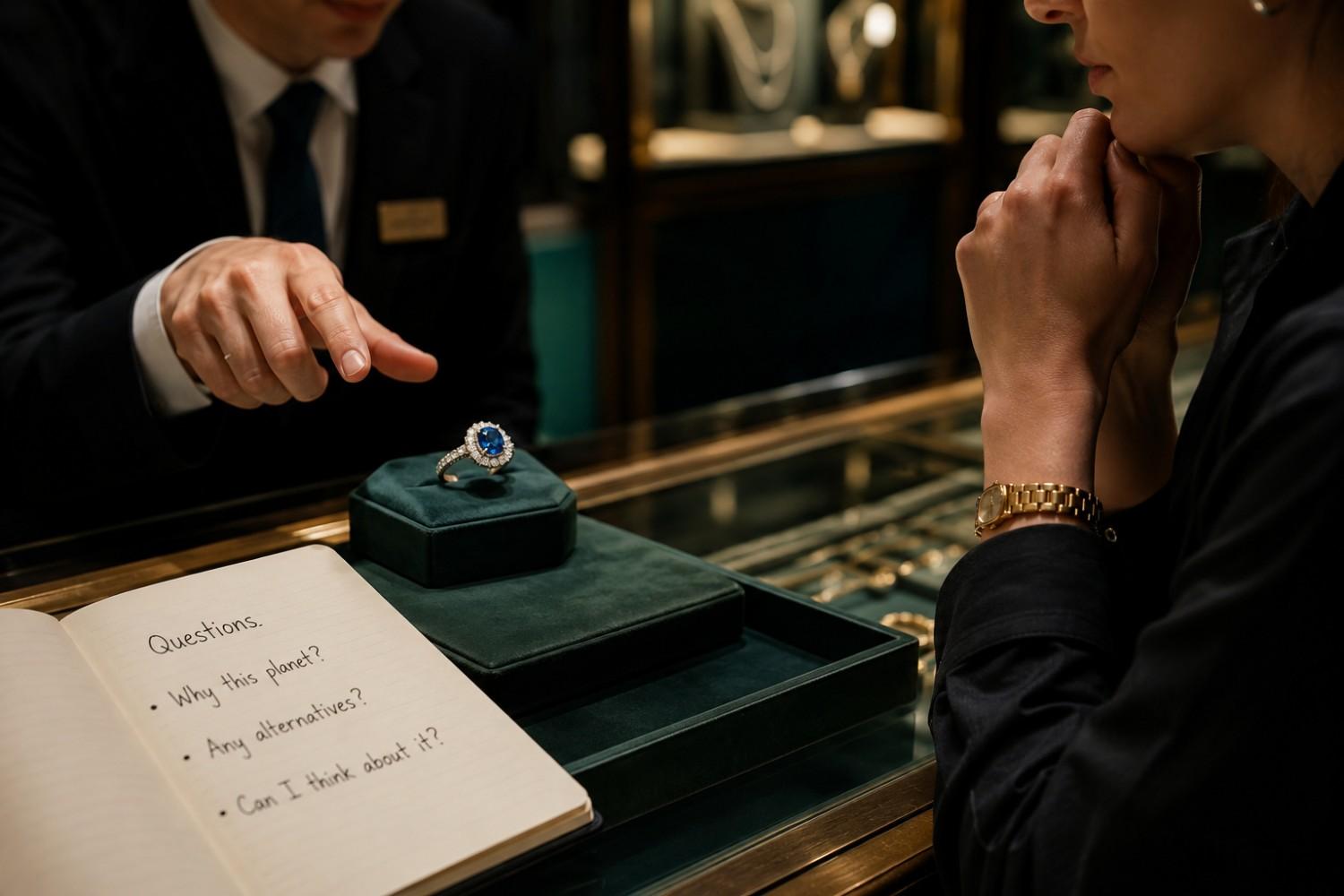
You do not need advanced astrological knowledge to protect yourself.
In fact, a few simple habits can dramatically reduce the chances of making a decision you later regret.
Ask for the reasoning
A genuine astrologer should be able to explain why the gemstone was chosen and how the recommendation connects to your chart.
Knowing how to evaluate the person making the recommendation can also help. Our guide on how to check credentials first discusses useful questions to ask before accepting remedial advice.
Separate the recommendation from the purchase
Understanding the suggestion and buying the stone are two different decisions. They do not need to happen at the same time.
Be careful with urgency
Most expensive purchases benefit from a cooling-off period. A gemstone is no exception.
Understand that alternatives may exist
Different astrologers often recommend different remedies. The first recommendation is not automatically the only one.
Treat gemstones as optional support
The healthiest approach is usually viewing a gemstone as a supplementary practice rather than a guaranteed solution.
Pay attention to your emotional state
People are easiest to pressure when they feel worried, anxious, or frightened. That is precisely when slowing down becomes most important.
Learn a little about your own chart
Even a basic understanding of your Lagna and major planetary influences can make it much harder for someone to overwhelm you with technical language.
The goal is not skepticism for its own sake.
The goal is making decisions from understanding rather than fear.
Some people also prefer exploring non-gemstone approaches. For readers interested in gentler remedial traditions, our Rudraksha alternative explains another commonly discussed path within Vedic practice.
Understand the Chart Before You Buy the Remedy
One of the most useful things you can do is understand why a recommendation is being made before deciding whether to follow it.
A recommendation without explanation creates dependence.
A recommendation with explanation creates understanding.
That difference matters.
The more clearly you understand your chart, the easier it becomes to evaluate whether a gemstone recommendation feels thoughtful, proportionate, and genuinely connected to your situation.
And the less likely you are to feel pressured into spending money simply because someone sounded confident.
If you want to understand the reasoning behind a gemstone recommendation before making a purchase, you can also discuss your chart with Atri - atri, Vedaz's AI guide for astrological remedies, to explore why a particular planet may or may not be considered for strengthening.
Final Thought
Gemstones occupy a fascinating place in astrology because they sit at the intersection of tradition, belief, symbolism, and commerce.
There is a genuine astrological tradition behind planetary gemstones. At the same time, there is also a large industry built around selling them.
That does not mean every gemstone recommendation is wrong.
It does mean every gemstone recommendation deserves scrutiny.
A thoughtful recommendation should be specific to your chart. It should come with reasoning. It should be presented calmly. And it should leave room for questions.
What it should not rely on is fear.
It should not depend on urgency.
And it should never make you feel as though an expensive purchase is your only path forward.
Ask why.
Understand the reasoning.
Take your time.
Because the strongest protection against being overcharged is not knowing more about gemstones.
It is understanding enough about the recommendation to know whether it actually makes sense in the first place.
Ridhima Agnihotri
Gemstone Astrology, Planetary Remedies & Spiritual Practices | 9+ Years
Ridhima Agnihotri is a spirituality writer specializing in gemstone astrology, traditional remedial measures, and planetary balancing practices. Her work focuses on presenting classical recommendations in a practical and reader-friendly manner while helping readers make informed decisions.
Frequently Asked Questions
1. How is a genuine gemstone recommendation derived?
A genuine recommendation comes from your specific birth chart rather than your Sun sign or a generic problem. Astrologers typically examine the Lagna, functional benefic planets, planetary strength, and overall chart structure before deciding whether strengthening a planet makes sense.
2. Why do astrologers recommend different gemstones for the same chart?
Different astrologers often follow different traditions and interpretive methods. Some focus more heavily on the Ascendant, while others emphasize the Moon chart or specific planetary principles. Multiple thoughtful recommendations can sometimes emerge from the same chart.
3. What can a gemstone realistically do?
Traditionally, gemstones are viewed as supportive remedies that may strengthen beneficial planetary influences. They are not considered guaranteed solutions for health, money, relationships, or life problems.
4. How are gemstone recommendations commonly used to overcharge people?
Overcharging often involves emotional pressure followed by expensive solutions. Carat inflation, certification fees, energizing charges, bundled remedies, and urgency are among the most common tactics.
5. Should I buy a gemstone directly from the astrologer?
Not necessarily. While some astrologers may offer genuine stones, it is worth recognizing the potential conflict of interest when the same person both recommends and profits from the remedy.
6. What is the biggest warning sign?
Fear combined with urgency. If a frightening chart interpretation is immediately followed by pressure to purchase an expensive gemstone quickly, it is usually wise to slow down, ask questions, and take time before making a decision.
Related Blogs
How Gemstones and Planets Shape Your Destiny
Were you aware that the gemstones you wear could hold the key to unlocking your destiny?
9 Crystals Aligned with Your Birth Chart for Instant Manifestation
Learn about the 9 crystals that resonate with your astrological birth chart. Find out how to amplify manifestation using zodiac-based crystal energy.
Navaratna Guide: Meaning, Planetary Connections, and Wearing Rules
Before buying a gemstone, discover what Vedic astrology actually says about planetary stones.