7 Chakra Bracelet Price Guide: Cost, Value & Buying Tips
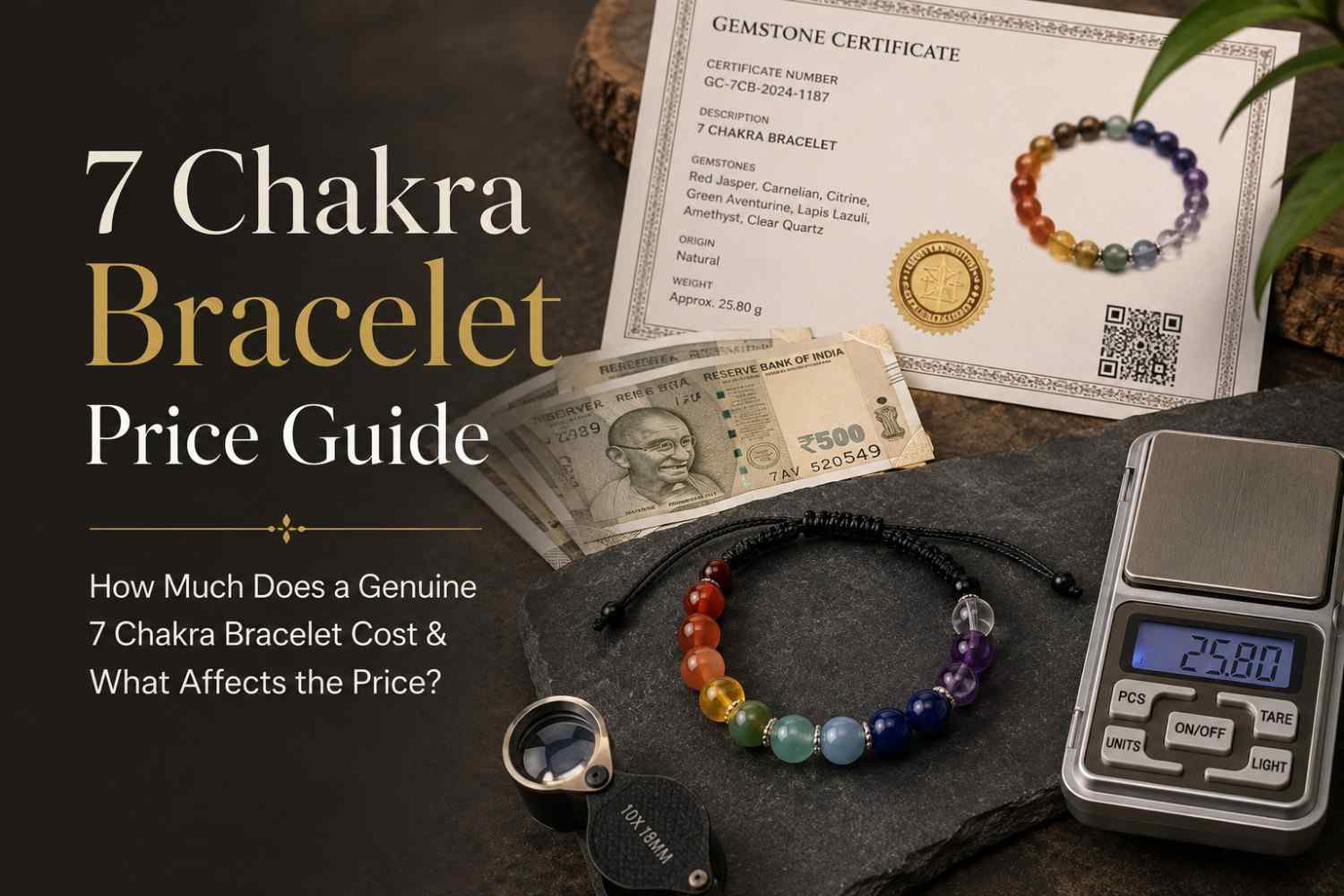
A genuine 7 chakra bracelet typically costs ₹400–₹1,500 in India or $18–$45 internationally, depending on gemstone quality, certification, bead size, and craftsmanship. Very cheap bracelets are usually dyed glass rather than real gemstones. Prioritize authenticity, certification, and durable construction over appearance alone. A certified bracelet offers better long-term value, making it a worthwhile purchase for personal use or gifting.
- ◦What drives the price
- ◦India price bands
- ◦International / US price bands
- ◦Gemstone vs lava-bead vs glass, price-wise
- ◦Where the cost actually comes from
- ◦Why the cheapest option ends up costing more
- ◦Region, season, gifting and budget
- ◦Is premium worth it, and a quick sanity check
- ◦What you're paying for at Vedaz
- ◦How to budget: what to prioritise, in order
- ◦Cheap vs mid vs premium — what you're actually getting
- ◦Why certification is cheap insurance
- ◦Longevity, gifting, and value over time
- ◦A final word on value
How much does a 7 chakra bracelet actually cost? A genuine 7 chakra bracelet made with real gemstones will usually run you somewhere around ₹400–₹1,500 in India, and about $18–$45 if you're buying internationally, depending on the stone quality, bead size, whether it's certified and whether it's been energized.
Lava-bead versions tend to come in a bit cheaper. Anything under ₹150 (or under about $6) that's called a "chakra" bracelet is basically always dyed glass — and that's exactly what it is, glass, not real gemstone.
Pricing on chakra bracelets gets confusing fast, because a bracelet that looks exactly the same — same rainbow of colours — could be seven genuine gemstones or seven pieces of dyed glass, and the price gap between those two is huge.
This guide breaks down what actually drives the price, what a fair range looks like in India and abroad, how gemstone vs lava vs glass changes the cost, and why going for the cheapest option is usually just choosing the fake.
What drives the price
Authenticity is the single biggest factor here. Seven genuine, matched gemstones simply cost more to source than seven dyed-glass beads, and that accounts for most of the price gap you'll see.
After that, price comes down to stone quality (clean colour, well-matched stones), certification (testing all seven stones and giving you something verifiable), bead size (6mm vs 8mm), what it's made of (pure gemstone vs lava-bead), whether it's been energized with documentation, and how well it's built (durable cord, clean drilling).
Brand name and service are smaller factors on top of that.
Wondering how to spot genuine stones before paying more? Read our 7 Chakra Bracelet Buying Guide to learn how to identify authentic bracelets and avoid dyed-glass fakes.
India price bands
Under ₹150 — this is almost always all dyed glass. Fine if you just want something colourful, but it's not a real seven-gemstone bracelet.
₹400–₹800 — this is realistically the floor for a genuine, certified seven-gemstone bracelet that's been honestly energized. Most everyday authentic pieces land here.
₹800–₹1,500 — better-matched stones, bigger beads, sturdier construction.
₹1,500 and up — premium grade, maybe silver accents, or higher-quality individual stones like fine amethyst or natural citrine.
International / US price bands
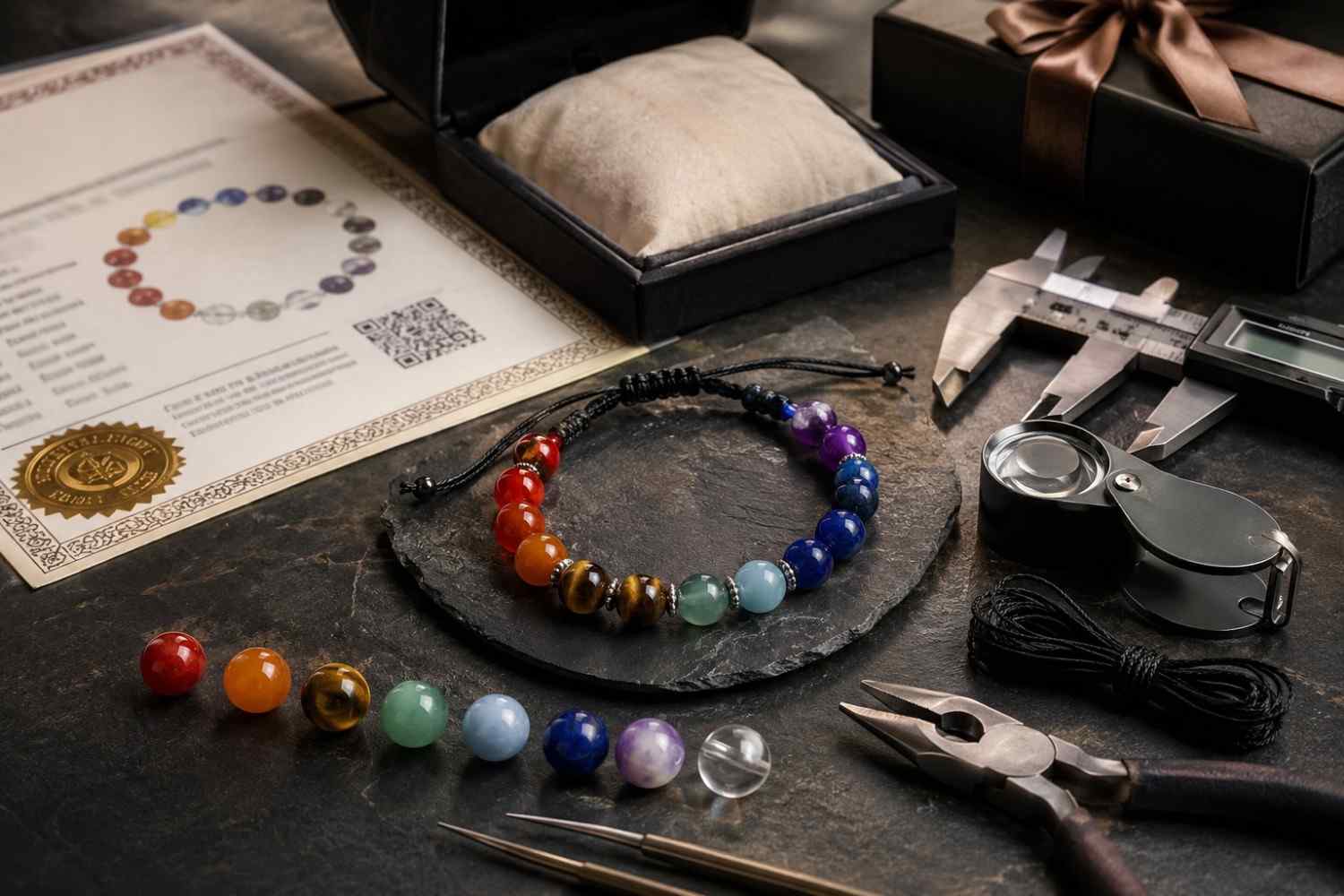
In Western markets, where chakra bracelets are sold as part of the mainstream "crystal healing" scene, prices run higher in dollar terms.
Under $6 — basically always dyed glass.
$18–$30 — genuine, certified seven-gemstone bracelets, standard-size beads. This is the everyday authentic range.
$30–$45 — bigger or better-grade stones, nicer construction, branded energization.
$45 and up — designer pieces, silver accents, finer individual stones, gift-boxed sets.
(These are rough figures based on the Western crystal jewellery market — set actual pricing live at publish.)
Gemstone vs lava-bead vs glass, price-wise
There are really three tiers, and it helps to be upfront about how each is priced. All-dyed-glass "chakra" bracelets are the cheapest simply because there's no real gemstone in them at all — they're costume jewellery, full stop.
Lava-bead chakra bracelets sit in the middle: the seven chakra stones are real, but most of the bracelet is made of cheap, porous lava (which is there to hold essential oil, not for its material value), so these usually cost a bit less than a pure-gemstone piece.
Pure-gemstone bracelets cost the most, since every single bead is genuine stone. When you're comparing prices, figure out which tier you're actually looking at — a lava-bead bracelet shouldn't be priced the same as a pure-gemstone one, and neither should be priced like an all-glass fake.
Where the cost actually comes from
For a genuine, certified bracelet, you're paying for: the seven stones themselves (each one isn't much on its own, but seven matched stones adds up); authentication and certification (more work than testing a single stone, since there are seven materials involved — this is the part fakes skip entirely); energization with documentation; the actual build (durable elastic, clean drilling, quality control); and service — things like returns, restringing, chart-matching.
When you see a ₹150 "7 chakra" bracelet, none of that is happening. It's seven dyed-glass beads on cheap elastic, which is exactly why it's that cheap.
Why the cheapest option ends up costing more
A ₹150 (or $5) "chakra" bracelet is all dyed glass. There's no certificate because there's nothing genuine to certify, and the dye fades, the glass scratches, and the cheap elastic snaps sooner or later, which means you're buying another one.
A genuine seven-gemstone bracelet, on the other hand, keeps its colour and character for years, since most chakra stones are pretty durable.
Over the course of a year, replacing cheap glass fakes over and over usually ends up costing more than just buying one certified piece — and only the genuine one is actually what it claims to be.
And with seven stones involved, the fakery is sevenfold too — an all-glass bracelet is misrepresenting every single bead on it.
Region, season, gifting and budget
In India, gem-and-bead hubs like Khambhat in Gujarat supply chakra stones at a lower wholesale cost, so Indian retail prices tend to run cheaper than Western ones for similar quality. Festivals like Diwali and Navratri often bring promotions too.
Internationally, prices climb because of import costs and branding. Chakra bracelets are also one of the most popular gifts in this category — they're beginner-friendly, pretty, and meaningful — so if you're buying one as a gift, make certification a priority and ask about presentation and whether a care card comes with it (something noting the safe, mixed-stone cleansing method).
When you're budgeting, the order of priority should be: authenticity and certification first (this one's non-negotiable, especially given how common the glass fakes are), then construction and stone quality, then honest energization, and only after all that, bead size or a fancier finish.
Is premium worth it, and a quick sanity check
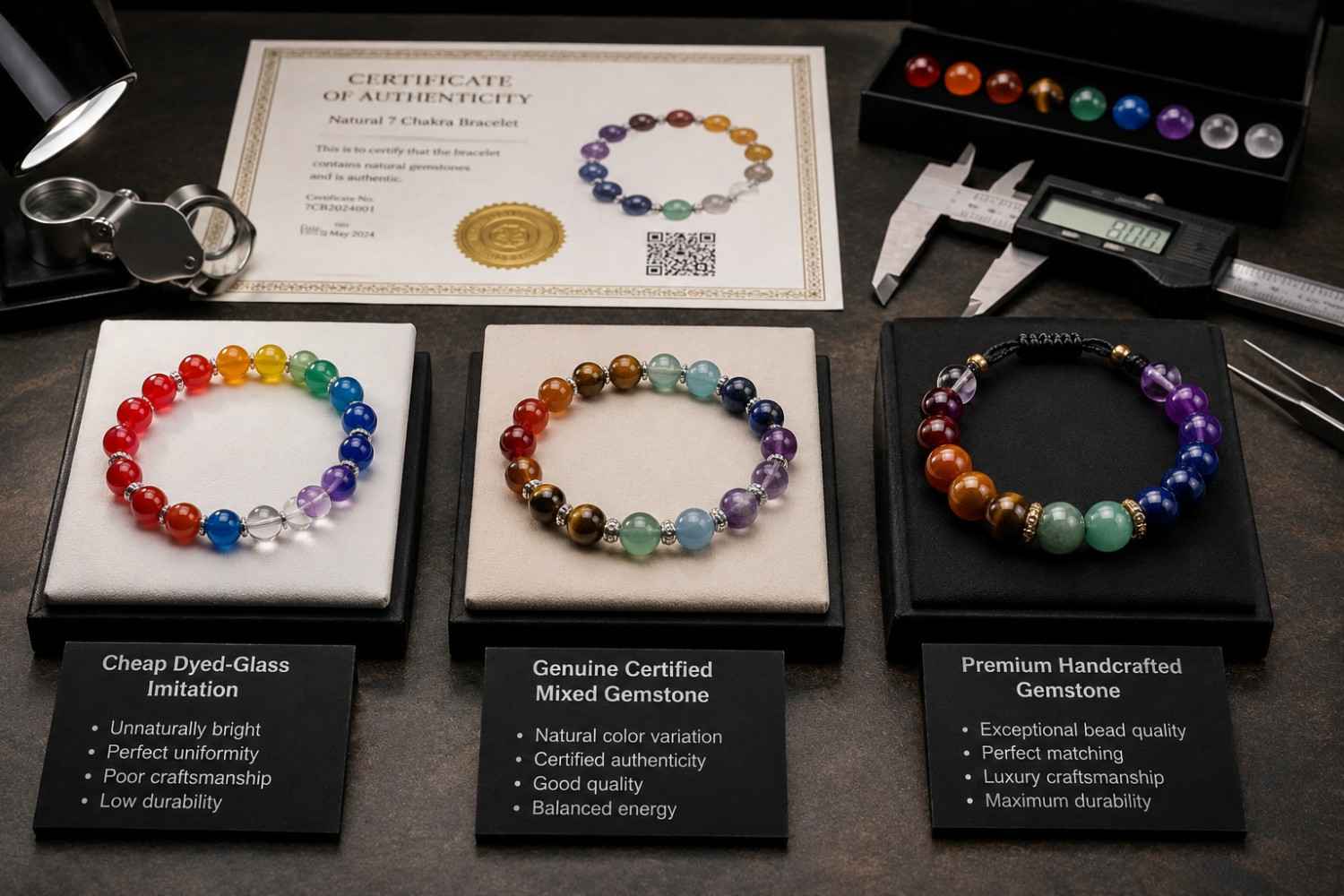
For most people, a certified, mid-range, pure-gemstone bracelet is the sweet spot — genuine seven stones and honest energization, without paying extra for cosmetic stuff.
Premium makes sense if it's a gift, a statement piece, or you specifically want finer individual stones like natural citrine or fine amethyst. Premium is about presentation and stone grade — not "more power," so don't pay extra expecting that.
Before you judge any price, ask yourself three things: are the stones verifiably genuine (certificate, no bubbles, natural variation)?
Are they in the right order? Is the construction solid? If all three check out, the price is probably fair. If any of them don't — especially if the price looks suspiciously low — assume it's glass and price it accordingly.
You're not chasing the cheapest rainbow bracelet here, you're chasing a price that actually matches what you're getting.
What you're paying for at Vedaz
A Vedaz 7 chakra bracelet's price reflects seven genuine, lab-verified stones in the correct order (never dyed glass), a QR certificate you can actually check, honest disclosure of any treatment, ritual energization with a ceremony video, sturdy construction with restringing support, and free chart-based matching that turns a general balancing bracelet into something personal to you.
You're paying for seven verified stones and everything that system represents — not seven dyed-glass beads on elastic, which is exactly the part a cheap fake can't fake.
How to budget: what to prioritise, in order
If you're figuring out where to spend your money on a 7 chakra bracelet, go in this order.
First: authenticity and certification — this is non-negotiable, and honestly more important here than with almost any other piece, because the fake risk is so high and there are seven stones that all need to be right.
Second: stone quality and construction — well-matched, genuine stones on a cord that'll actually hold up and can be restrung.
Third: honest energization. Fourth, and only after all of that: bead size, whether you go lava or pure gemstone, or a fancier finish.
A certified, genuine seven-gemstone bracelet that's modest in grade will serve you far better than an uncertified "premium-looking" one that turns out to be glass.
Cheap vs mid vs premium — what you're actually getting
| Cheap (<₹150 / <$6) | Mid (₹400–800 / $18–30) | Premium (₹800+ / $30+) | |
|---|---|---|---|
| Stones | All dyed glass | Seven genuine, certified | Seven genuine, higher grade |
| Certificate | None | Verifiable QR | Verifiable QR |
| Treatment disclosure | None | Honest | Honest |
| Energization | None / unverified | Charged + video | Charged + video |
| Build | Fragile | Durable | Durable, premium finish |
| Real value | Costume accessory | Strong everyday choice | Statement / gift / fine stones |
Why certification is cheap insurance
People sometimes don't love paying extra for certification, but with a seven-stone bracelet, it's honestly the cheapest insurance you can buy — more necessary here than with a single-stone piece.
Because the bracelet needs seven matched stones, the temptation to swap in glass is seven times higher, and the rainbow colours hide it really well in a photo.
Certification usually only adds a small amount to the price, but it's the one thing that actually confirms you got seven real gemstones instead of seven dyed-glass beads. Skipping it to save a little is exactly how people end up with a glass "chakra" bracelet without realizing it.
Think of the certificate less as an upsell and more as the receipt proving all seven stones — and whatever's been done to them — are real.
Longevity, gifting, and value over time
A better way to think about value here is cost-per-year rather than the price tag. A genuine seven-gemstone bracelet, looked after with the safe mixed-stone routine, holds its colour and character for years, since most chakra stones are durable quartz-family minerals.
An all-glass fake scratches, fades, and sits on cheap elastic that eventually snaps, meaning you're buying another one. Over a year, replacing glass fakes again and again usually costs more than just getting one certified piece to begin with — and only the real one is actually what it claims to be.
This is also part of why chakra bracelets make such good gifts, especially for someone just getting into crystals — they're pretty, beginner-friendly, and meaningful.
If you're gifting one, make sure it's consistently certified, ask about how it's presented, and see if a care card comes with it noting the safe smudge-or-moonlight cleansing — a small thing most people wouldn't think to do on their own, and one that protects the more delicate stones for years.
Once you've bought your bracelet, follow our How to Wear & Use a 7 Chakra Bracelet guide to learn the correct way to wear, cleanse, and care for a mixed-stone bracelet.
A final word on value
Here's the honest summary: with a chakra bracelet, you're buying either seven genuine gemstones or seven dyed-glass beads, and that gap is really the whole story.
Everything else — bead size, lava versus pure gemstone, a fancier finish — is secondary. Pay the modest premium for verified, certified, genuine stones in the right order, and you end up with something durable and meaningful that's rooted in a tradition going back centuries.
Chase the lowest price, and you'll almost always end up with glass. Match the price to what's actually verifiable, lean on the certificate and the physical tells, and you'll never overpay for a rainbow that isn't even real.
Want to know what benefits people associate with wearing one? Explore the 7 Chakra Bracelet Benefits guide to understand how it's commonly used for mindfulness and chakra balancing.
Frequently Asked Questions
1. Why do 7 chakra bracelet prices vary so much?
Because a bracelet that looks identical could be seven real gemstones, a lava-bead mix, or all dyed glass — and certified or not. None of that shows up in a photo.
2. What's a fair price for a genuine one?
Somewhere around ₹400–₹1,500 in India, or roughly $18–$45 internationally, for a certified seven-gemstone bracelet, depending on stone quality and size.
3. Why are some chakra bracelets so cheap?
The really cheap ones are all dyed glass with no genuine gemstone and no certification. Look for air bubbles and overly uniform colour, and always ask for a certificate.
4. Is a lava-bead chakra bracelet cheaper?
Usually a little, yes — the seven chakra stones are real, but the lava beads themselves are inexpensive, so it should cost less than a pure-gemstone piece and more than an all-glass one.
5. Does bead size change the price much?
A bit — bigger beads mean more material — but authenticity and stone quality matter far more to the price than size does.
6. Is a certified bracelet worth the extra cost?
Yes — with seven stones to verify, certification is the cheapest insurance you can get against ending up with glass. It's only a small share of the overall price.
7. Do international prices differ from India?
Yes, Western prices run higher in dollar terms because of import costs, branding, and how the whole crystal-healing thing is positioned there.
8. Is a 7 chakra bracelet a good gift?
Yes — it's beginner-friendly, pretty and meaningful, which makes it one of the most popular gifts in the category. Go for a certified one and make sure the mixed-stone care instructions come with it.
Related Blogs
How Much Does a Tiger Eye Bracelet Cost? Price Guide, Value & Buying Tips
Find out what a genuine tiger eye bracelet should cost, what affects its price, and how to avoid overpaying for fake stones.
Best Tiger Eye Bracelet: Colours, Quality & Buyer's Guide
Buying tiger eye? Learn how to identify genuine stones, compare colours, understand certification, and avoid common imitations.

How to Wear & Use a Tiger Eye Bracelet for Confidence and Protection
Learn the right way to wear a tiger eye bracelet, choose the best wrist, and build a simple daily practice for confidence and protection.
Tiger Eye Bracelet Benefits: Confidence, Protection & Focus
Discover tiger eye bracelet benefits for confidence, focus, protection and grounding. Learn who can wear it and how it supports daily life.