How Much Does a Tiger Eye Bracelet Cost? Price Guide, Value & Buying Tips
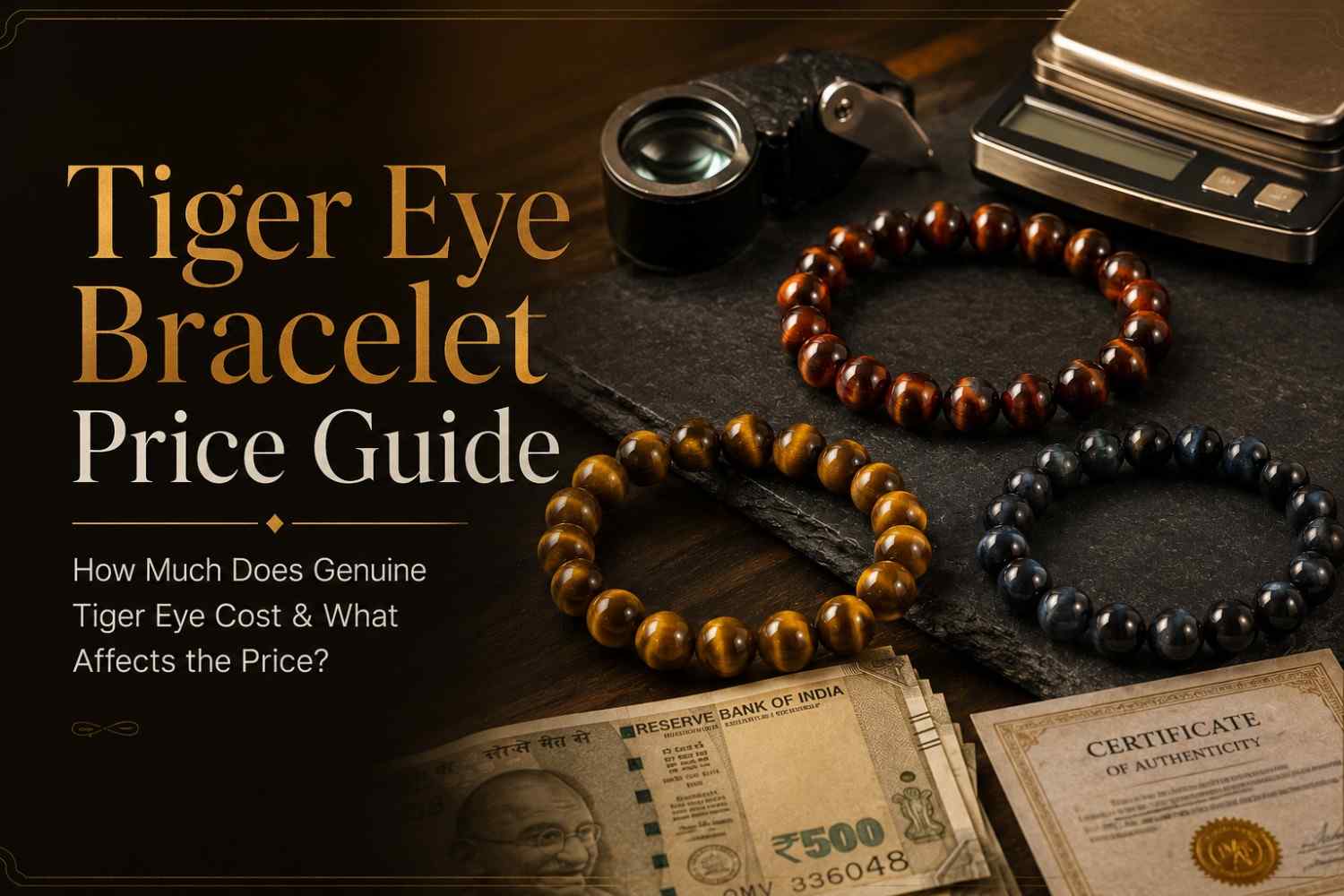
Two tiger eye bracelets can look identical and still cost ₹150 or ₹1,200 — the difference comes down to whether it's real. Here's a quick, no-fluff breakdown of what actually drives the price, fair ranges in India and abroad, and where people usually overpay.
- ◦How much does a tiger eye bracelet cost?
- ◦What drives the price
- ◦India price bands
- ◦International / US price bands
- ◦How colour affects price
- ◦The anatomy of the cost
- ◦Why the cheapest option costs more in the end
- ◦Bead size and grade
- ◦Regional and seasonal variation
- ◦Is premium ever worth it?
- ◦Longevity, gifting and budgeting
- ◦A simple price sanity check, and the treatment caveat
- ◦How to budget: priorities in order
- ◦Cheap vs mid vs premium: what you actually get
- ◦Why certification is cheap insurance
- ◦What you pay for at Vedaz
- ◦The treatment premium trap, in short
How much does a tiger eye bracelet cost?
A genuine tiger eye bracelet usually costs around ₹350 to ₹1,200 in India, and roughly $15 to $40 internationally. The price depends on chatoyancy quality, bead size, colour and certification.
Bracelets with a sharp, clear cat's eye band cost more, as does the blue variety called hawk's eye. Certified stones also carry a slightly higher price. Very cheap pieces are almost always dyed glass rather than real tiger eye.
Tiger eye pricing is more straightforward than most crystals because the tilt test makes it easy to check authenticity yourself. But two bracelets that look identical can still cost ₹150 or ₹1,200, and it helps to know why.
This guide breaks down what actually drives the price, fair ranges in India and internationally, how colour affects cost, and why going with the cheapest option usually costs more over time.
What drives the price
The biggest factor is whether the stone is genuine. A bracelet made from real chatoyant quartz costs more to produce than fiber optic glass, and that gap accounts for most of the price difference.
Beyond authenticity, price comes down to chatoyancy quality (a sharp, even band across every bead is higher grade than a dull or patchy one), colour (blue hawk's eye is rarer than common gold), certification, bead size (8mm versus 10mm), energization with documentation, and construction quality like durable cord and clean drilling.
Brand reputation and service extras like returns, restringing and chart matching also play a small role.
Before comparing prices, read our Tiger Eye Bracelet Buying Guide to learn how to identify genuine tiger eye using the simple tilt test and avoid common imitations.
India price bands
Under ₹150 — treat with real caution. These are usually dyed glass or fiber optic imitations with no certificate. Fine as a visual accessory, but not a verified stone.
₹350 to ₹700 — the realistic starting point for genuine, certified tiger eye with honest energization. Most authentic everyday gold tiger eye sits here.
₹700 to ₹1,200 — strong chatoyancy, larger 10mm beads, or the rarer blue hawk's eye variety.
₹1,200 and above — premium grade, silver accented designs, or collector quality stones.
International / US price bands
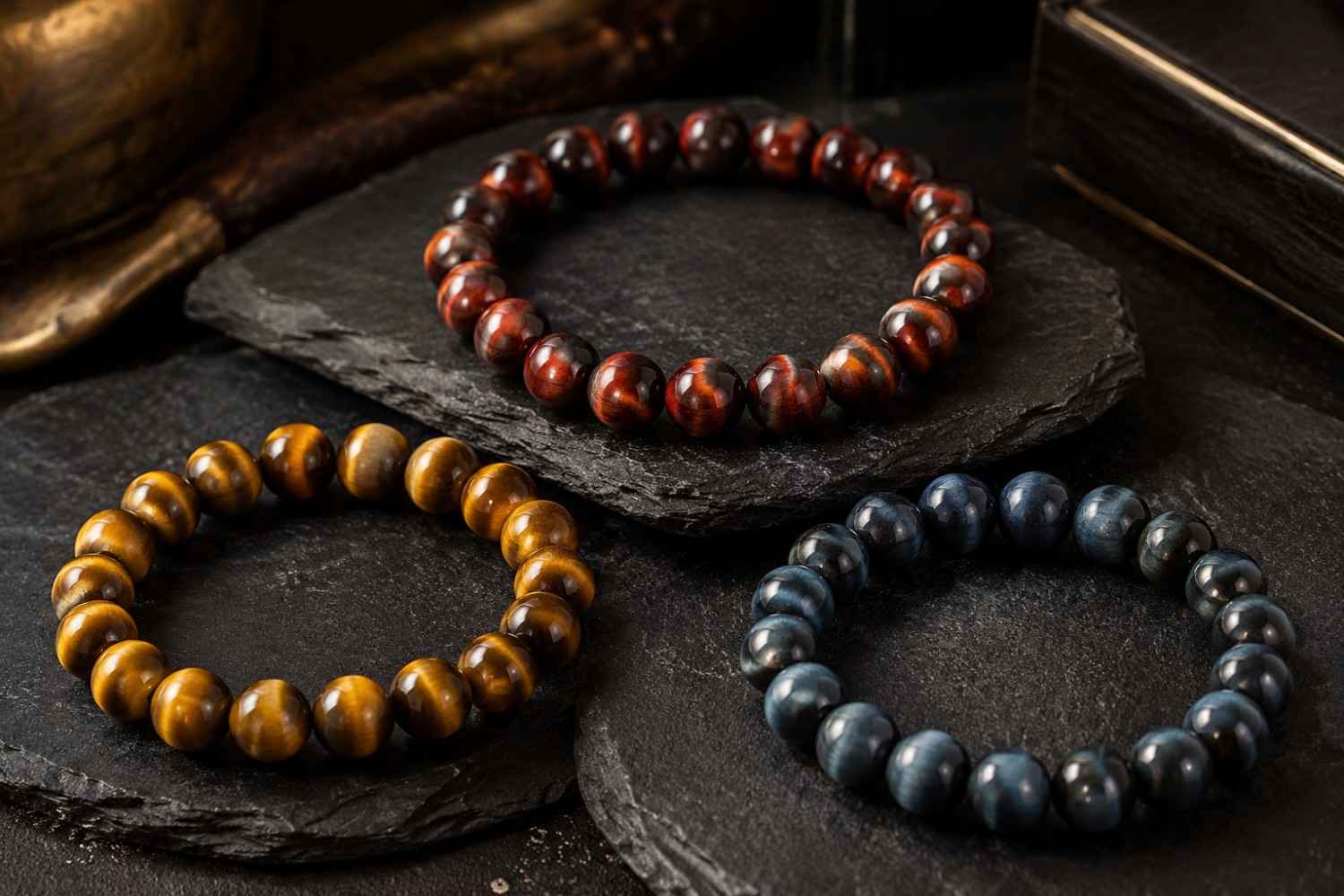
In Western markets, tiger eye sells into the broader crystal healing category and prices are naturally higher in dollar terms:
Under $5 — almost always an imitation.
$15 to $25 — genuine, certified gold tiger eye, standard 8mm beads, the everyday authentic range.
$25 to $40 — strong chatoyancy, larger beads, or blue hawk's eye.
$40 and above — premium grade, silver accents, or gift boxed sets.
These are indicative ranges based on the Western crystal jewellery market. Set live pricing at publish.
How colour affects price
Colour is a real pricing factor with a tiger eye. Gold and brown are the most common and the most affordable.
Red is almost always heat treated gold, so it should sit at roughly the same price as gold. Be cautious about paying a big premium for "rare natural red" because it is nearly always treated.
Blue or hawk's eye is a genuinely rarer natural variety and does legitimately cost a little more. The honest pricing order is: gold and red at similar everyday levels, blue with a modest premium for its scarcity.
The anatomy of the cost
A genuine certified bracelet price covers several things: the stone itself (modest, since tiger eye is an inexpensive mineral), authentication and certification (the part fakes skip entirely), energization with documentation, good construction like durable elastic and clean drilling, and service including returns, restringing and chart matching.
When you see a ₹150 "tiger eye" bracelet, almost none of that is happening. That is exactly why it costs so little, and exactly why it usually is not real stone.
Why the cheapest option costs more in the end
A ₹150 or $5 "tiger eye" bracelet is almost always fiber optic glass or dyed quartzite. It carries no certificate because there is nothing genuine to certify.
These glass pieces scratch, chip and lose their artificial shimmer over time, which means replacing them again and again.
A genuine tiger eye bracelet is hard, durable quartz that keeps its lustre for years with very little care. Buying cheap fakes repeatedly across a year usually costs more than one certified piece would have, and only the certified piece is actually what it claims to be.
Bead size and grade
Larger 10mm beads use more material and show more of the cat's eye effect, so they cost a little more than 8mm. But the size difference is modest.
Chatoyancy grade matters more to price than bead size does. A bracelet with a sharp, lively and even band across every bead is higher grade and worth paying more for compared to one with weak or patchy shimmer.
When comparing prices, judge the quality of the moving light, not just the bead diameter.
Regional and seasonal variation
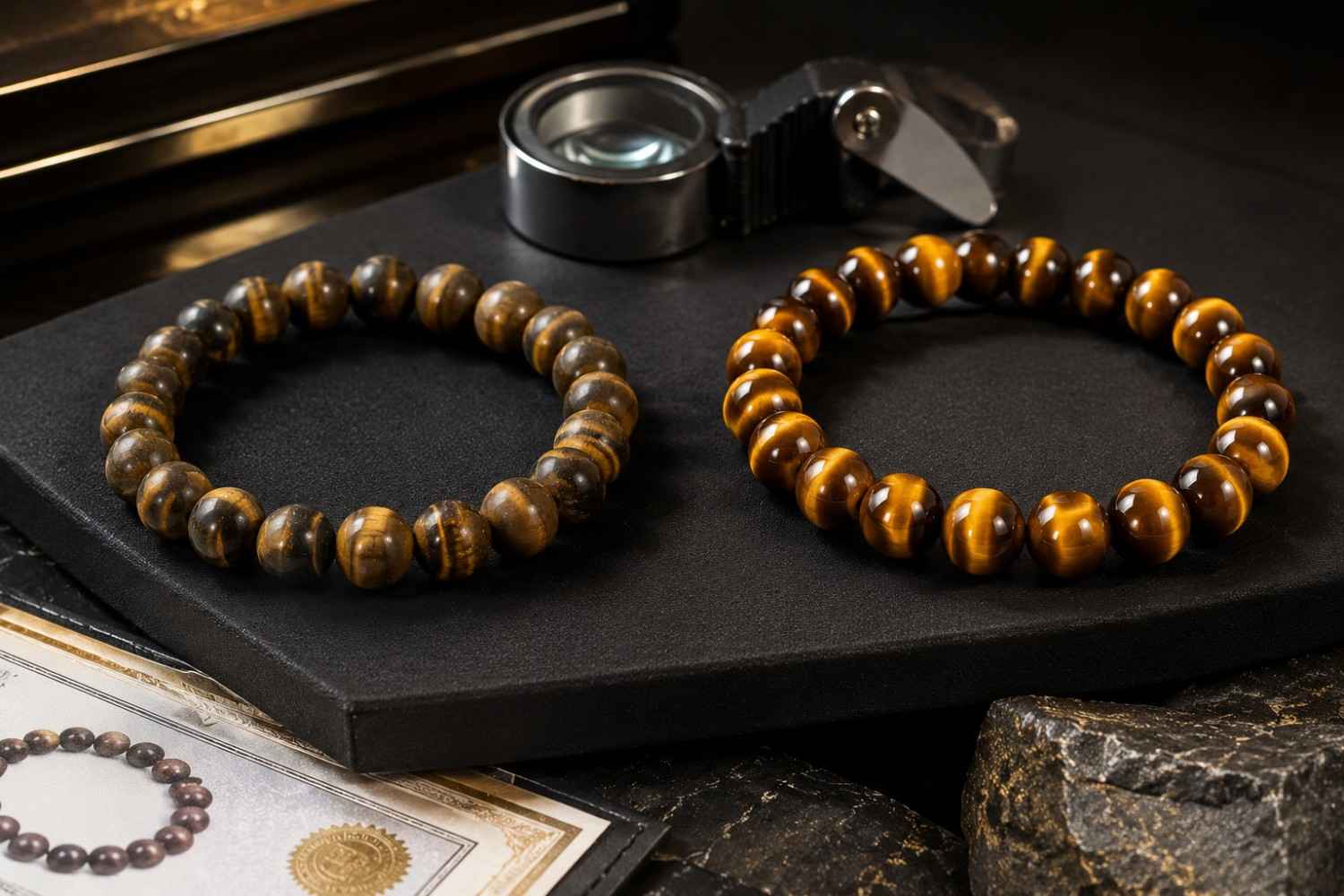
In India, gem and bead supply hubs like Khambhat in Gujarat supply tiger eye at lower wholesale cost, so Indian retail tends to be cheaper than Western markets even at comparable quality.
Festivals and auspicious periods like Diwali and Navratri often bring both higher demand and promotional pricing. Internationally, the same bracelet carries markups for import, brand positioning and the broader crystal healing market, which is why US prices run higher in dollar terms.
Is premium ever worth it?
For most buyers, a certified mid range gold tiger eye bracelet is the sweet spot. You get genuine verified stone and honest energization without paying for cosmetic extras.
Premium pricing makes sense in three situations: as a gift where packaging matters, as a statement piece with larger 10mm beads or silver accents, or for higher grade or blue hawk's eye with sharper chatoyancy or a rarer colour.
Premium is about presentation, grade and rarity. A certified mid range piece carries the same tradition as a premium one.
Longevity, gifting and budgeting
Tiger eye's durability makes it excellent value on a cost per year basis. A genuine bracelet, with minimal care, lasts for years. That durability also makes it a solid gift for someone facing a challenge, an exam or a new role.
If gifting, prioritise consistent certification and ask about presentation options. When budgeting, go in this order: authenticity and certification first (non negotiable), then chatoyancy grade and construction quality, then honest energization, and last, bead size, colour or premium finish.
A certified, well built gold tiger eye serves you better than an uncertified "premium" piece every single time.
Once you've chosen your bracelet, our How to Wear & Use a Tiger Eye Bracelet explains the correct wrist, cleansing methods, and daily intention practice.
A simple price sanity check, and the treatment caveat
Before judging any price, ask three things. Is authenticity verifiable through both the moving chatoyancy and a certificate? Is any colour treatment honestly disclosed, especially for red? Is the construction durable? If yes to all three, the price is likely fair whether it is mid range or premium.
The one tiger eye specific warning is about treatment. Never pay a natural rarity premium for red tiger eye, which is almost always heat treated. Anchor your judgement to verifiable proof and honest disclosure, not to the price tag or a "rare colour" story.
The goal is not the cheapest bracelet or the most expensive one. It is a price that matches verifiable reality.
How to budget: priorities in order
If you are deciding where to spend on a tiger eye bracelet, go in this order.
First, authenticity and certification. This is non negotiable because it is the one thing you are truly buying. The tilt test makes it easy to confirm yourself.
Second, chatoyancy grade and construction. A sharp, lively band and a durable cord that can be restrung.
Third, honest energization. A genuine ritual with proof adds real meaning to the piece.
Fourth, bead size, colour or premium finish. A larger 10mm bead or rarer blue hawk's eye is a nice addition but the last thing to spend on.
A certified, well built gold tiger eye with strong chatoyancy will serve you better than an uncertified "premium" piece every time.
Cheap vs mid vs premium: what you actually get
| Cheap (under ₹150 / under $5) | Mid (₹350 to ₹700 / $15 to $25) | Premium (₹700+ / $25+) | |
|---|---|---|---|
| Stone | Usually fake (glass) | Genuine, certified | Genuine, sharp chatoyancy or blue |
| Tilt test | No real movement | Moving band visible | Strong, even moving band |
| Certificate | None | Verifiable QR | Verifiable QR |
| Treatment disclosure | None | Honest (red = treated) | Honest |
| Energization | None or unverified | Charged with video | Charged with video |
| Real value | Risky accessory | Strong everyday choice | Statement piece, gift, rarer colour |
The pattern is consistent across the category. The cheap tier is mostly about risk. The mid tier is where genuine value lives for most buyers. The premium tier is about chatoyancy grade, colour rarity and presentation rather than any extra power.
Why certification is cheap insurance
Some buyers resent paying anything extra for certification. But it is the cheapest insurance in the whole purchase. Certification adds only a small share to the total price, yet it is the single thing alongside the tilt test that confirms you have bought real chatoyant quartz rather than fiber optic glass.
With tiger eye it also confirms treatment, so you are not overpaying for "natural red" that is actually heat treated. Think of the certificate not as an upsell but as the receipt proving that the stone and its disclosed treatment are exactly what the listing claimed.
What you pay for at Vedaz
A Vedaz tiger eye bracelet's price reflects lab verified genuine chatoyant quartz rather than glass or dyed stone, a verifiable QR certificate, honest treatment disclosure with heat treated reds labelled as such, ritual energization with a ceremony video, durable construction with restringing support, and free chart based matching to align colour and intention with your chart.
You are paying for proof and honest disclosure. The genuine moving light, verified. That is the one thing a cheap glass fake simply cannot replicate.
Curious about what tiger eye is traditionally used for? Explore our Tiger Eye Bracelet Benefits guide to learn why it's associated with confidence, focus, protection, and grounding.
The treatment premium trap, in short
One final pricing warning specific to tiger eye. The most common way buyers overpay is on red.
Because natural red tiger eye sounds rare and desirable, some sellers price heat treated red at a steep premium with a "rare natural" story. In reality, almost all red tiger eyes on the market are heat treated gold. It is a fine, stable and attractive stone, but it is not a rarity that justifies a big markup. Pay everyday gold tier prices for red.
Reserve any genuine premium for naturally rarer blue hawk's eye. And always anchor your judgement to verifiable proof and honest treatment disclosure rather than a colour rarity story.
Rohan Kapoor
Certified Gemologist | 21
Rohan Kapoor is a certified gemologist with 21 years of experience grading and appraising natural gemstones. His work focuses on what genuinely drives a stone's value — clarity, treatment history, and origin — so buyers can tell fair pricing from inflated markup.
🔮 Expertise: Birth chart analysis, planetary gemstone prescription, chakra-based stone selection
Frequently Asked Questions
1. What's a fair price for a tiger eye bracelet?
Around ₹350 to ₹1,200 in India, or roughly $15 to $40 internationally, for certified genuine stone depending on chatoyancy, size and colour.
2. Why is some tiger eye so cheap?
Very cheap tiger eye is often dyed glass or fiber optic imitation. Use the tilt test and insist on certification before buying.
3. Does colour affect the price?
Yes. Gold is the most common and affordable. Blue or hawk's eye is rarer and legitimately costs more. Red is usually heat treated, so it should not carry a big "natural" premium.
4. Does the bead size change the price much?
Somewhat, since 10mm beads use more material. But chatoyancy grade and authenticity drive price more than size does.
5. Is a certified bracelet worth the extra cost?
Yes. Certification adds a small share to the price and is the thing that proves you have got real chatoyant quartz rather than glass. It is cheap insurance.
6. Should I pay more for "natural red" tiger eye?
No. Most red tiger eye is heat treated. It is a fine stone, but do not pay a natural rarity premium for it.
7. Do international prices differ from India?
Yes. Western prices run higher in dollar terms because of import costs, brand positioning and the broader crystal healing market.
8. Is tiger eye good value overall?
Yes. It is durable and inexpensive, so a genuine certified piece offers strong long term value compared to replacing cheap glass fakes repeatedly.
Related Blogs
Best Tiger Eye Bracelet: Colours, Quality & Buyer's Guide
Buying tiger eye? Learn how to identify genuine stones, compare colours, understand certification, and avoid common imitations.

How to Wear & Use a Tiger Eye Bracelet for Confidence and Protection
Learn the right way to wear a tiger eye bracelet, choose the best wrist, and build a simple daily practice for confidence and protection.
Tiger Eye Bracelet Benefits: Confidence, Protection & Focus
Discover tiger eye bracelet benefits for confidence, focus, protection and grounding. Learn who can wear it and how it supports daily life.
7 Chakra Bracelet Price Guide: Cost, Value & Buying Tips
Wondering how much a genuine 7 chakra bracelet should cost? Compare price ranges, understand what you're paying for, and avoid common fakes.