Best Tiger Eye Bracelet: Colours, Quality & Buyer's Guide
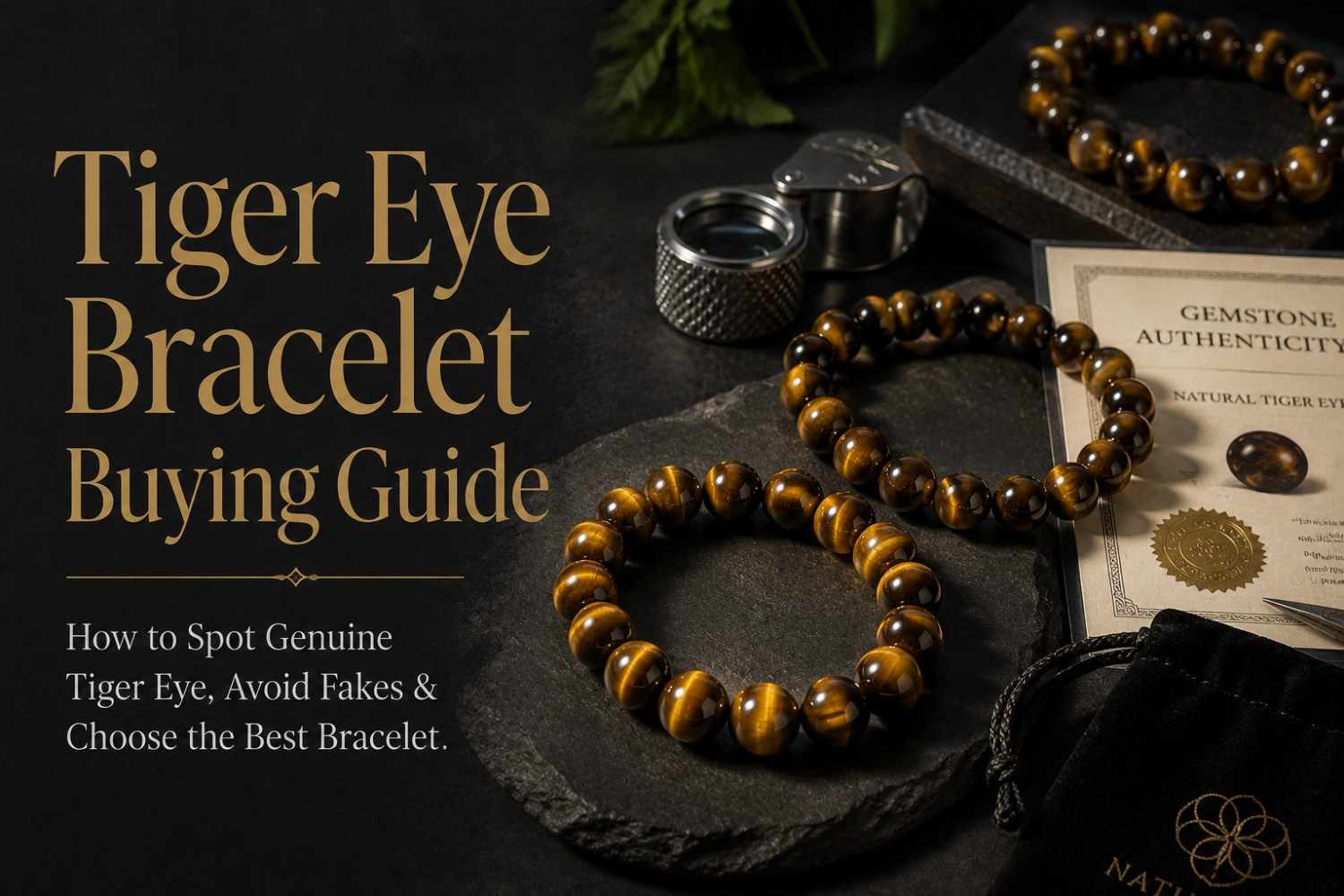
Tiger eye is one of the easier crystals to buy with confidence because it comes with a built-in authenticity test. Tilt the bead under light and watch what happens. Real tiger eye shows a moving band of light. Fakes don't. This guide walks you through that test, the three colour types, treatment disclosure, bead quality and what makes a seller trustworthy.
- ◦What is the best tiger eye bracelet?
- ◦Why authenticity matters
- ◦The chatoyancy tilt-test (the key test)
- ◦Real vs fake — the tells
- ◦The colour varieties and treatment
- ◦Bead quality and construction
- ◦Raw vs polished
- ◦Certification and energization
- ◦Why the fakes market exists, and buying online vs in-store
- ◦Red-flag checklist
- ◦Buying checklist
- ◦Why buy from Vedaz
- ◦Understanding labs and certificates
- ◦Caring for it after purchase
- ◦A quick authenticity recap
- ◦A note on grading by chatoyancy
What is the best tiger eye bracelet?
The best tiger eye bracelet shows genuine chatoyancy — a sharp band of light that moves as you tilt the bead — in real stone, not dyed glass. Look for even bands, consistent beads, a cool feel, certification, and honest disclosure of any colour treatment.
Then choose the colour (gold, red or blue) that matches your intention. The single most useful test is the tilt test: real tiger eye's light band moves. Fakes don't.
Tiger eye has the most reliable authenticity test in the whole crystal category. Once you know what to look for, it becomes one of the easier stones to buy with confidence.
This guide covers that test in detail, the colour varieties and what to know about treatment, the fakes to avoid, and how to judge bead quality and a trustworthy seller.
Why authenticity matters
A tiger eye bracelet is supposed to be genuine chatoyant quartz with a specific look and a long tradition behind it. If the stone turns out to be fiber-optic glass or dyed quartzite, you haven't bought a courage stone. You've bought a shimmery accessory with a spiritual label.
There's nothing wrong with costume jewellery, but it shouldn't be priced or sold as a genuine energy piece. Verifying authenticity is how you make sure you're paying for the real thing. And happily, the tiger eye makes this easy.
The chatoyancy tilt-test (the key test)
The defining feature of genuine tiger eye is chatoyancy. It's a silky band of light that moves across the stone as you tilt it under a light source, like the slit pupil of a cat's eye. Pick up a bead, hold it under good light, and tilt it back and forth.
In the real tiger eye, a soft luminous streak glides across the surface. Because the stone's fibres run in a natural direction, the effect has depth and a slight irregularity to it.
This single test catches the great majority of fakes and you can do it in seconds, either in a shop or from a clear video.
Real vs fake — the tells
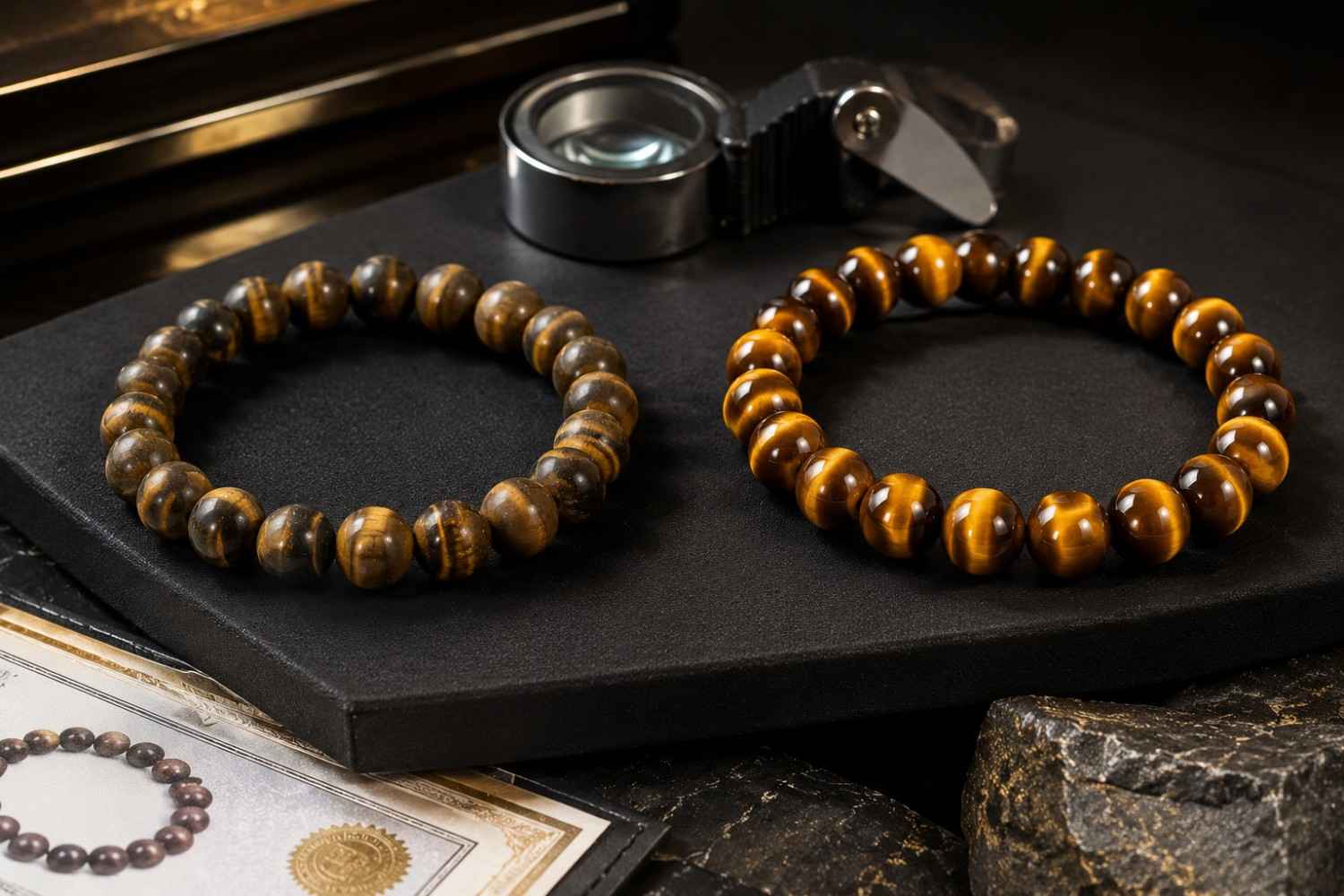
Beyond the tilt test, genuine tiger eye feels cool and dense to the touch, warming slowly. Glass warms fast.
You'll also notice natural colour variation between and within beads — subtle differences in band and tone. And the shimmer has depth to it. It doesn't look flat or painted on.
Fakes, usually fiber-optic cat's eye glass or dyed quartzite, give themselves away in a few ways. The shimmer looks too perfect and uniform, often just a single sharp central line rather than a soft moving band.
You might see air bubbles inside the stone, which is a dead giveaway of glass. Every bead looks unnaturally identical in colour. And the piece feels warm and light rather than cool and dense.
The colour varieties and treatment
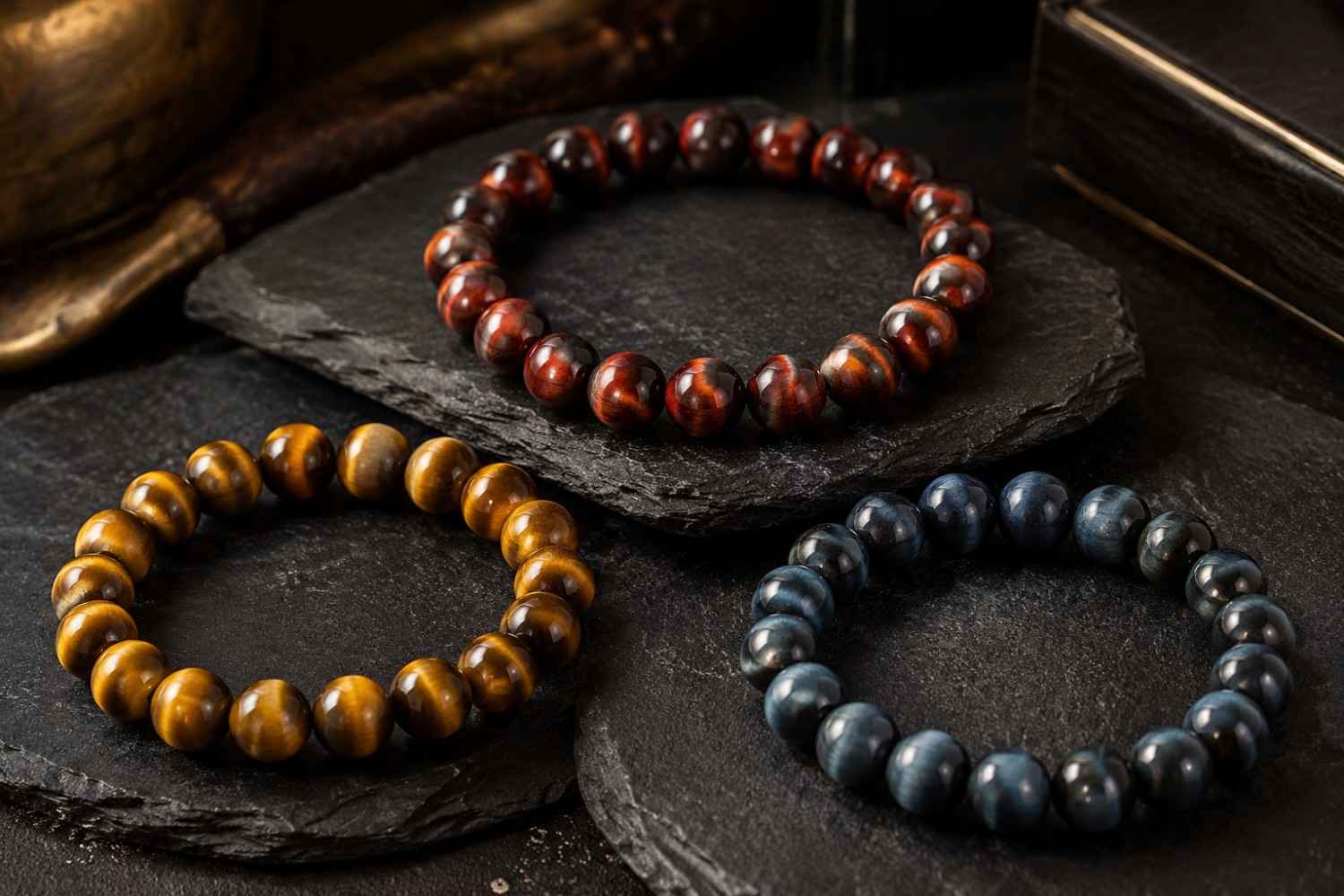
Tiger eye comes in three main colours. It's worth knowing which are natural and which are treated before you buy.
Gold and brown is the classic, natural variety. It's the all-purpose choice and is associated with confidence, focus and willpower.
The red tiger eye is usually heat-treated from the gold tiger eye to produce a richer colour. It's associated with energy, motivation and drive.
Heat treatment is stable and widely accepted, but a good seller will tell you this upfront rather than implying the red is natural.
Blue tiger eye, also called hawk's eye, is a naturally occurring blue-grey variety. It's associated with calm, communication and clarity. It's rarer than gold, so it usually costs a little more.
Knowing this protects you. Red tiger eye sold as rare natural red at a big premium is almost always just heat-treated gold, which is fine. But you shouldn't overpay for it based on a false claim.
Not sure which colour suits your goal? Read our Tiger Eye Bracelet Benefits guide to understand the traditional meanings of gold, red, and blue tiger eye.
Bead quality and construction
Authenticity is necessary but it's not enough on its own. Build quality decides how the bracelet looks and how long it lasts.
Chatoyancy quality is the first thing to check. The sharper and more even the moving band across each bead, the higher the grade.
You also want well-matched beads so the bracelet reads as a set rather than a jumble. Bead size matters too. 8mm is the everyday standard while 10mm reads bolder and shows more of the cat's eye effect.
Check the drilling. Clean, centred holes matter because chips at the drill points are the main durability risk.
The polish should be smooth and even across every bead since that's what brings out the chatoyancy. And look at the elastic or cord. It should be durable, ideally double-stranded, with restringing support available if you need it.
Raw vs polished
Tiger eyes are almost always sold polished or tumbled and for good reason. Chatoyancy only really shows on a smooth, polished surface.
A raw, unpolished piece won't display the cat's eye effect properly. For tiger eye specifically, polished is the right choice. The shimmer is the whole point and polishing is what reveals it.
Certification and energization
A reputable seller batch-tests their stones and provides proof. A good certificate names the issuing lab, discloses any treatment such as heat-treated red tiger eye, and includes a verifiable reference like a QR code or report number.
For an inexpensive stone like tiger eye, a batch certificate is the honest and practical standard. It means a representative sample from a production lot has been tested, rather than every single bead.
Energization, or prana pratishtha, is a legitimate traditional value-add when disclosed honestly. Ideally the seller includes a ceremony video.
But confirm the stone is genuine first. Treat energization as a secondary layer that adds intention, not as a substitute for authenticity.
Why the fakes market exists, and buying online vs in-store
Tiger eye is faked because fiber-optic cat's eye glass is cheap to mass-produce and looks convincing at first glance. Most new buyers simply don't know about the tilt test.
The good news is that once you do know it, the tiger eye becomes one of the easier stones to verify, even when buying online.
In-store, you can tilt the bead yourself and check for bubbles. That's a real advantage. Online, insist on a clear video showing the moving band rather than just a static photo.
Ask for certification with a lab name you can verify. And make sure the return policy is easy to use. The rule online is simple. If you can't see the chatoyancy moving and the seller won't name a lab, treat it as unverified regardless of price.
Red-flag checklist
No moving chatoyancy — a static or too-perfect central shimmer Visible air bubbles inside the stone (glass) Light, warm feel Unnaturally uniform colour across every bead Rare natural red sold at a big premium (almost always heat-treated) No certificate, no QR code, no lab named No return policy
Buying checklist
Genuine moving chatoyancy confirmed by the tilt test Cool feel, natural colour variation, depth to the shimmer Lab or QR certificate naming the issuer Honest disclosure of any colour treatment, especially red Even, well-matched beads, clean drilling, durable elastic Honestly disclosed energization with a ceremony video Easy return policy
Why buy from Vedaz
Every Vedaz tiger eye bracelet is lab-screened for genuine chatoyant quartz rather than fiber-optic glass or dyed stone.
Each one ships with a QR batch certificate you can verify independently. Any colour treatment is disclosed honestly so a heat-treated red is labelled as such and never sold as rare natural.
Energization is shown with a ceremony video and kept separate from the certificate. Each piece can also be matched to your chart through a free remedy reader so you choose the right colour and intention rather than making a market guess.
Understanding labs and certificates
Not all certificates carry the same weight. The most credible come from recognised gemmological labs that identify the mineral using proper instruments and disclose any treatment.
For the tiger eye this matters most around heat-treated red. Less credible are anonymous in-house certificates that simply assert authenticity with no verifiable reference behind them.
For an inexpensive stone like a tiger eye, you shouldn't expect a separate lab report for every bead. A batch certificate, where a representative sample of a production lot is tested, is the honest and economical standard.
The real test of any certificate is whether you can independently verify it. A QR code or report number you can actually check beats any printed claim, however official it looks.
Caring for it after purchase
One of the tiger eye's quiet advantages is how easy it is to maintain. It's a hard, durable quartz rather than a delicate or reactive stone.
Once it arrives, you can cleanse it with water, smudging, sound or moonlight depending on your preference. Recharge it in soft sunlight or moonlight every few weeks.
The only real cautions are to avoid prolonged hot water, harsh chemicals, and knocking it hard enough to chip the drill holes. Stored sensibly and cleansed occasionally, a genuine tiger eye bracelet keeps its lively chatoyancy for years.
That low-maintenance durability is part of what makes a genuine piece such good value compared with a glass fake that scratches and dulls over time.
Once you've chosen your bracelet, follow our How to Wear & Use a Tiger Eye Bracelet guide for the correct wrist, cleansing methods, and daily intention practice.
A quick authenticity recap
Here's the decision rule pulled together in one place. Start with the tilt test. Genuine tiger eye shows a soft band of light that moves across the bead with natural depth and slight irregularity. A static, too-perfect shimmer or a single central line fails the test.
Then check the physical tells. The real tiger eye is cool, dense and naturally varied in colour. Glass is warm, light and may show bubbles. Be alert to treatment claims, especially around red.
Red is almost always heat-treated so don't pay a premium for a rare natural red story. Require a verifiable certificate with a QR code or report number, not an anonymous sticker.
And judge construction and energization as secondary to authenticity, never as replacements for it. Run a bead through that sequence and you'll rarely be fooled.
A note on grading by chatoyancy
Once you've confirmed a tiger eye is genuine, the main quality difference between pieces comes down to the strength and evenness of the chatoyancy. A top-grade bracelet shows a sharp, bright, lively band that moves cleanly across every bead with well-matched colour throughout.
A lower grade shows a weaker or patchier shimmer, or beads that vary noticeably in how strongly the cat's eye appears.
Both can be genuine stones. But the higher-grade piece displays the effect that makes the tiger eye special in the first place. It's reasonable to pay a little more for that.
When you're comparing two genuine bracelets, let the quality of the moving light guide your choice rather than bead size or price alone.
Want to know what a genuine bracelet should cost? Explore our Tiger Eye Bracelet Price Guide to compare price ranges, certification, and what influences value.
Devika Rao
Certified Gemologist | 23
Devika Rao is a certified gemologist with 24 years of experience sourcing and grading natural stones. Her work focuses on helping buyers tell genuine tiger eye apart from heat-treated or synthetic imitations, using classical gemological checks alongside simple at-home tests.
🔮 Expertise: Chatoyancy & optical effect testing, treated vs. natural stone identification, sourcing from mining regions, imitation/synthetic detection
Frequently Asked Questions
1. How do I know tiger eye is real?
Tilt it under light. Real tiger eye shows a moving band of light called chatoyancy. Dyed glass shows no movement, or a too-perfect shimmer, and may have air bubbles inside. It also feels warm and light rather than cool and dense.
2. What's the difference between gold, red and blue tiger eye?
Gold is the natural all-purpose confidence stone. Red is usually heat-treated from gold tiger eye and is associated with energy and drive. Blue, or hawk's eye, is a rarer natural variety linked to calm and clarity.
3. Is red tiger eye natural?
Most red tiger eye is heat-treated from gold tiger eye. That's stable and acceptable, but a good seller will say so rather than charging a premium for natural red.
4. Is raw or polished tiger eye better?
Polished. The chatoyancy only shows properly on a smooth surface so polished is the norm and the right choice for tiger eye.
5. What size tiger eye bead is best?
8mm for everyday wear, 10mm for a bolder look that shows more of the cat's eye effect. Authenticity and chatoyancy quality matter more than size.
6. How do I check a certificate is real?
It should name the issuing lab, disclose any treatment, and include a verifiable QR code or report number. An unbranded printed claim with nothing to check is not enough.
7. Can I verify tiger eye from an online listing?
Yes. Ask for a video showing the band of light moving as the bead is tilted, plus certification. A static photo is not enough to confirm chatoyancy.
8. Can I get one matched to my birth chart?
Yes. Vedaz's free remedy reader can align the bracelet to the courage and confidence-governing parts of your chart, or recommend a chart-specific gemstone if tiger eye isn't the right fit.
Related Blogs

How Much Does a Tiger Eye Bracelet Cost? Price Guide, Value & Buying Tips
Find out what a genuine tiger eye bracelet should cost, what affects its price, and how to avoid overpaying for fake stones.

How to Wear & Use a Tiger Eye Bracelet for Confidence and Protection
Learn the right way to wear a tiger eye bracelet, choose the best wrist, and build a simple daily practice for confidence and protection.

Tiger Eye Bracelet Benefits: Confidence, Protection & Focus
Discover tiger eye bracelet benefits for confidence, focus, protection and grounding. Learn who can wear it and how it supports daily life.
7 Chakra Bracelet Price Guide: Cost, Value & Buying Tips
Wondering how much a genuine 7 chakra bracelet should cost? Compare price ranges, understand what you're paying for, and avoid common fakes.