Kundli Matching for Marriage in Karnataka: A Practical, Honest Guide to Guna Milan and What It Really Means
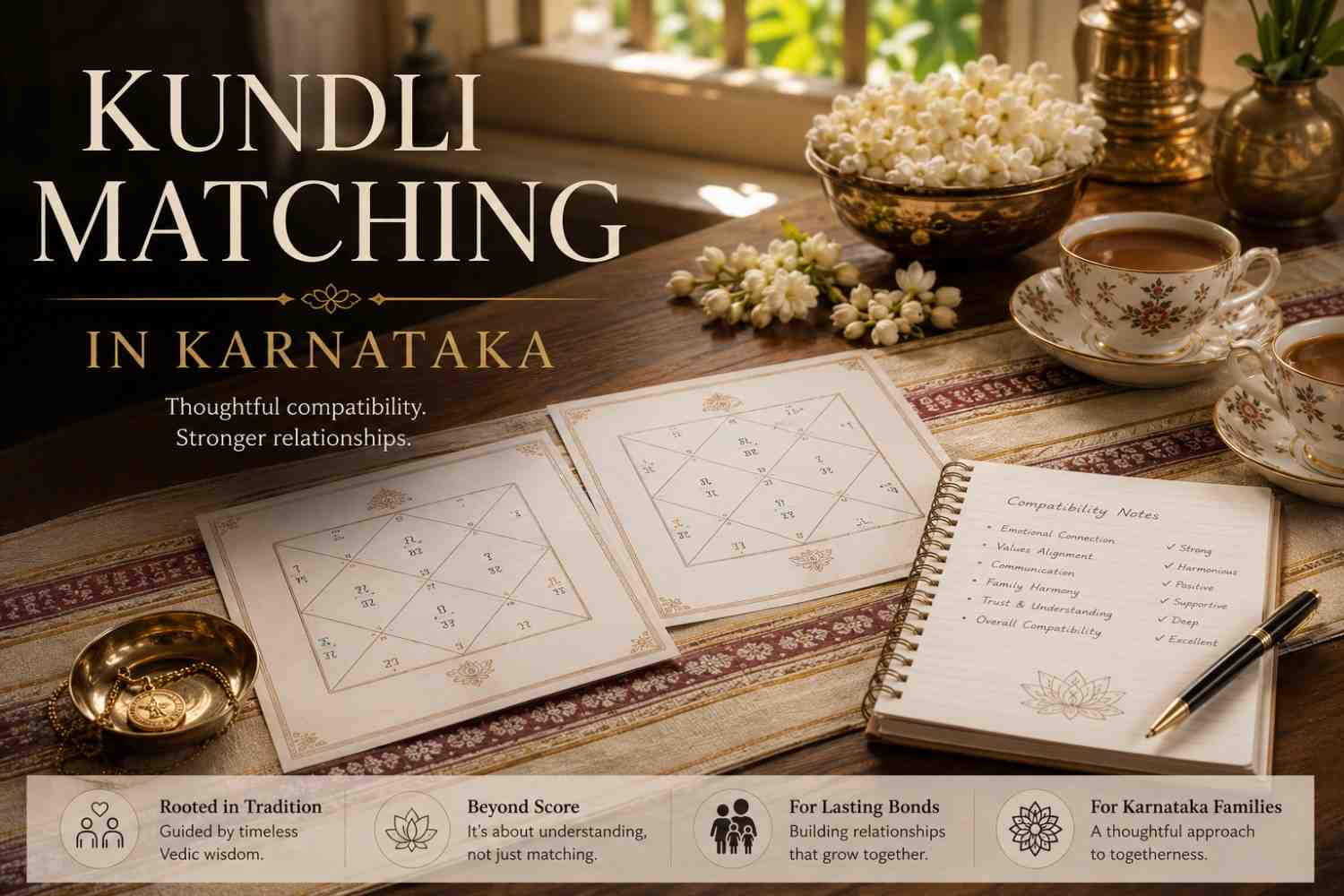
Kundli matching in Karnataka carries enormous emotional weight, but the Guna Milan score was never meant to function as a final verdict on marriage. This guide explains what the Ashtakoota system actually measures, how Manglik, Nadi, and Bhakoot doshas are honestly interpreted, and why real compatibility always goes beyond numbers alone.
Kundli matching, also called Guna Milan, carries enormous weight in marriage discussions across Karnataka. A score out of 36 can influence family decisions, create anxiety around doshas, and sometimes become the deciding factor in whether a match moves forward.
The problem is that many people know the score matters, but far fewer understand what it actually measures.
Does a low score mean the marriage will struggle? Are Manglik, Nadi, or Bhakoot doshas really as serious as they are often made to sound? And can one number genuinely determine whether two people are compatible?
The honest answer is much more balanced than many people realize.
Kundli matching is a traditional compatibility framework, not a prediction machine. It can offer useful insights when used thoughtfully, but it was never meant to replace judgment, communication, emotional compatibility, or the wishes of the couple themselves. This guide explains what the Ashtakoota Guna Milan system actually measures, how doshas are meant to be interpreted, and why the healthiest approach to marriage compatibility always goes beyond a single score.
Quick Facts
| Topic | Honest Reality |
|---|---|
| System used | Ashtakoota Guna Milan |
| Total score | 36 points |
| Common acceptable range | Usually 18 or above |
| Most heavily weighted factor | Nadi (8 points) |
| Most discussed doshas | Manglik, Nadi, Bhakoot |
| Most important honest point | The score is guidance, not a final verdict |
What Ashtakoota Guna Milan Actually Measures
The Ashtakoota system compares the Moon signs and nakshatras of two people across eight traditional compatibility factors known as kootas. Together, these eight factors create the familiar score out of 36 that most families focus on during kundli matching.
The eight kootas are:
-
Varna (1 point) — broad temperament and value compatibility.
-
Vashya (2 points) — mutual attraction and influence within the relationship.
-
Tara (3 points) — wellbeing and compatibility connected to nakshatras.
-
Yoni (4 points) — instinctive and physical compatibility.
-
Graha Maitri (5 points) — emotional, mental, and intellectual understanding.
-
Gana (6 points) — temperament compatibility between personality types. Because Gana primarily examines behavioural styles and interpersonal tendencies.
-
Bhakoot (7 points) — emotional harmony and family-related compatibility.
-
Nadi (8 points) — health and progeny compatibility within the classical framework.
Traditionally, a score above 18 is considered acceptable, while higher scores are generally viewed more positively. But one of the biggest misconceptions about Guna Milan is the belief that the score functions as a simple pass-or-fail test.
It does not.
-
The system measures specific types of compatibility, not the entire marriage. The score reflects how two charts compare across the eight kootas. It was never intended to capture every factor that influences a relationship.
-
Each koota contributes only one part of the picture. A couple may score lower in one area while showing strength in several others. Looking only at the final number often hides important details within the breakdown.
-
The score is a framework, not a verdict. Traditionally, the purpose of Guna Milan was to guide discussion and highlight areas worth understanding more deeply. It was never designed to determine the fate of a marriage by itself.
Understanding what the system measures is important because many fears around kundli matching come from expecting the score to do something it was never meant to do.
What the Score Does and Does Not Mean
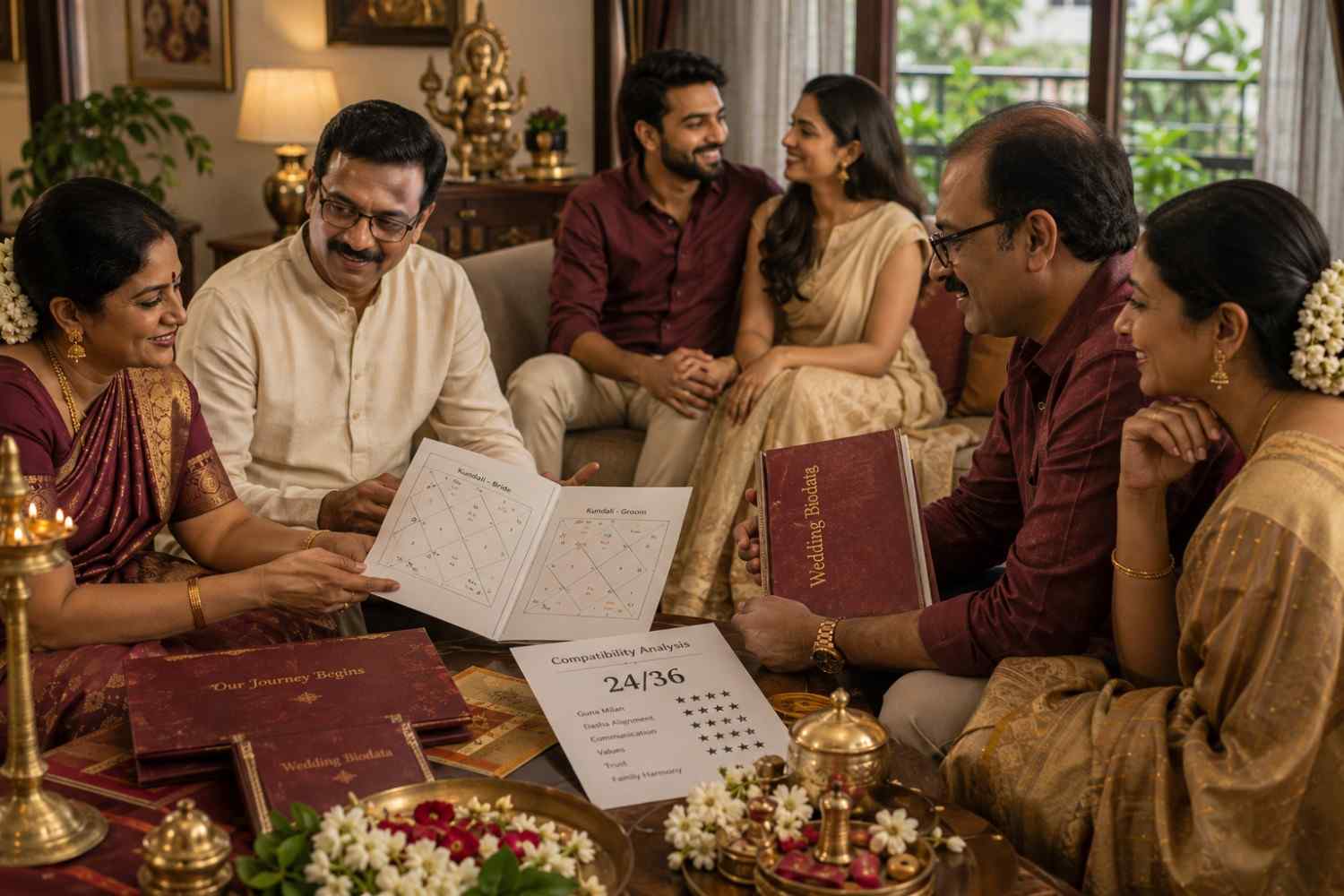
Once people see a score, the natural question becomes: is it good or bad?
The answer is not always straightforward.
A higher score generally suggests stronger compatibility across the traditional factors being measured. A lower score suggests that some areas may require more attention. But several important realities often get lost when discussions focus only on the final number.
-
A high score does not guarantee a successful marriage. Many high-scoring matches still face communication issues, family tensions, value differences, or other challenges that astrology cannot fully predict.
-
A low score does not predict failure. Some couples with modest scores go on to build stable, loving, and successful marriages because real compatibility involves far more than a numerical result.
-
The score is not a complete horoscope analysis. Guna Milan primarily compares Moon signs and nakshatras. It does not automatically evaluate the full birth charts, divisional charts, planetary strengths, or broader relationship combinations.
-
Dosha cancellations matter. Manglik, Nadi, and Bhakoot doshas all have recognised cancellation and mitigation conditions. A score or dosha should never be interpreted without checking those factors first.
-
Human compatibility remains essential. Communication, emotional maturity, mutual respect, trust, shared goals, and long-term expectations influence a marriage in ways that no scoring system can fully measure.
-
The score should support judgment, not replace it. The healthiest use of kundli matching is as one source of perspective alongside practical compatibility and thoughtful decision-making.
Honestly, this is where many families begin feeling calmer. The score is meaningful, but it is not all-powerful.
Manglik, Nadi, and Bhakoot — The Doshas Families Worry About Most
If any part of kundli matching creates anxiety, it is usually these doshas.
Unfortunately, they are also among the most misunderstood topics in marriage astrology.
Manglik Dosha
Manglik dosha is associated with specific placements of Mars in the birth chart. Because it is discussed so frequently, many people assume it automatically creates severe marriage problems.
The reality is far more nuanced.
-
Manglik dosha has multiple cancellation conditions. Classical astrology contains several recognised situations where the effect is reduced, balanced, or modified significantly.
-
Mutual Manglik status is one of the most common examples. When both partners are Manglik, traditional astrology often views the situation very differently than when only one partner is.
-
The entire chart matters. Mars does not exist in isolation. Benefic influences, planetary strength, house placements, and broader relationship indicators all affect interpretation.
Simply identifying Manglik dosha is not the same as completing the analysis.
People interested in understanding cancellation rules in more depth may also find our guide on Manglik cancellations helpful, particularly because classical astrology contains several recognised exceptions that significantly modify interpretation.
Nadi Dosha
Nadi receives the highest weight in the Ashtakoota system, which is one reason families often become particularly concerned about it.
But concern and certainty are not the same thing.
-
Nadi dosha also has recognised cancellation conditions. Classical texts contain exceptions and mitigating factors that should always be examined.
-
The broader chart remains important. A Nadi mismatch should never be treated as the only factor determining compatibility.
-
Deeper analysis comes before conclusions. The real question is not whether a mismatch exists, but how significant it remains after all other chart factors are considered.
For readers wanting a deeper look at traditional exceptions, health considerations, and cancellation principles, our article on why Nadi Dosha matters explores the topic in greater detail.
Bhakoot Dosha
Bhakoot dosha relates to specific Moon-sign relationships between two charts.
Like the other major doshas, it is often discussed in a way that creates more fear than understanding.
-
Bhakoot has mitigation and cancellation rules. Proper analysis includes checking these before making strong claims.
-
Context determines significance. The same Bhakoot combination can carry different weight depending on the overall chart structure.
-
No single dosha should dominate the entire assessment. Genuine compatibility analysis looks at the full chart rather than focusing on one factor alone.
Those interested in understanding Moon-sign relationships, mitigation rules, and family harmony considerations can also explore Bhakoot Dosha's role.
And honestly, that principle applies to almost every dosha in astrology. The purpose is deeper analysis—not instant panic.
The Karnataka Context
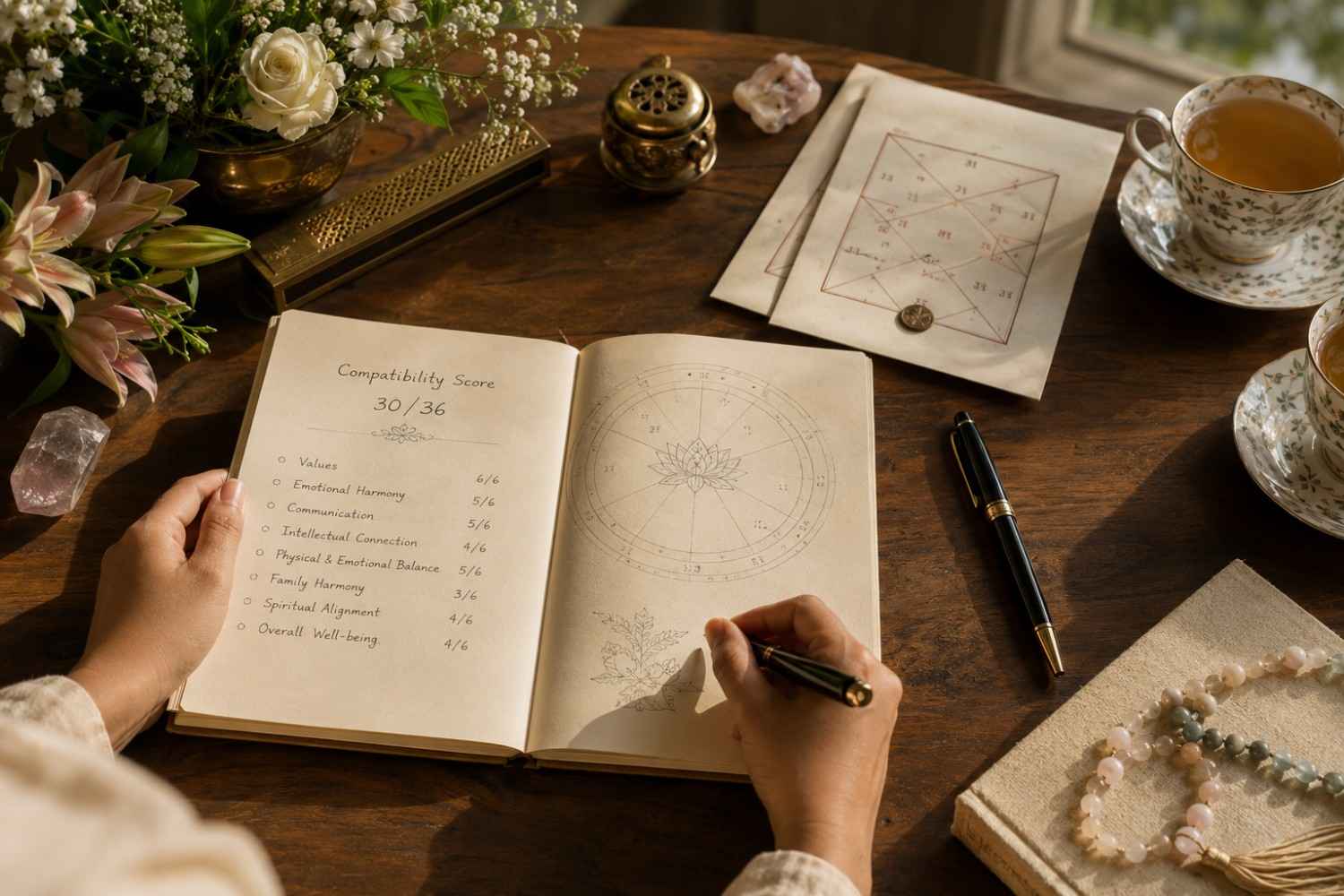
In Karnataka, kundli matching remains a deeply important part of arranged marriage culture.
Many families continue to consult astrologers before moving forward with a match, and in some communities the Guna Milan score still carries significant emotional and social weight. For parents and elders especially, horoscope matching often feels like an important layer of reassurance before a major life decision.
At the same time, marriage decisions across Karnataka are evolving.
Many modern families balance astrology with practical compatibility. Education, communication, emotional maturity, career goals, family values, lifestyle expectations, and the wishes of the couple themselves increasingly matter alongside the horoscope.
And honestly, that balance is healthy.
The strongest approach is usually neither blind faith nor complete dismissal. It is treating kundli matching as one useful perspective while recognising that marriage is ultimately lived by real people, not by charts.
The tradition was meant to support thoughtful judgment—not replace it.
When Kundli Matching Causes Real Harm
Most problems do not come from kundli matching itself.
They come from how it is sometimes used.
-
A score becomes more important than the people involved. Couples who genuinely understand each other can sometimes be judged primarily by a number rather than by the actual relationship.
-
Doshas are treated like final verdicts. Labels such as Manglik, Nadi, or Bhakoot can create enormous anxiety when presented without context or proper analysis.
-
Fear replaces understanding. Families sometimes become trapped by worst-case predictions instead of asking thoughtful questions about what the chart actually suggests.
-
Expensive remedies suddenly become the solution. One of the most common patterns in fear-based astrology is diagnosis followed immediately by costly rituals, gemstones, or remedies.
-
Human compatibility gets ignored. Trust, kindness, communication, emotional safety, and shared values often influence long-term happiness more than any single astrological factor.
A low score or dosha should lead to deeper conversation, not panic.
The moment astrology creates fear instead of understanding, something has gone wrong.
Get an Honest Kundli Matching Analysis — Vedaz
Vedaz approaches kundli matching through full-chart context rather than fear-based scoring alone. The analysis includes Ashtakoota Guna Milan, dosha cancellation checks, and broader compatibility factors explained honestly and clearly without fatalistic framing or expensive remedy pressure.
People who want to explore compatibility beyond scores and doshas may also find Mitra AI useful for conversations around emotional understanding, communication, trust, and relationship dynamics.
For readers navigating uncertainty around matchmaking, expectations, and relationship concerns, Rati AI offers a space to think through emotional questions and compatibility challenges more thoughtfully.
Free at vedaz.io.
Final Thought
Kundli matching is one of the most emotionally significant uses of astrology across Karnataka and much of India, which is exactly why it deserves careful and honest interpretation.
The Ashtakoota system is a genuine traditional compatibility framework, and it can absolutely offer useful insights when approached thoughtfully. But it is still only one part of understanding whether two people can build a healthy marriage together.
The score is not destiny.
Families who wish to explore broader timing questions alongside compatibility can also read about timing of the marriage, keeping in mind that astrology is best approached as guidance rather than certainty.
Doshas are not automatic verdicts.
And no single number can fully measure communication, maturity, emotional safety, trust, kindness, shared values, or mutual respect.
The healthiest approach is simple.
Take kundli matching seriously—but take it proportionately.
Ask deeper questions. Look beyond the headline score. Check cancellation conditions properly. Pay attention to the actual relationship between the people involved.
And most importantly, do not allow fear-based interpretations to override thoughtful judgment.
Because honestly, the tradition was meant to guide families, not frighten them.
Vaishnavi Bhardwaj
Marriage Astrology, Kundli Matching & Relationship Analysis | 12+ Years
Vaishnavi Bhardwaj is a Vedic astrology writer specializing in marriage astrology, compatibility assessment, and relationship analysis. Her work focuses on helping readers understand classical Jyotish principles related to partnerships, kundli matching, and significant relationship milestones.
Frequently Asked Questions
1. What is a good kundli matching score for marriage?
In the Ashtakoota Guna Milan system, the total score is out of 36, and traditionally 18 or above is considered acceptable. Higher scores are generally viewed more favourably. However, the score should not be treated as a pass-or-fail result because it is only one compatibility indicator rather than a complete prediction of marital success.
2. Should a low Guna Milan score stop a marriage?
Not usually. A lower score simply suggests that some traditional compatibility factors may show more friction. It does not automatically mean the marriage will fail. Full-chart analysis, dosha cancellation checks, and the actual compatibility between the couple matter far more than the number alone.
3. How serious is Manglik dosha in kundli matching?
Manglik dosha is often presented much more fearfully than it should be. Classical astrology contains several cancellation conditions, including situations where both partners are Manglik. A proper astrologer checks these before drawing conclusions.
4. What are the eight kootas in Ashtakoota matching?
The eight kootas are Varna, Vashya, Tara, Yoni, Graha Maitri, Gana, Bhakoot, and Nadi. Together they form the 36-point Guna Milan system, with each koota examining a different area of compatibility.
5. Is kundli matching different in Karnataka?
The core system is largely similar across India, although different communities may place different levels of importance on particular factors. In Karnataka, kundli matching continues to play an important role in many arranged marriages while increasingly being balanced with practical compatibility considerations.
6. Can kundli matching cause harm?
Yes, when it is treated rigidly or fearfully. Real harm occurs when scores and doshas are treated as final verdicts without deeper analysis. Used honestly, kundli matching can encourage thoughtful discussion. Used fatalistically, it can create unnecessary anxiety and heartbreak.
Related Blogs

Dreaming of moving abroad? Check Foreign Travel Astrology
Is your destiny written in the stars? Discover if the universe is guiding you toward a life abroad!
The Best Places to Travel Abroad Foreign Travel Astrology
Is foreign travel written in your stars? Explore how astrology influences your journeys and uncover the best destinations for your zodiac sign!

Can Your Birth Chart Predict Depression Symptoms?
This article examines whether astrological birth charts can predict depression symptoms, contrasting astrological beliefs with psychological research on personality traits and mental health.
The Manifestation Secrets Hidden in Celebrity Birth Charts
Find out what makes fame unique and special. This guide lets you know how some of the biggest celebrities use planetary help to become successful—and how you can do the same.