Study Room and Home Office Vastu: Best Directions, Desk Placement & Focus Tips
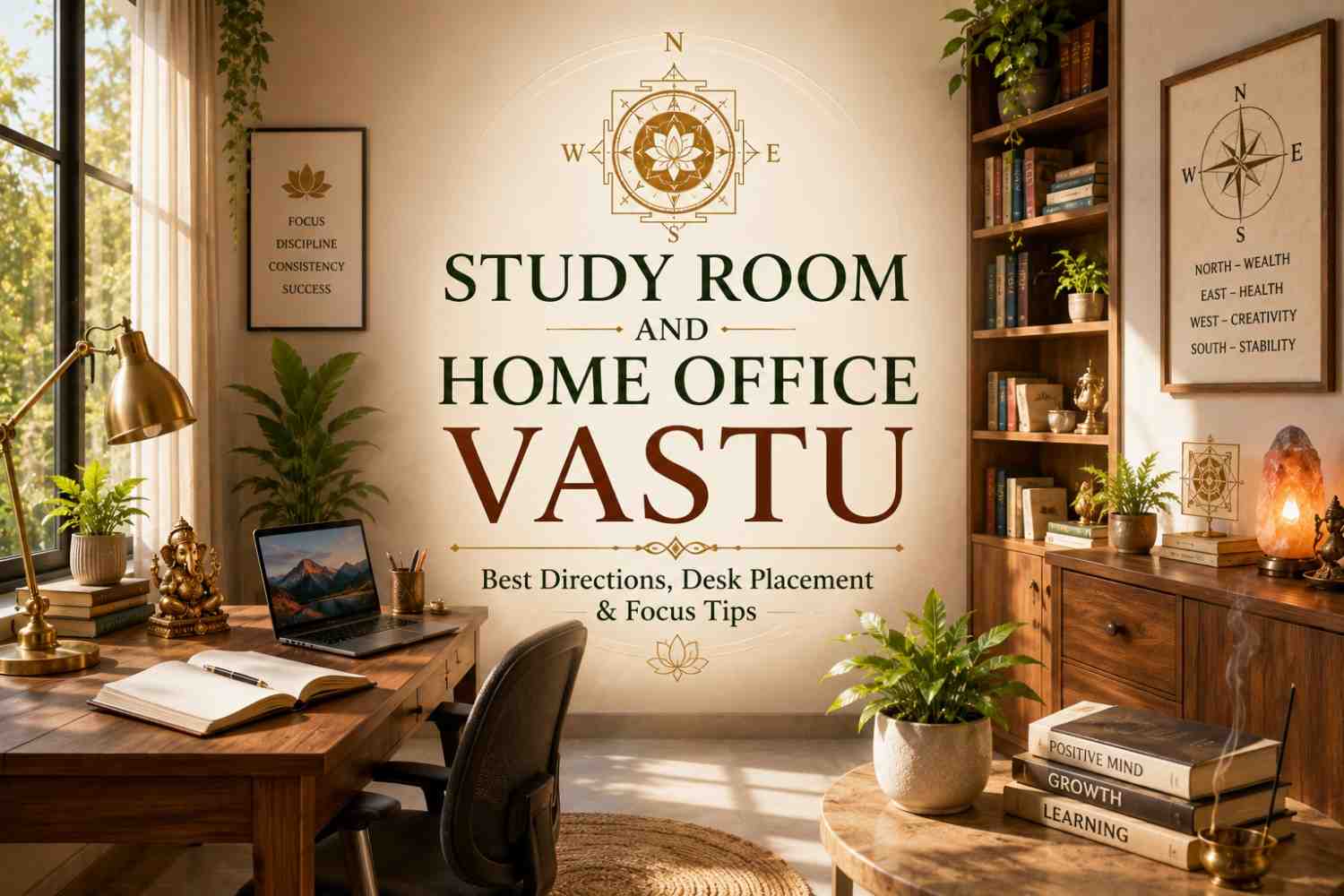
In Vastu Shastra, East and North are the classical directions for a study room or home office. The worker should face East or North while seated. The desk belongs against the West or South wall. Books and learning materials go on the East, Northeast, or North walls.
- ◦Study Room and Home Office Vastu Quick Facts
- ◦Best Direction for a Study Room or Home Office According to Vastu
- ◦Desk Placement and Working Direction in a Study Room
- ◦Where to Keep Books, Learning Materials, and Equipment
- ◦Light, Color, and Atmosphere in a Study Room
- ◦What to Avoid in a Study Room or Home Office
- ◦Vastu Tips for Students: Making Your Study Space Work for Exams
- ◦Vastu for Home Office Workers: What's Different
- ◦How to Apply Study Room Vastu in a Small Apartment
- ◦Practical Vastu Remedies for Non-Ideal Study and Office Spaces
- ◦Final Thought
There's a reason some study spaces just feel right — where you sit down and the work flows — and others feel like a constant battle against distraction. The lighting, the direction you're facing, what's behind you, what's in front of you — these things affect concentration more than most people realize.
Classical Vastu has been saying this for centuries. The directional and elemental factors that shape mental clarity, learning capacity, and sustained focus are exactly what Vastu addresses when it comes to study and office spaces. And with so many people now working from home full-time, getting this space right matters more than ever.
This guide covers everything — where to place your study room or home office, how to position your desk, what colors and lighting work best, and how to adapt when your home doesn't give you a dedicated room.
Study Room and Home Office Vastu Quick Facts
| Factor | Classical Guideline |
|---|---|
| Primary direction | East or North — light, learning, and forward energy |
| Acceptable alternatives | Northeast (combined quality), West (with care) |
| Avoid | Southwest (heavy zone), South (Yama direction), under stairs |
| Worker faces | East or North while working |
| Desk placement | West wall (face East) or South wall (face North) |
| Books and materials | East, Northeast, or North walls |
| Key principle | Direction + light + structural support = sustained concentration |
Best Direction for a Study Room or Home Office According to Vastu
East-Facing Study Room
East is the classical first choice for any study or office space. It's the direction of Indra — king of the gods — and the rising Sun. Think about what the East represents: beginnings, vitality, the forward movement of a new day. That energy is exactly what intellectual work needs.
East-facing study rooms also catch morning sunlight during the most cognitively productive hours, which isn't just good Vastu — it's good science. This direction works especially well for students, those in education, and anyone doing sustained learning-focused work.
North-Facing Study Room
North is the strong second option, and for certain types of work, it can actually be the better choice. The North is the direction of Kubera (god of wealth) and Mercury — both associated with commerce, opportunity, and sharp analytical thinking.
If your work involves finance, business, technology, or any kind of commercial or data-driven analysis, a North-facing office is particularly well-suited. Many business professionals find this direction more supportive for output-focused work than East.
Northeast-Facing Study Room
The Northeast combines the qualities of both East and North — which makes it excellent for higher learning, advanced study, contemplative scholarship, and dharmic intellectual work.
Some traditions are cautious about placing active commercial work in the sacred Northeast, but for academic and reflective work, it's one of the best placements available.
Desk Placement and Working Direction in a Study Room
This is where a lot of people go wrong — they get the room direction roughly right but then position the desk incorrectly inside it. Here's what actually matters:
- Desk against the West wall — you face East; this is the most classical arrangement and the one to default to
- Desk against the South wall — you face North; a strong alternative, especially for business-focused work
- Solid wall behind you when seated — this provides the structural support that Vastu associates with stability and confidence while working
- Door visible from the desk — either directly or in your peripheral awareness; sitting with your back fully to the door creates a subconscious vulnerability that disrupts focus
What to avoid:
- Facing South while working (Yama direction — not supportive for focused, forward-moving activity)
- Facing West as your primary working direction
- Sitting with a window directly behind you (backlight glare on screens, and energetically unsettled)
Where to Keep Books, Learning Materials, and Equipment
Placement of what's in the room matters as much as the room's direction itself.
- Books and reference materials — store on the East, Northeast, or North walls; these directions carry the learning and forward-energy qualities that support study
- Sacred texts and inspirational books — the Northeast is the best spot; it honors the contemplative dimension of serious study
- Computer and primary work equipment — on the desk, oriented so the screen faces the direction you're working toward (East or North)
- Heavy equipment (printers, large monitors, filing cabinets) — South or West of the room; heavier items belong in the heavier zones
- Avoid placing books or learning materials in the Southwest — that's the heavy, stabilizing zone, and it doesn't support the light, forward quality that learning needs
This kind of room-level thinking is part of what the Vastu Shastra Complete tradition addresses systematically — not just one element but how all the elements work together.
Light, Color, and Atmosphere in a Study Room
Natural Light
- Windows on the East or North walls are ideal — morning and indirect light during work hours, without the afternoon harshness
- Don't position your desk with the window directly behind you — back-light glare on screens, and it's energetically unsettled
- Diffused light is better than direct sunlight on your work surface; the light should illuminate without blinding
Artificial Lighting
- A focused task light at the desk is non-negotiable — overhead lighting alone is never enough for sustained work
- Warm white light (2700–3500K) is generally better for long work sessions than cool blue light, which causes eye fatigue faster
- Combine ambient and task lighting rather than relying on one harsh overhead source
Wall Colors That Support Concentration
- Light colors throughout — white, cream, light yellow, light blue, soft green
- Yellow is particularly supportive in East-facing study rooms — it aligns with the Sun's direction
- Light blue supports concentration and mental clarity
- Avoid dark or aggressive colors as primary wall tones
- Avoid red as a dominant color — it's too activating for the kind of sustained, settled focus that study requires
What to Avoid in a Study Room or Home Office
Some of these are Vastu principles. Some are just practical. Most are both.
- Bed in the study room — mixing sleep and work zones disrupts both; the brain needs these to be separate spaces
- Toilet directly adjacent or sharing a wall with the study space
- Excessive clutter — this one needs no Vastu citation; a cluttered desk is a cluttered mind
- Broken furniture, cracked surfaces, damaged equipment — replace or repair; a maintained space signals active, productive energy
- Mirror reflecting the desk or worker — creates visual distraction and restlessness
- Heavy beams directly overhead the working position
- Blank wall directly in front with nothing to rest the eyes on — a little openness or meaningful imagery in the forward view helps
Vastu Tips for Students: Making Your Study Space Work for Exams
Students have some specific considerations that go beyond the general study room principles.
- Face East while studying — the Sun's rising energy is particularly aligned with learning and retention
- Use a dedicated chair, not the bed and not the floor; your body posture sends a signal to your brain about what mode you're in
- Place an image of Goddess Saraswati on the wall facing you, or at the entry to your study area
- A small altar with a Saraswati image and a lamp lit during study sessions connects the dharmic dimension to the academic one — many students find this genuinely grounding
- Treat books with respect — don't step on them, keep them clean, bless them at the start of the academic year (traditional practice)
- During exam preparation specifically — intensified East-facing study and Saraswati invocation are classically supportive practices
If you want support with building the focus and mental discipline that exam season demands, Arjun - arjun — Vedaz's AI astrologer specializing in concentration and focus — is worth exploring.
Vastu for Home Office Workers: What's Different
Working from home full-time has its own set of Vastu considerations that are slightly different from the student's study room.
- Commerce, business, financial work — a North-facing desk is often more supportive than East for output-driven professional work
- Creative and content work — East-facing supports creative flow and generative thinking
- Technical and analytical work — Northeast is a particularly good combination
- Visual separation between work space and the rest of the home — this is one of the most important things for work-from-home discipline; a curtain, a screen, or even just a dedicated area rug can create the mental boundary
- Working from the bedroom (especially the bed) is discouraged both in Vastu and in contemporary productivity research — the two zones need to stay separate; for more on keeping the bedroom's quality intact, Bedroom Vastu is worth reading alongside this
- A small Ganesha image at the entrance to your home office is a classical remedy for removing obstacles in work
- Video call backgrounds — keep what's visible behind you professional and uncluttered; this is both Vastu-consistent and practically important
How to Apply Study Room Vastu in a Small Apartment
No dedicated room? That's fine. The principles scale down well.
- Designate a specific corner with a desk and chair — apply the same directional rules at smaller scale; desk against the West wall so you face East, or against the South wall so you face North
- Visual separation — a curtain, folding screen, or area rug demarcating the work zone does more than you'd think for maintaining focus
- For shared spaces where multiple family members work or study — scheduling and mutual respect for focus times often matters more than ideal Vastu geometry
- A small Saraswati image and a daily ritual of beginning study with brief intention (lighting a small lamp, a short invocation) creates the conscious dimension that a full dedicated room would otherwise provide
- Never study from the bed — this is the single most universally applicable piece of advice regardless of space constraints
The core principle holds at any scale: a clean, organized, East or North-facing work corner used consistently for focused work will serve its purpose.
Practical Vastu Remedies for Non-Ideal Study and Office Spaces
Sometimes you're working with what you have. Here's how to make the best of it:
- Non-ideal direction for the room? Compensate with desk orientation — even if the room faces South, position your desk so you personally face East or North while seated
- No window or poor natural light? Invest in good warm-toned task lighting; the light quality at the desk matters more than the room's overall brightness
- Clutter that can't be fully cleared? Keep the desk surface itself clear even if storage is imperfect; the immediate work zone is what matters most
- Bed in the same room (studio apartment)? Use a folding screen or curtain to visually separate the two zones, and never work while lying on the bed
Final Thought
The study room or home office is where the work that shapes your outcomes actually happens. Classical Vastu takes this seriously — because the directional, lighting, and arrangement factors that affect concentration are exactly what Vastu is designed to address.
If you have a choice in placement, East or North-facing is the one to go with. Within whatever space you have, position your desk so you face East or North while working, keep a solid wall behind you, store books on the learning-direction walls, and choose light colors with warm balanced lighting.
But beyond the specifics, the universal principle here is intention. A study space treated as the location of important work — kept clean, organized, used consistently — develops a quality over time that supports everything that happens within it.
Add a brief daily invocation of Saraswati (for students) or Ganesha (for work), use a proper chair rather than the bed, and the space becomes what classical tradition always pointed toward: an environment that actively supports the activity it houses.
Understanding how your personal chart interacts with your study or work patterns can add another layer of insight — reading your birth chart alongside these Vastu principles often reveals why certain spaces and directions feel more naturally aligned for you than others.
Niharika Venkataraman
Home Vastu, Workspaces & Interior Planning | 11+ Years
Niharika Venkataraman specializes in home Vastu, study environments, and workspace optimization. Her articles blend traditional Vastu concepts with modern interior design practices.
Frequently Asked Questions
1. Which direction should a study room or home office be in?
East or North are the classical choices. East (direction of Indra and the rising Sun) works best for students and learning-focused work. North (direction of Kubera and Mercury) is more favorable for business, commerce, and analytical work. Northeast combines both and suits advanced or contemplative study well. Avoid Southwest, South, and under stairs.
2. Which direction should I face while studying or working?
East or North while seated at your desk. Achieve this by placing the desk against the West wall (you face East — the most classical) or against the South wall (you face North). Keep a solid wall behind you for support, and make sure the door is visible or in your peripheral awareness.
3. Where should I keep books and study materials?
On the East, Northeast, or North walls — these directions carry the learning and forward-energy quality that study needs. Sacred texts and inspirational books particularly belong in the Northeast. Avoid the Southwest for books and learning materials where possible.
4. What colors work best in a study room?
Light, calm colors — white, cream, light yellow, light blue, soft green. Yellow supports the East/learning direction. Light blue helps concentration and clarity. Avoid dark tones and avoid red as a dominant color — it's too activating for sustained focused work. Use warm white artificial lighting (2700–3500K) rather than harsh cool light.
5. How do I set up a study area in a small apartment without a dedicated room?
Designate a specific corner with a desk and chair, facing East or North. Use a curtain, screen, or area rug to create visual separation from the rest of the room. A small Saraswati image and a brief daily intention ritual (lighting a lamp before starting) creates the conscious quality a full room would provide. Never study from the bed.
6. What should students focus on most for exam preparation?
East-facing direction, a dedicated chair (not the bed), a Saraswati image at the study space, a small lamp lit during study sessions, and books treated with respect. During exam prep specifically, intensified East-facing study and Saraswati invocation are classically recommended. Keeping the study space clean and clutter-free during this period also matters.
Related Blogs

Feng Shui Chinese Art of Finding Love
Simple, down-to-earth Feng Shui love hacks to help you shift your space, clear emotional blocks, and invite real, meaningful love into your life.
Effortless Feng Shui Tips to Boost Romance
Unlock the magic of love with astrology-backed rituals to attract your soulmate using candles, moon phases, and vision boards.

Why Every Home Needs Vastu Shanti?
Find out the 10 strong Vastu Shanti advantages that can make your house more energy level, eliminate the negativity, and bring abundance, bliss and well-being.
Vastu for Home Explained: Best Directions, Room Placement & Easy Fixes
Complete Vastu guide for home: directions, kitchen, bedroom, entrance & remedies. Improve energy, health & prosperity easily.