Diwali 2026: Date, Lakshmi Puja Muhurat, Rituals, Remedies & 5-Day Festival Guide
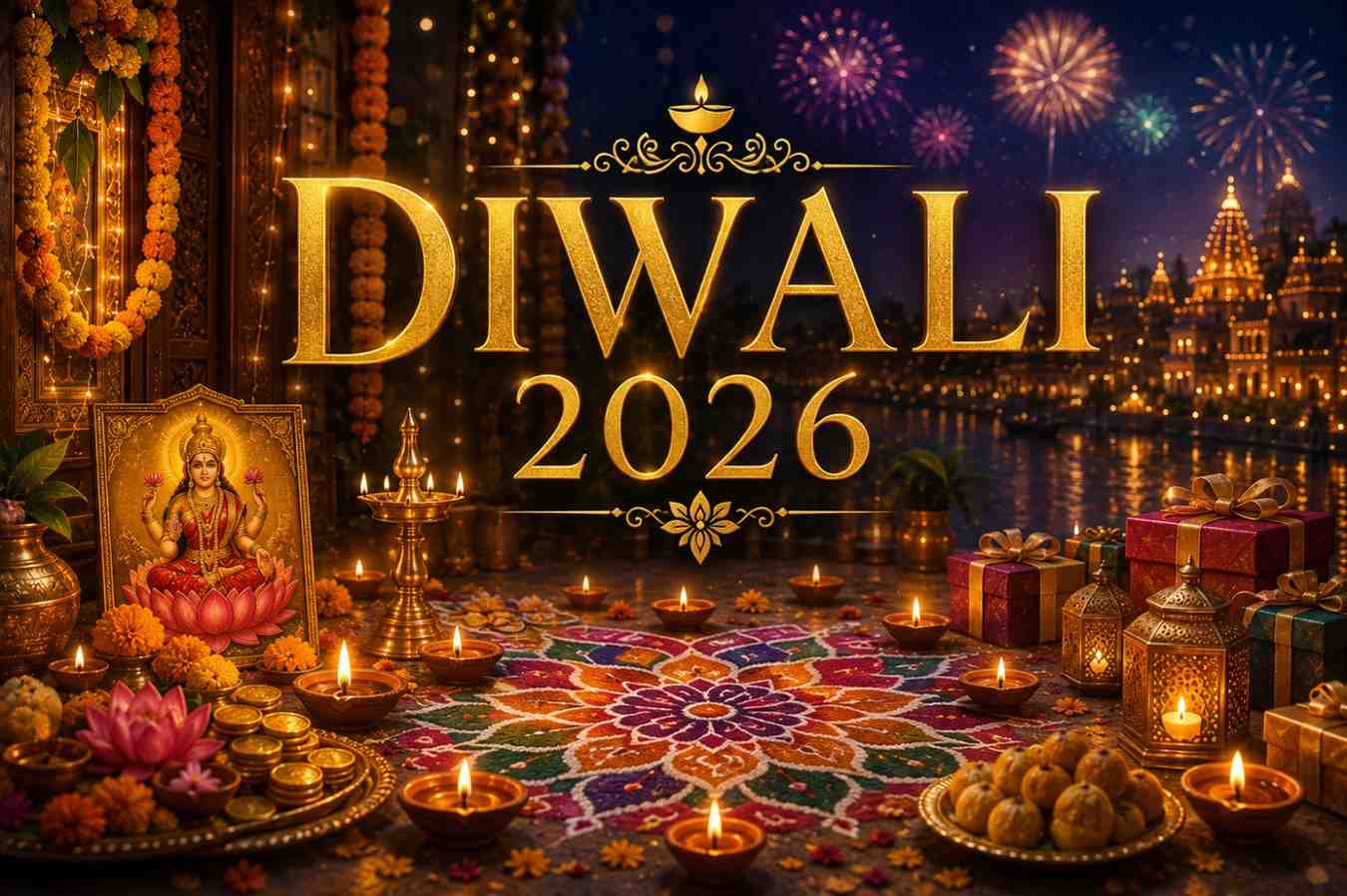
Diwali 2026 falls on Sunday, November 8 — the new moon of Kartika. The Lakshmi Puja muhurat is during Pradosh Kaal (approximately 1.5 hours before and after sunset). The five-day festival runs from Dhanteras (November 6) through Bhai Dooj (November 10).
Every year, Diwali comes around and most people have the same questions. When exactly is it? What time should the puja happen? Does it matter which lamp goes where? And honestly — what is the right way to do this?
If those are your questions, you're in the right place. This guide covers Diwali 2026 completely — the exact dates, the Lakshmi Puja muhurat, what each of the five days actually means, why the astrology of this night is special, and what remedies work best during this window.
No fluff. Just everything you need to celebrate Diwali 2026 the right way.
Diwali 2026 Quick Facts
| Diwali 2026 date | Sunday, November 8, 2026 (Lakshmi Puja day) |
| Kartika Amavasya | The new moon of the Kartika month — the astronomical basis for Diwali |
| Five-day festival | Dhanteras, Naraka Chaturdashi, Lakshmi Puja, Govardhan Puja, Bhai Dooj |
| Primary deity worship | Goddess Lakshmi, Lord Ganesha, Goddess Saraswati (many traditions) |
| Astrological significance | New moon — the darkest night, when lighting lamps is most symbolically and energetically meaningful |
| Pradosh Kaal | Most auspicious window for Lakshmi Puja — approximately 1.5 hours before and after sunset |
| Choghadiya muhurats | Exact timing calculated by city — verify for your location |
What Are the Five Days of Diwali 2026?
Most people think of Diwali as one night. It's actually a five-day sequence, and each day has its own purpose — spiritually and astrologically. Here's what each one is really about.
Day 1: Dhanteras — Friday, November 6, 2026
Dhanteras kicks off the whole festival, and its focus is simple: wealth, health, and preparation.
The day is dedicated to Dhanvantari — the divine physician of Vedic tradition — and to Goddess Lakshmi in her wealth-bringing form. In nearly every household, this is the day for buying gold, silver, or new utensils.
The belief is that wealth purchased on Dhanteras multiplies. Whether you take that literally or symbolically, the underlying idea makes sense — conscious, intentional investment carries a different quality than careless spending.
The first lamps of the five-day sequence are lit on Dhanteras. Astrologically, this opens a three-day window where accumulation, investment, and material renewal are especially auspicious.
Much like Akshaya Tritiya is considered one of the best days of the year for wealth-related actions, Dhanteras carries a similar energy within the Diwali window.
Day 2: Naraka Chaturdashi (Chhoti Diwali) — Saturday, November 7, 2026
Also called Chhoti Diwali or Roop Chaudas. This day marks Lord Krishna's defeat of the demon Narakasura — and the symbolism is direct: clear out what's inauspicious before Lakshmi arrives.
Traditional practice includes an early morning oil bath (abhyanga snan), a final round of deep cleaning, and lighting more lamps. Astrologically, this day is about purification and removal of negative energies.
It's especially relevant for anyone going through difficult planetary periods. Think of it as preparing the ground — you wouldn't invite an honored guest into a messy home.
Day 3: Lakshmi Puja — Sunday, November 8, 2026
This is the main event. The new moon of Kartika — the darkest night of the lunar month — and the night the entire five-day sequence has been building toward.
The primary worship is Lakshmi Puja, almost always performed with Ganesha Puja (Ganesha clears the path before Lakshmi enters) and, in many traditions — especially business communities — Saraswati Puja as well.
The combination is intentional: Saraswati brings the wisdom to handle the wealth that Lakshmi gives.
The muhurat falls during Pradosh Kaal — approximately 1.5 hours before and after sunset. The exact time varies by city. More on this in the section below.
Day 4: Govardhan Puja / Annakut — Monday, November 9, 2026
This day commemorates Lord Krishna lifting Mount Govardhan to protect the people of Vrindavan from Indra's floods. The practice — called Annakut ("mountain of food") — involves elaborate food offerings to the deity, expressing gratitude and abundance.
Astrologically, the prosperity energy continues but with an important addition: the right relationship between wealth and dharma.
The story is about a community that chose faith and right action. The offerings are about gratitude, not transaction — a distinction the tradition takes seriously.
Day 5: Bhai Dooj — Tuesday, November 10, 2026
Bhai Dooj — also called Yama Dvitiya — closes the festival on a warm, personal note. Sisters apply tilak to their brothers' foreheads and pray for their long life; brothers offer gifts in return.
The day connects to Yama (the god of death) and his sister Yamuna — making it a day for honoring the sibling bond and praying for protection and longevity. It's a meaningful close to a festival that began with Dhanvantari (healing) and moved through Lakshmi (abundance) — ending with family, gratitude, and the people you love still being here.
Why Is Diwali Astrologically Significant?
Why Does Diwali Fall on the New Moon?
Diwali falls on Kartika Amavasya — the new moon of the autumn lunar month — and there's a real astrological reason for that.
Amavasya is the darkest night of the lunar cycle. The Moon is conjunct the Sun; there's no lunar light in the sky. Lighting lamps on the darkest night is not just poetic — it's symbolically and energetically deliberate.
In Vedic understanding, Amavasya nights are traditionally connected to ancestral matters, depth practices, and specific forms of worship that carry particular power in the absence of lunar light.
The Diwali Amavasya isn't just any dark night — it's the Amavasya of Kartika, the month traditionally linked to Lakshmi and the return of light after the monsoon season. That combination makes it one of the most spiritually charged nights of the entire Vedic calendar.
Just like Mahashivaratri - mahashivaratri complete guide is the most powerful night for Shiva worship, Kartika Amavasya is the most powerful night for Lakshmi worship. Both work with darkness deliberately.
Understanding how these annual festival cycles interact with your own chart starts with knowing your birth chart — the same planetary periods that shape your year also determine how each festival window lands for you personally.
Why Pradosh Kaal Is the Lakshmi Puja Muhurat
Pradosh Kaal — the period around dusk, roughly 1.5 hours before and after sunset — is considered one of the most auspicious daily windows for worship throughout the year.
It's the transitional zone between day and night, when the threshold between the material and the subtle is traditionally held to be thinner.
On Diwali specifically, classical tradition says that Goddess Lakshmi moves through homes during Pradosh Kaal on this night — visiting those that are clean, lit, and genuinely prepared.
Performing Lakshmi Puja in this window combines two auspicious factors at once: the most auspicious daily window on the most auspicious annual night.
That's why the muhurat matters. It's not just a formality — it's the convergence point.
Diwali and Planetary Remedies
Diwali night — particularly during Pradosh Kaal — is considered one of the most powerful remedy windows of the entire year. Mantra recitation performed on this night is held to carry amplified effect.
Some specific connections worth knowing:
- Lakshmi Mantra and Sri Suktam — for prosperity and material wellbeing
- Ganesha worship — for removal of obstacles, both material and astrological
- Saturn afflictions: November 7 is a Saturday in 2026 — conscious Shani worship the day before Diwali is a strong traditional practice for those in Sade Sati or other difficult Saturn periods
- Ancestral observance: Amavasya is associated with Pitra matters — brief Pitra Tarpan can be meaningfully combined with Diwali practice
Certain Vedic gemstones are also traditionally worn or activated during powerful remedy windows like Diwali — the amplified energy of the night is considered conducive to energizing gemstones aligned with your planetary needs. If this is something you're working with, Diwali night is one of the best times for it.
If you've been putting off remedy work, this is one of the strongest windows in the year to begin. For personalized guidance on what your chart needs during this window, Atri - atri at Vedaz specializes in astrological remedies — worth consulting before Diwali if you want a targeted approach.
How to Perform Lakshmi Puja on Diwali 2026
Preparation
The preparation is not a preliminary — it is part of the practice.
- Thoroughly clean the entire home, especially the entrance and puja area. Lakshmi enters only homes that are genuinely clean — this is consistent across every regional tradition
- Decorate the entrance with rangoli, flowers, and toran (decorative hangings)
- Light diyas throughout the home — at the entrance, windowsills, the puja room, and every threshold
- Prepare the puja altar with images or idols of Lakshmi, Ganesha, and Saraswati (in many traditions)
- Gather offerings: flowers (especially lotus and marigold), incense, lamps, sweets, fruits, coins, kheer or panchamrit
- Bathe and wear new or clean clothes — yellow, red, or pink are traditional
The Puja Itself
- Begin with Sankalpa — the formal statement of intention. Don't skip this. It's what makes a ritual a conscious act
- Worship Lord Ganesha first — clear the path before invoking Lakshmi
- Invoke Goddess Lakshmi with the Lakshmi Beej Mantra (Om Shreem Mahalakshmiyei Namah) or the full Lakshmi Mantra
- Recite Lakshmi Stotram or Sri Suktam if your tradition includes it
- Make offerings — flowers, food, incense, light (aarti), sweets
- For business communities: this is the day for Chopda Pujan — worshipping new account books to open the financial year with intention
- Conclude with aarti and distribute prasad
Diwali Practices for Specific Astrological Situations
Different charts call for slightly different approaches to the same festival window:
- Sade Sati or Saturn afflictions — Combine Diwali Lakshmi Puja with Shani worship on November 7 (Saturday). The renewal energy of Diwali supports even difficult Saturn periods — lean into it, don't avoid it
- Seeking marriage or partnership — Lakshmi-Ganesha-Saraswati combined worship with clear intention; the new moon timing is genuinely conducive to new beginnings in relationship. Shubha - shubha at Vedaz can help align this with your specific chart for marriage timing
- Financial difficulty — Committed Lakshmi Puja with Sri Suktam recitation, combined with the practical preparation Lakshmi-energy requires: real cleanliness, real organization, decisive action
- Health concerns — Add Mahamrityunjaya Mantra recitation, especially on Dhanteras when Dhanvantari is honored
- Business and commerce — Chopda Pujan: Lakshmi for wealth, Saraswati for the wisdom to handle it. A meaningful tradition for opening the new financial year
- Ancestral honoring — A brief Pitra Tarpan is a natural addition on Amavasya night for those who want to honor both dimensions of Diwali
The Navratri Guide covers another major annual window — nine nights of Devi worship that carry similar potency for specific remedy intentions.
Honest Notes on Diwali Practice
Muhurat times vary by city. Sunset in Mumbai is not the same as in Delhi, Chennai, or Bengaluru. Pradosh Kaal shifts accordingly. For precise local timing, check with a local pundit, a Vedic panchang, or an astrology platform that calculates by coordinates.
Sincerity matters more than elaborateness. A simple Lakshmi Puja done with genuine devotion is more powerful than an elaborate one done mechanically. The tradition is clear on this.
The cleaning is the practice. Preparing the home consciously is not optional. Lakshmi entering a clean, well-lit, intentionally prepared home is not only metaphor.
Lakshmi includes wisdom. That's why Saraswati appears alongside her in business traditions. The real Diwali practice asks for both wealth and the discernment to handle it well.
Avoid the transaction framing. This is devotional practice, not a purchase of outcomes.
Practical safety. Lit diyas and fireworks deserve real attention. The practice loses meaning if it causes harm.
Final Thought
Diwali is one of those festivals that rewards you when you actually show up for it properly.
Clean the home like you mean it. Light the lamps consciously. Do the puja during Pradosh Kaal with real intention — not just going through the motions. And remember that Lakshmi, in the deepest sense, arrives where wisdom and dharma have prepared the ground.
The wealth she brings isn't only material — it's the clarity, the order, the right use of what you already have.
Whatever your chart looks like this year, whatever 2026 has been — Diwali is a genuine fresh start. The invitation is open every year. This is how you actually take it.
Karthikeya Raman
Hindu Calendar, Muhurat & Religious Festivals | 15+ Years
Karthikeya Raman is a researcher of Hindu calendars, auspicious timings, and religious festivals. With extensive experience studying traditional Panchang systems and festival observances, he provides readers with accurate and insightful guidance on important Hindu celebrations.
Frequently Asked Questions
1. When is Diwali 2026?
Diwali 2026 falls on Sunday, November 8, 2026 — Kartika Amavasya (the new moon of Kartika). The full five-day sequence runs from Dhanteras on Friday, November 6 through Bhai Dooj on Tuesday, November 10.
2. What is the Lakshmi Puja muhurat for Diwali 2026?
The muhurat falls during Pradosh Kaal — approximately 1.5 hours before and after sunset on November 8, 2026. Exact timing varies by city. Consult a local pundit, Vedic panchang, or astrology platform for your specific location.
3. Why is Diwali on the new moon?
Diwali falls on Kartika Amavasya deliberately. Amavasya is the darkest night of the lunar month — and classical tradition holds that Goddess Lakshmi moves through homes during Pradosh Kaal on this specific night, visiting those that are clean, lit, and prepared. The darkness is intentional.
4. What are the five days of Diwali?
Day 1: Dhanteras — Lakshmi/Dhanvantari worship, auspicious for purchases. Day 2: Naraka Chaturdashi (Chhoti Diwali) — Removal of negative influences. Day 3: Lakshmi Puja (main Diwali) — New moon night; Lakshmi-Ganesha worship. Day 4: Govardhan Puja / Annakut — Gratitude and abundance offerings. Day 5: Bhai Dooj — Sister-brother bond; Yama-Yamuna observance.
5. How should I perform Lakshmi Puja on Diwali?
Clean the home thoroughly, decorate the entrance, prepare the altar with Lakshmi and Ganesha (and Saraswati in many traditions), light diyas throughout, do Sankalpa, worship Ganesha first, invoke Lakshmi with mantras and offerings, recite Sri Suktam or Lakshmi Stotram if your tradition includes it, and conclude with aarti and prasad. Perform everything during Pradosh Kaal.
6. Can I do planetary remedies during Diwali?
Yes — Diwali night during Pradosh Kaal is one of the most powerful remedy windows of the year. For Saturn afflictions, add Shani worship on November 7 (Saturday). For health, add Mahamrityunjaya Mantra. For partnership, Lakshmi-Ganesha-Saraswati combined worship. The renewal energy supports most remedial intentions.
Related Blogs
Saraswati Puja: Science Behind Yellow Sweets
Yellow sweets on Saraswati Puja aren't just tradition—they're science, emotion, and energy in one. Find out how colour, food, and devotion come together in this surprising story of wisdom and wellness
Are You Doing Shiv Puja In The Right Way?
Shiv Pooja isn’t about perfection—it’s about presence. Discover the small yet powerful steps you might be skipping, and how they can transform your prayer into a deeper, more personal experience.
Easy Lakshmi Pooja Steps For Inner Peace
You don’t need perfection to feel divine peace. Just a diya, a flower, and a moment of stillness. This gentle Lakshmi Pooja is a soft reminder that grace begins within.
Navgraha Pooja: A Powerful Spiritual Start
Struggling with delays, confusion, or emotional heaviness? Navgraha Pooja might be the spiritual shift you need. Learn how this ancient practice helps you align with cosmic energy and reclaim inner peace.