Pooja Room Setup as per Vastu: Directions, Deities and Remedies
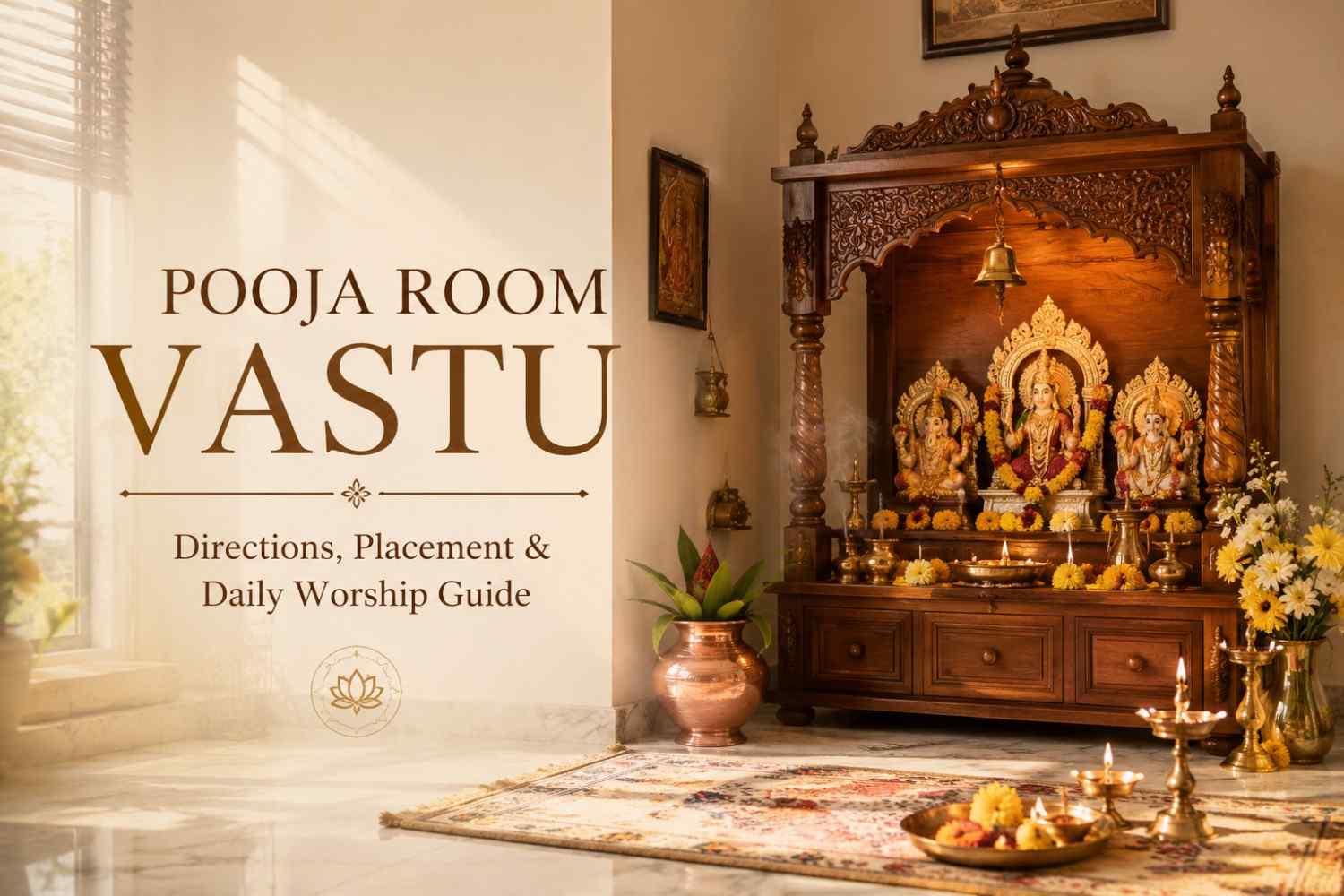
The pooja room is the most spiritually significant space in a Hindu home. Classical Vastu places it in the Northeast (Ishanya) — the direction of Lord Shiva as Ishana. The worshipper should face East or North, with the altar against the West or South wall. These principles apply whether you have a full room or a single corner.
- ◦Pooja Room Vastu Quick Facts
- ◦Why the Northeast Is the Best Direction for Your Pooja Room According to Vastu
- ◦Acceptable Alternative Directions When Northeast Isn't Possible
- ◦Which Directions to Avoid for a Pooja Room — and Why
- ◦How to Arrange Your Pooja Room: Altar, Deities, and Worship Items
- ◦Daily Practice in the Pooja Room — This Is What Actually Matters
- ◦Pooja Room Vastu for Small Apartments — Practical Adaptations That Work
- ◦Common Pooja Room Vastu Mistakes People Make
- ◦Practical Remedies When Your Pooja Space Isn't in an Ideal Location
- ◦Final Thought
Think about the one corner of your home that feels different from the rest. A little quieter. A little more settled. That's what a well-placed pooja room does — it gives your home a spiritual center of gravity.
Most of us grew up with a pooja space of some kind — a wooden cabinet in the corner, a marble shelf, or if the home was large enough, an entire dedicated room.
But very few people know why it was placed where it was, or what actually makes a pooja space work according to classical Vastu. Is it just direction? Just arrangement? Or is it something more?
This guide breaks it all down — where to place it, how to arrange it, what to keep in it, and how to adapt when your home doesn't give you ideal options. Whether you're setting up a new home or fixing an existing space, you'll find clear, practical answers here.
Pooja Room Vastu Quick Facts
| Factor | Classical Guideline |
|---|---|
| Primary direction | Northeast (Ishanya) — the most sacred direction |
| Acceptable alternatives | East, North (with appropriate care) |
| Avoid | Southwest, Southeast, South, under stairs, adjacent to toilet |
| Worshipper faces | East or North |
| Altar faces | West or South |
| Key principle | Sacred space needs active daily use to fulfill its purpose |
| Adaptability | Scales from full room to small altar to a single corner |
Why the Northeast Is the Best Direction for Your Pooja Room According to Vastu
This isn't arbitrary. The Northeast (Ishanya) has a specific logic behind it in classical Vastu, and once you understand it, the placement makes complete sense.
- Direction of Ishana — Lord Shiva's form as the master and lord; the most sacred directional association in Vastu
- Lightest zone of the home — classically, the Northeast should be kept open and uncluttered, which aligns perfectly with the energy a spiritual space needs
- First to receive morning sunlight — ideal for dawn worship, which is the most classical time for daily practice
- Water element zone — sacred water used in worship belongs in this direction
- Counterbalance to the Southwest — the heavy, grounded Southwest (master bedroom zone — see Bedroom Vastu for more on that) is diagonally opposite; the Northeast provides the light, open, spiritually active counterbalance
If you're building or designing a home from scratch, this is where your pooja space goes. No debate needed.
Acceptable Alternative Directions When Northeast Isn't Possible
Life doesn't always give you a Northeast corner that works. Here's what classical Vastu recommends instead, in order of preference:
- East — direction of the rising Sun and Indra; supports dharmic engagement and morning practice; a strong secondary choice
- North — direction of Kubera; less ideal than East but perfectly workable when Northeast and East are both unavailable
- Northeast corner of any room — if you can't dedicate an entire room, the Northeast corner of your living room, bedroom, or study is still the right placement for a small altar
Which Directions to Avoid for a Pooja Room — and Why
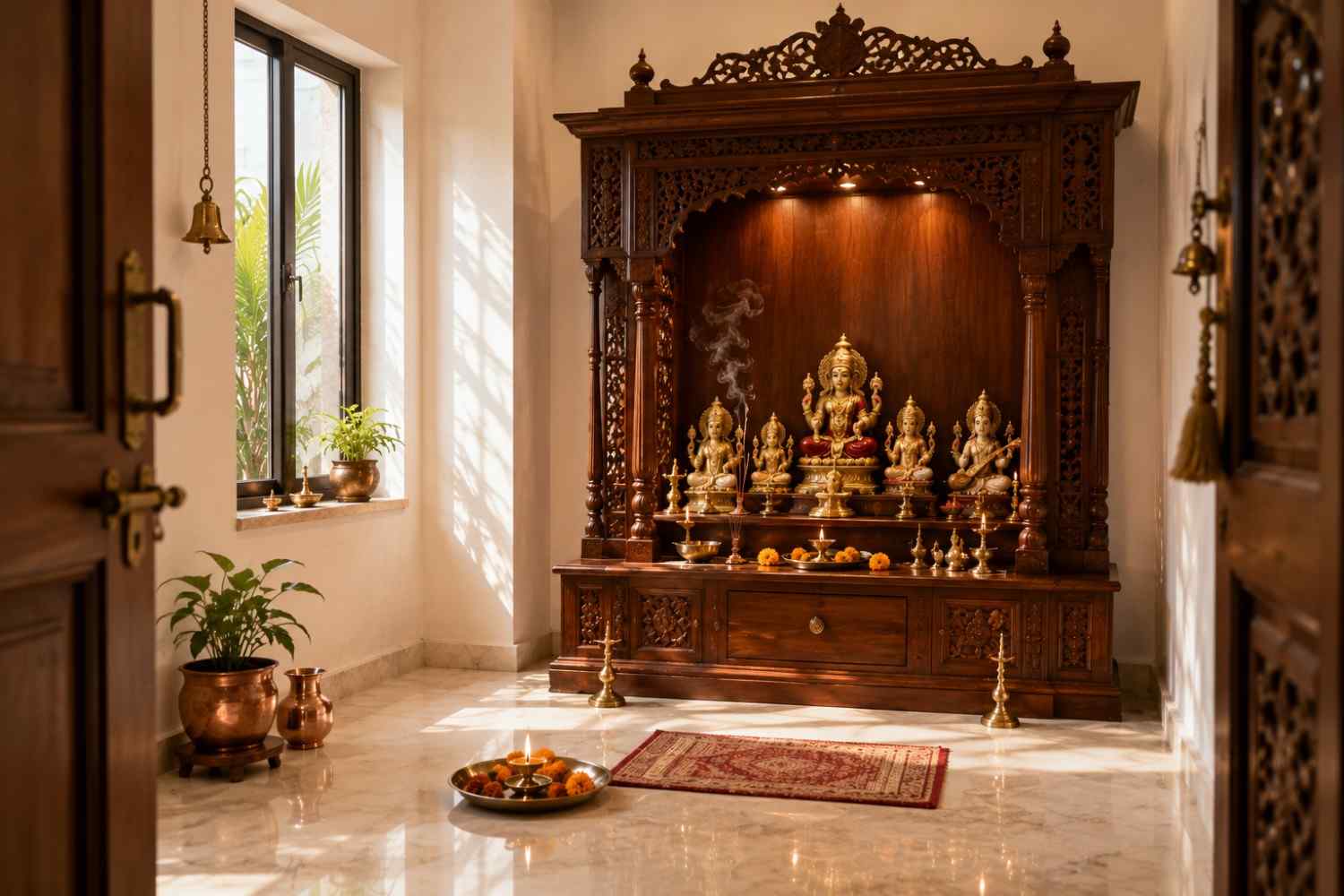
Some placements genuinely don't work, and it's worth knowing why rather than just following rules blindly.
- Southwest — this is the heavy, stabilizing zone of the home (think master bedroom, load-bearing energy); a pooja room here disrupts both the spiritual space's lightness and the zone's grounded quality. If you want to go deeper into how the Bedroom Vastu and pooja room zones relate, that's a useful read alongside this one.
- Southeast — this is the fire zone, classically assigned to the kitchen (see Kitchen Vastu); not appropriate for spiritual space
- South — the Yama direction; reserved for heavier purposes, not worship
- Under stairs — weight and foot traffic above a sacred space is classically avoided across traditions
- Adjacent to or sharing a wall with a toilet — cleanliness and energetic incompatibility; the two activities don't belong side by side
- Basement — the pooja space belongs on the main floor or above, not below the home's living level
- Directly facing the main door — classical practice prefers the pooja space to feel private and inward, not the first thing visible on entry
How to Arrange Your Pooja Room: Altar, Deities, and Worship Items
Altar Placement — Get the Direction Right First
The altar is the heart of the pooja room, and its placement determines everything else.
- Deities should face West or South — this way, you as the worshipper face East or North, which is the classical requirement
- Altar height — at or above shoulder height when you're seated; deities should never be at floor level or below the worshipper's eye line
- Against a solid wall — not floating in the center of the room
- Clear space in front — enough room to sit comfortably and perform worship without feeling cramped
Deity Placement on the Altar
- Lord Ganesha — placed first or centrally; he is invoked at the beginning of every worship, so this makes practical and spiritual sense
- Family Ishta Devata (your chosen deity) — the central figure of your family's worship tradition
- Other deities — arranged according to your family tradition; classical order varies
- Photos of deceased ancestors — these do not belong on the main altar in most traditions; keep them in a separate memorial space elsewhere in the home
- Photos of living gurus or teachers — placement depends on your tradition; some keep them on the altar, others place them adjacent
- Cracked or broken idols — replace them; damaged sacred objects are not appropriate for active worship; respectfully immerse them in flowing water according to tradition
Worship Items That Belong in the Pooja Room
- Diya (oil lamp) — the central element; lit during every worship session
- Ghanti (bell) — rung during aarti
- Incense and holder
- Water vessel for offerings
- Shankh (conch) for ritual sounding
- Sandalwood paste and kumkum
- Fresh flowers — changed regularly; never leave wilted flowers on the altar
- Sacred texts — Bhagavad Gita, Ramayana, or your family tradition's texts
- Mala (prayer beads)
Materials and Colors for the Pooja Room
- Wood — the preferred material for altars; sandalwood, teak, and rosewood are classical choices
- Marble or stone — acceptable for both altars and flooring
- Wall colors — yellow, white, and soft light tones support the pooja room's quality; avoid dark or aggressive colors
- Natural materials throughout wherever possible
Daily Practice in the Pooja Room — This Is What Actually Matters
Here's something most Vastu guides don't say clearly enough: the arrangement means very little without the practice. A beautifully set up pooja room that no one uses is, in a real sense, not doing its job.
Classical tradition is specific about daily use:
- Light the lamp every morning and evening — Pradosh Kaal (dusk) is particularly classical for the evening worship
- Change the flowers regularly — wilted or dead flowers have no place on the altar
- Clean the altar as part of worship — the act of cleaning is not a chore here; it is itself a devotional act
- Keep the space separate from ordinary activity — no eating, no sleeping, no business being conducted in a dedicated pooja room
- Cover the altar with a cloth during extended travel or non-use
- Enter consciously — don't walk in and out casually; the space deserves intentional entry
- Gather as a family occasionally — the pooja room anchors family spiritual life when used together
If you want guidance on building a consistent daily spiritual routine around your pooja practice, Moksha - moksha — Vedaz's AI astrologer for spiritual wellbeing and mental peace — can be genuinely helpful for that kind of reflection.
Pooja Room Vastu for Small Apartments — Practical Adaptations That Work
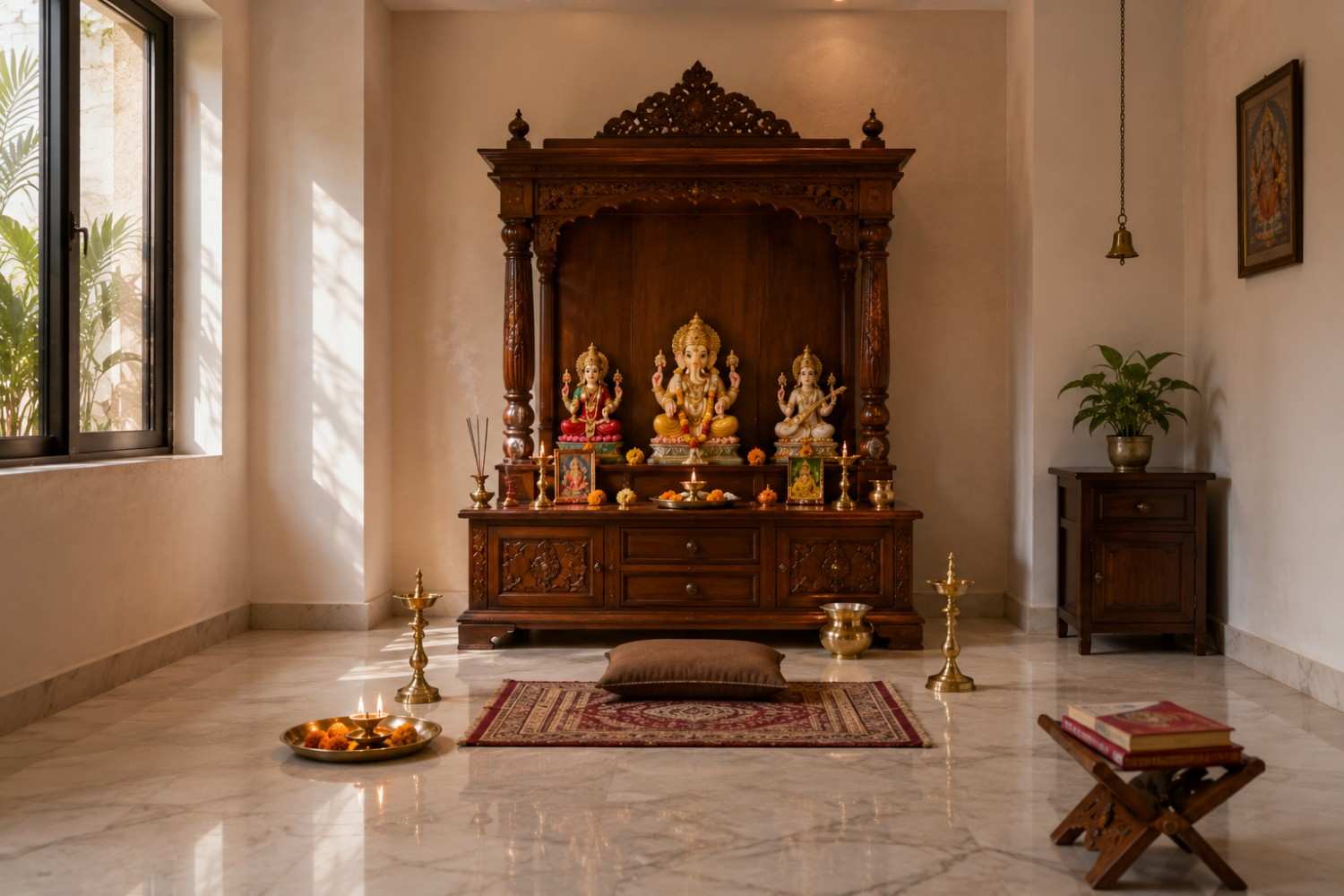
This is where most people feel stuck. You live in a 2BHK. There's no dedicated room. What do you do?
The good news: Vastu principles scale down beautifully. The direction matters more than the size.
If You Have a Wall or Corner Available
- A dedicated cabinet or cupboard converted into a pooja space, placed against the Northeast wall of the apartment
- A wall-mounted shelf or altar unit in the Northeast corner of your living room
- A pooja unit built into the living room — this is common and perfectly acceptable when placed in the Northeast corner
All the same principles apply even at small scale: Northeast placement, deities facing West or South, cleanliness, daily use.
When Even a Corner Is Difficult
- A small portable altar — a wooden box or cabinet that opens for worship and closes when not in use
- A wall-mounted niche — takes up minimal space but creates a visually distinct sacred zone
- A dedicated shelf used only for worship — marked off from ordinary objects by a small curtain or different surface treatment
Even with a portable altar, try to maintain the orientation — sit facing East or North whenever possible.
Common Pooja Room Vastu Mistakes People Make
Most of these are easy to fix once you know about them.
- Pooja room in the Southwest — the most common problematic placement
- Adjacent to a toilet — energetic and cleanliness mismatch
- Keeping cracked or broken idols on the altar instead of replacing them respectfully
- Multiple idols of the same deity — one of each deity is the classical preference
- Ancestor photos on the main altar — they belong in a separate memorial space
- Eating or sleeping in a dedicated pooja room
- Using the space for storage or non-spiritual activity
- Leaving lamps unlit for long periods — regular lighting keeps the space alive
- Sitting on the bare floor without a clean asana (worship seat) — classical practice always uses a dedicated seat
Practical Remedies When Your Pooja Space Isn't in an Ideal Location
Not everyone can move their pooja room. But you can work with what you have.
- Pooja room in a non-ideal direction? Use light colors, bright lighting, and keep a small clean water vessel nearby to invoke the Northeast's water-element quality
- Pooja corner in a shared room? Use a curtain, screen, or dedicated lighting to create visual separation from ordinary activity
- Toilet-adjacent pooja space? Place a heavy decorative wall hanging on the shared wall; keep the toilet door always closed; sprinkle Ganga jal regularly as a purification practice
- Family resistance to a dedicated space? Even a small wall niche with deity images, used daily, fulfills the essential principle — conscious sacred space in the home
And the most important reminder of all: a small, actively-used corner beats an elaborate, unused room every single time.
If your pooja space has a non-ideal placement and you're not sure what specific remedies apply to your home's layout, Atri - atri — Vedaz's AI astrologer specializing in Vedic remedies — can help you identify practical corrections suited to your specific situation.
Final Thought
The pooja room is the home's spiritual center — the place where daily devotional life finds its physical anchor, where the family's connection to the sacred gets expressed in a visible, tangible form.
Classical Vastu places it in the Northeast for real reasons: the most sacred direction, the lightest zone, the first point of morning sunlight, the domain of the water element.
If you have a choice, the Northeast is genuinely the right call. If you're working with an existing space, apply the principles within whatever you have.
But here's the thing that gets said too rarely: the deepest Vastu of a pooja room is the daily practice itself. A small Northeast altar used every morning with sincere intention does more than an elaborate dedicated room that only opens on festival days.
Light the lamp, change the flowers, clean the altar as an act of devotion and reat the space with the respect it deserves — in how you enter, how you speak near it, how you maintain it.
That's what Vastu Shastra Complete has always pointed toward at its heart: not rules for their own sake, but a way of organizing your home so that the sacred has a living, breathing place within it.
The arrangement supports the practice. The practice creates the value. Together, they make your home something more than just a place you live.
Want to understand how Vastu connects to your personal chart? Reading your birth chart alongside your home's layout can reveal patterns you might not expect.
Niharika Venkataraman
Home Vastu, Interior Layouts & Sacred Spaces | 11+ Years
Niharika Venkataraman is a Vastu researcher specializing in home planning, sacred spaces, and interior layouts. She focuses on helping homeowners apply traditional Vastu principles in practical and modern ways.
Frequently Asked Questions
1. Which direction should the pooja room be in?
Northeast (Ishanya) is the classical choice — it's the most sacred direction in Vastu, associated with Lord Shiva as Ishana. If Northeast isn't available, go with East first, then North. Avoid Southwest, Southeast, South, under stairs, adjacent to toilet, basement placement, or directly facing the main door.
2. Which direction should the worshipper face?
East or North. You achieve this by placing the altar against the West wall (you face East) or the South wall (you face North). East is the more classical preference. The deities themselves end up facing West or South — looking back at you as you worship.
3. Where should I place a pooja room in a small apartment?
Go for the Northeast corner of whatever space you have. A dedicated cabinet against the Northeast wall, a wall-mounted shelf unit, or a pooja unit in the Northeast corner of your living room all work well. The principles still apply at small scale — right direction, deities facing West or South, cleanliness, and daily use.
4. What items belong in the pooja room?
The essentials: deity images or idols (Ganesha first, then your Ishta Devata), diya, ghanti, incense, water vessel, shankh, sandalwood paste, kumkum, fresh flowers, sacred texts, and mala. Replace cracked or broken idols respectfully. Ancestor photos belong in a separate memorial space, not the main altar.
5. What pooja room Vastu mistakes should I avoid?
The big ones: Southwest placement, toilet-adjacent location, keeping damaged idols, multiple idols of the same deity, ancestor photos on the main altar, eating or sleeping in the dedicated space, using it for storage, leaving lamps unlit for long periods, and sitting without a clean asana. The single most universal mistake — having a pooja space and not using it regularly.
6. Is the Vastu of a pooja room useful if I don't actively practice?
Honestly? Not fully. The arrangement supports the practice, but the practice creates the value. An unused pooja room — however beautifully arranged — doesn't fulfill the classical principle. Daily lamp lighting, regular worship, and conscious treatment of the space as sacred are what bring the actual benefit. For someone without an active practice, the Vastu mostly becomes decorative.
Related Blogs

Feng Shui Chinese Art of Finding Love
Simple, down-to-earth Feng Shui love hacks to help you shift your space, clear emotional blocks, and invite real, meaningful love into your life.

Effortless Feng Shui Tips to Boost Romance
Unlock the magic of love with astrology-backed rituals to attract your soulmate using candles, moon phases, and vision boards.
Why Every Home Needs Vastu Shanti?
Find out the 10 strong Vastu Shanti advantages that can make your house more energy level, eliminate the negativity, and bring abundance, bliss and well-being.
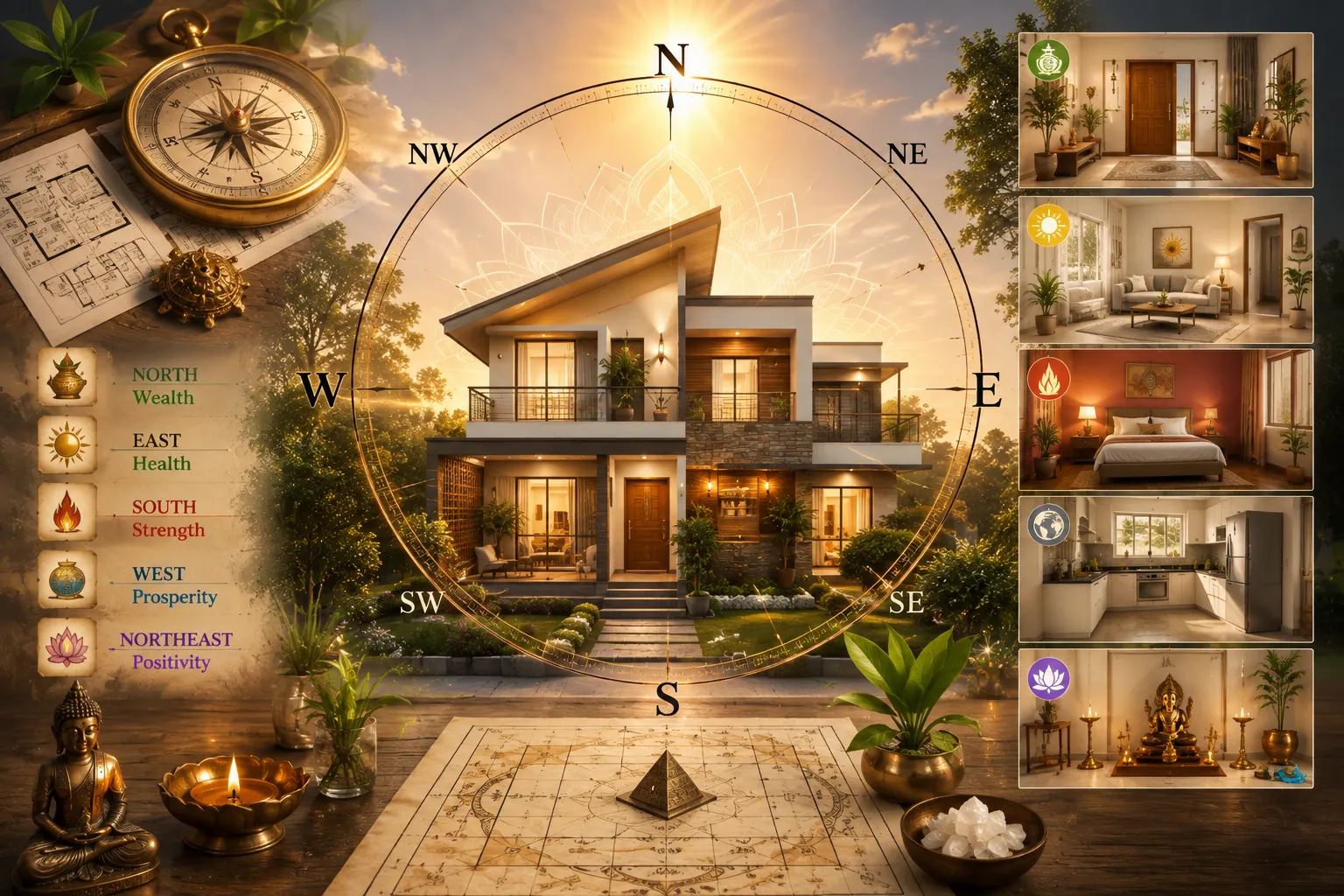
Vastu for Home Explained: Best Directions, Room Placement & Easy Fixes
Complete Vastu guide for home: directions, kitchen, bedroom, entrance & remedies. Improve energy, health & prosperity easily.